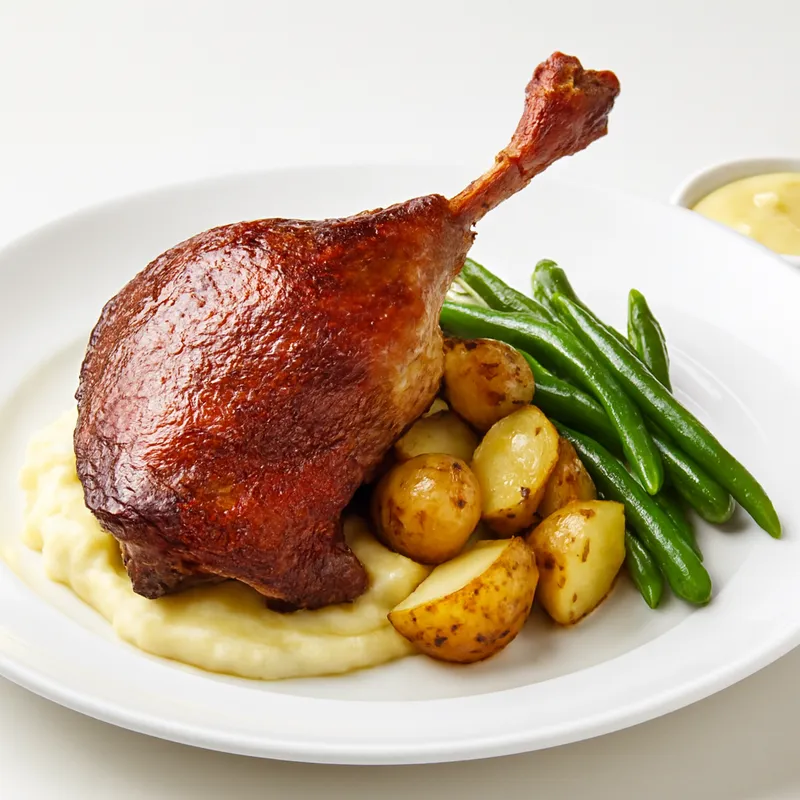
In Practice
Duck legs: dry-cure with 18 g salt + 2 g pink-salt #1 + thyme + bay per kg meat for 24-36 h at 4°C; rinse, pat dry; submerge in rendered duck fat at 80-90°C for 2-3 h until probe-tender. Store fully covered in fat at 4°C — up to 6 months. Failure mode: salt-cure too short → bacterial spoilage even under fat; fat too hot (>100°C) → meat fibers tighten, dries out and shreds.
Origin
Confit is a technique rooted in medieval France, where it emerged as a method to preserve meats. During this period, food preservation was crucial, and the French discovered that slow-cooking meats submerged in their own fat not only preserved them but also enhanced their flavor and texture. This method was particularly popular in the Gascony region, known for its duck and goose farming. Over time, confit spread through French culinary practices and became a hallmark of French gastronomy, celebrated for its silky texture and rich taste.
How It Works
Salt-cure + low-temperature poach in fat: NaCl draws water activity (aw) below 0.85 via osmosis, inhibiting bacterial growth; rendered fat at 70-90°C slowly hydrolyzes collagen → gelatin without crossing the muscle-fiber contracture threshold (above 70°C myofibrils squeeze water out). When cooled, the solidified fat caps oxygen exposure, extending shelf life to 6+ months in cellar conditions (15°C).
Dish examples
58 dishes · 13 cuisines



Through Time
Codified in medieval Gascony (southwest France) before refrigeration as the off-season storage method for autumn-fattened ducks and geese. La Varenne's 1651 *Le Cuisinier François* documented confit d'oie as bourgeois technique. Madeleine Kamman's 1976 *The Making of a Cook* and Paula Wolfert's 1983 *The Cooking of South-West France* introduced confit to North American chefs; Thomas Keller's 1999 *French Laundry Cookbook* re-canonized it.
Related cooking knowledge
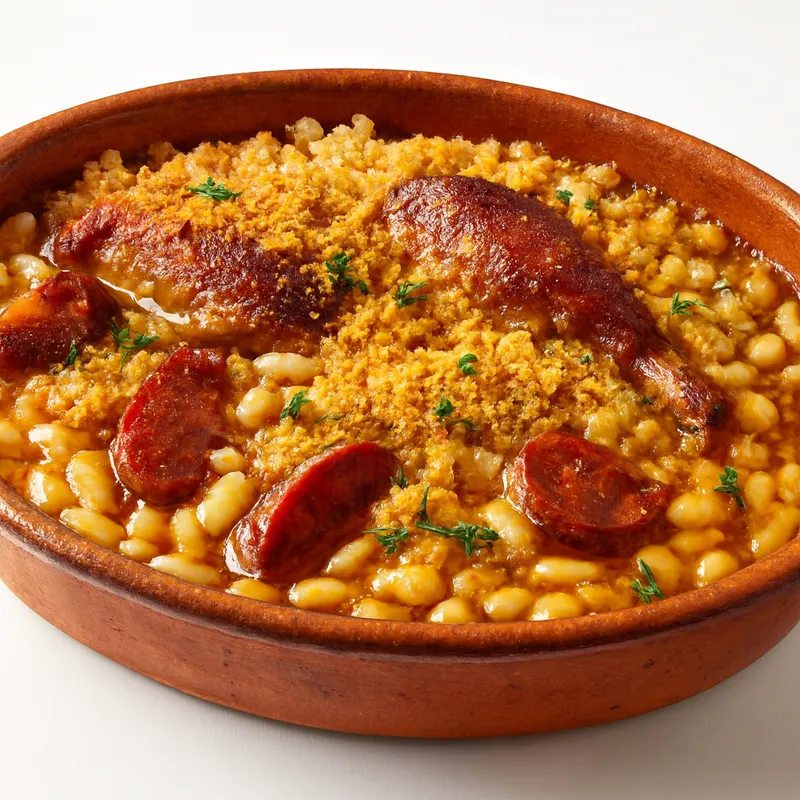
Curing is confit's required first step. Rillettes is confit shredded and pounded back into the fat as spreadable paste; cassoulet is confit's classic destination. Sous vide is the modern controlled-temperature successor — same gelatin-without-fiber-contracture principle, but with water bath and vacuum bag replacing fat submersion.


