
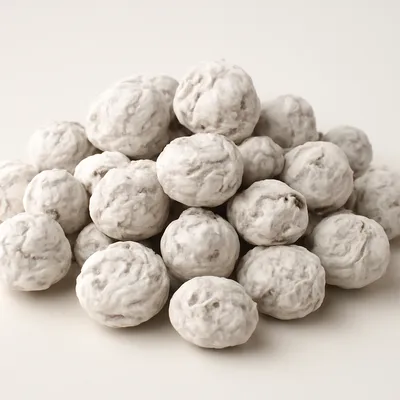


Chuno is one of humanity's oldest freeze-dried foods, made for centuries by Aymara and Quechua farmers on the Bolivian-Peruvian altiplano (around 3,800-3,900 m), who let potatoes freeze on cold Andean nights and thaw under the day's sun over several days, then trod out the water and skins underfoot. The craft predates the Inca, with evidence at Tiwanaku near Lake Titicaca; light and storable for years, chuno underwrote the Inca state's roadside qullqa storehouses that provisioned armies and buffered famines, and was documented by the Spanish chronicler Jose de Acosta in 1590. Phuti, Aymara for 'cooked,' is the everyday way to serve it, turning the humble preserved tuber into a cheesy, comforting highland accompaniment.
The chuno is spongy and earthy with a unique, almost smoky funk that distinguishes it from fresh potato. Soft scrambled egg and salty melting cheese mellow it into something rich and savory. It is deeply traditional, hearty highland fare.
Chuno is natural freeze-drying: the cold altiplano night freezes the potatoes and the ice crystals rupture their cell walls, so foot-treading the next day presses out most of the water and removes the skins, while the rest sublimates and evaporates at low temperature under the dry (roughly 30-40% humidity), high-altitude sun, the process that elsewhere requires an industrial freeze-dryer. The tubers shrink to about a fifth of their size and keep for years because microbes cannot grow without water; the bitter, frost-hardy high-altitude varieties used are also detoxified as the repeated freezing and washing leach out water-soluble glycoalkaloids (solanine and chaconine). Rehydrating and boiling restore a spongy texture that readily absorbs the egg and cheese.
Variations
made with white chuno (tunta), with aji sauce, with extra cheese, served alongside meat
On the Palate
Where Chuno Phuti sits in the Bolivian flavor cloud
Ingredients
Serves 4How it's made
8 steps · 8 hours
- 1480 min
Soak the dried chuno in water overnight to rehydrate.
- 210 min
Rub and rinse the chuno to remove the dark skins.
Watch outRub and rinse until the dark skins slip off — leftover skin keeps a chalky, gritty bitterness.
- 315 min
Boil the chuno in salted water until soft.
- 43 min
Drain and lightly squeeze out excess water.
- 54 min
Saute chopped onion in oil until translucent.
- 63 min
Add the chuno and toss to heat through.
- 73 min
Pour in beaten eggs and scramble gently with the chuno.
Watch outPush the eggs and chuno with a soft hand and pull off the heat while still glossy — overcooked scramble goes dry and rubbery.
- 82 min
Fold in crumbled fresh cheese and serve hot.


