The original, savory way açaí is eaten in Pará — thick, unsweetened purple pulp served in a gourd bowl (cuia) and treated as a starchy staple, not a dessert. It is eaten as a meal alongside fried or salted fish and farinha de mandioca, the gritty manioc flour stirred in for texture. This is deliberately distinct from the sweetened açaí bowl (the existing 'Acai na Tigela' / 'Acai Bowl') sold in gyms and beach kiosks across southern Brazil and abroad: in the Amazon, açaí is unsweetened and savory, the daily bread of the region.


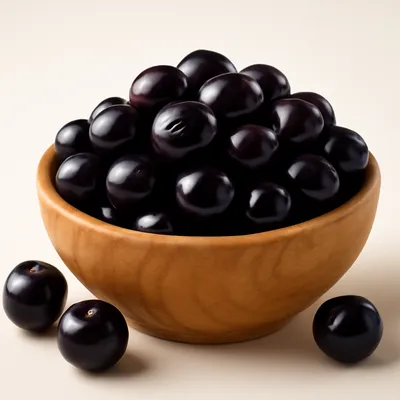
Açaí is the fruit of the açaí palm (Euterpe oleracea), native to the Amazon estuary, and has been a dietary staple of riverside and indigenous communities in Pará for centuries — long before its late-20th-century reinvention in southern Brazil as a sweetened fitness food. In Belém and across the state, açaí is sold daily, pulped fresh, and eaten unsweetened with fish and farinha as a core source of calories. The sugared, fruit-topped bowl familiar internationally is a much later, southern Brazilian commercial adaptation; the cuia version is the Amazonian original.
Thick, almost pudding-like purple pulp, deep and dark, with a flavor that is earthy and faintly nutty, more like an unsweetened vegetable than a berry — no sweetness at all. Stirred with coarse farinha, it gains a sandy, crunchy grit that thickens each spoonful. Eaten with a piece of fried fish, the cool, dense açaí plays against the hot, salty, crisp fish. It coats the mouth and sits heavy, exactly the way a staple food should.
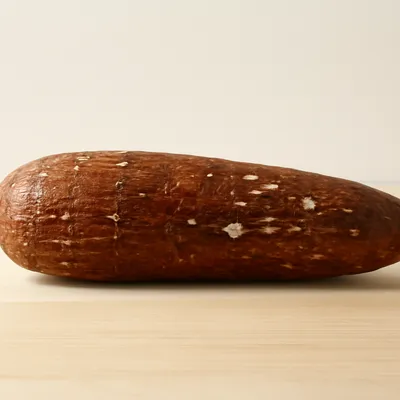
Fresh açaí berries have a thin layer of edible pulp over a large seed and oxidize fast, so they are soaked to soften and then pulped — traditionally rubbed by hand or machine-extracted with a little water — into a smooth, thick liquid that must be eaten the same day. The pulp is naturally unsweetened and high in fat, which is what makes it filling and staple-like rather than a snack. Farinha is stirred in not for flavor but for body and texture, soaking up the loose pulp; the result is thick enough to eat with the fingers in the traditional way.
Variations
The Pará savory standard is unsweetened pulp with fried or salted fish (such as pirarucu or jaraqui) and farinha; some eat it with shrimp or charque. The thickness is graded locally — grosso (thick), médio, and fino. By contrast, the southern Brazilian sweet bowl (the separate 'Acai na Tigela') blends the pulp with guaraná syrup or sugar and tops it with banana and granola — a different dish entirely from the cuia version described here.
On the Palate
Where Açaí na Cuia sits in the Brazilian flavor cloud
Keep the açaí pulp savory and unsweetened and use it the same day, because its high fat and fast oxidation are exactly what make it a filling staple rather than a sweet snack.
Ingredients
Serves 2How it's made
6 steps · 20 min
- 110 min
Soak fresh açaí berries in warm water until the thin pulp softens around the seeds.
Watch outThe berries are ready when the thin skin-pulp gives softly under your finger; the seed inside stays hard.
- 28 min
Pulp the softened berries by hand or machine with a little water, then strain out the seeds and fibers to leave a thick, smooth purple liquid.
- 31 min
Keep the pulp unsweetened and use it the same day, as it oxidizes quickly.
- 410 min
Fry or pan-sear salted Amazonian fish until crisp and golden.
Watch outFry the salted fish until the surface is crisp and deep golden, not pale — the crunch plays against the loose pulp.
- 53 min
Pour the açaí pulp into a gourd bowl (cuia) and stir in coarse farinha de mandioca to thicken.
Watch outAdd farinha a bit at a time; stop when the pulp mounds on the spoon instead of running off.
- 61 min
Serve the savory açaí with the fried fish on the side, eating the two together.
Archive tool suggestions — not reviewed
These legacy suggestions have not been evidence-reviewed and are not presented as required tools.