In Practice
Oil volume ≥4× food weight or temperature crashes 30-40°C on drop, sogging the crust. Thermometer mandatory — eyeballing fails. Pat surface dry; let battered pieces drain 30 sec before lowering. Recover oil temp between batches. Drain on rack, not paper (steam trapped beneath turns crust soggy). Failure modes: under 160°C oil saturates the food; over 200°C burns crust before interior cooks; reusing oil past 6-8 cycles polymerizes into bitter, dark, foam-prone medium.
Background
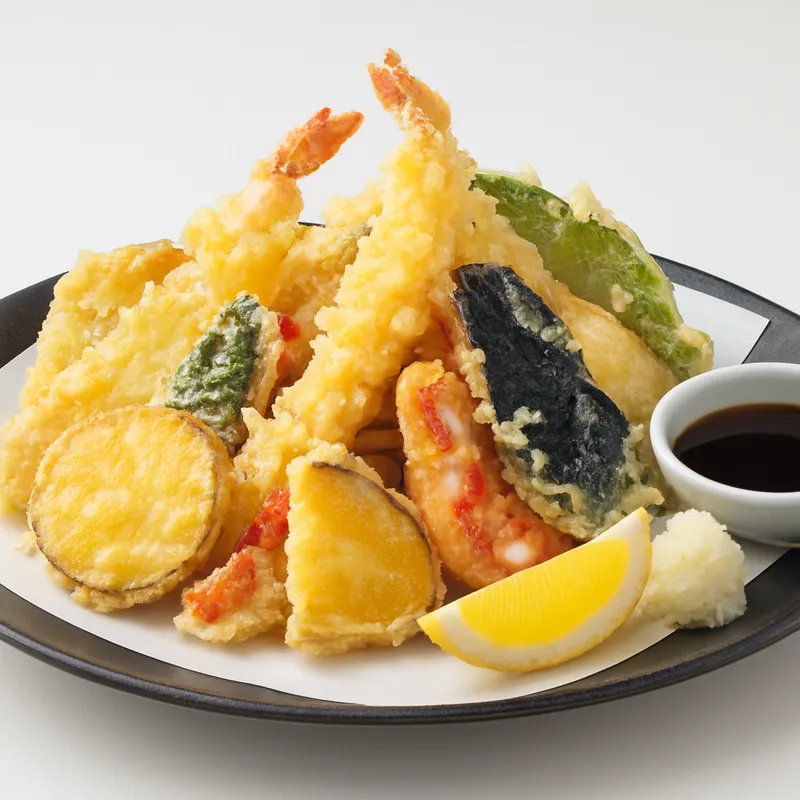
Deep frying is a universal technique with distinct traditions. In Japan, tempura is a delicate art, where seafood and vegetables are coated in a light batter and fried quickly, often served with tentsuyu sauce. In India, samosas are deep-fried pastries filled with spiced potatoes and peas, a popular street food. Meanwhile, in Spain, churros are deep-fried dough sticks, often enjoyed with a cup of thick hot chocolate. In the American South, fried chicken is a staple, seasoned and fried to a golden crisp.
How It Works
Oil at 175-190°C transfers heat by conduction roughly 25× faster than air at the same temperature. Surface moisture flashes to steam, creating outward pressure that blocks oil ingress; starches gelatinize and dehydrate into a porous crust; Maillard browning and partial caramelization produce the golden color. Smoke point of the oil (peanut 230°C, refined sunflower 232°C) caps usable range.
Dish examples
1120 dishes · 123 cuisines




Through Time
Egyptian fried zalabia c. 600 BCE; Roman scriblita in Apicius. Portuguese tempura technique (peixinhos da horta) brought to Nagasaki by Jesuit missionaries c. 1543 became Japanese tempura. Industrial-scale frying canonized in James Beard's 1959 *Fish Cookery* and the modern science decoded in Modernist Cuisine (Myhrvold, 2011).
Related cooking knowledge
Stir Frying uses the same fat-as-medium principle in a fraction of the oil. Sauteing is the dry-pan cousin. Confit operates at 60-90°C in fat — same medium, opposite intent (preservation, not crispness). Tempura is the most engineered batter variant.


