
Korean
Ferment everything. Wait. The waiting is the technique.
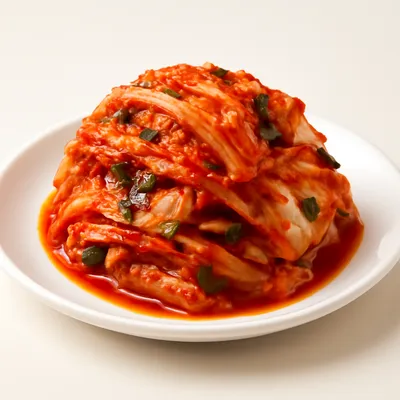
Kimchi
A staple fermented vegetable dish, often spicy and tangy, essential to Korean meals and culture.
View page →A Korean feast is a array of small plates, each a movement in a grand tale of flavors. The center stage is often a fiercely bubbling pot of Kimchi Jjigae, its tangy, spicy broth a siren call to the senses, while a platter of Samgyeopsal sizzles on a tabletop grill, waiting for its turn to be wrapped in crisp lettuce. This savory landscape is dotted with banchan, those tiny, potent side dishes that offer everything from the briny kick of kimchi to the sweet, nutty crunch of candied anchovies. Each bite is an invitation to explore Korea's agricultural wealth and its bold, unapologetic approach to flavor.
The Palate
What makes it taste like itself
Dishes to explore
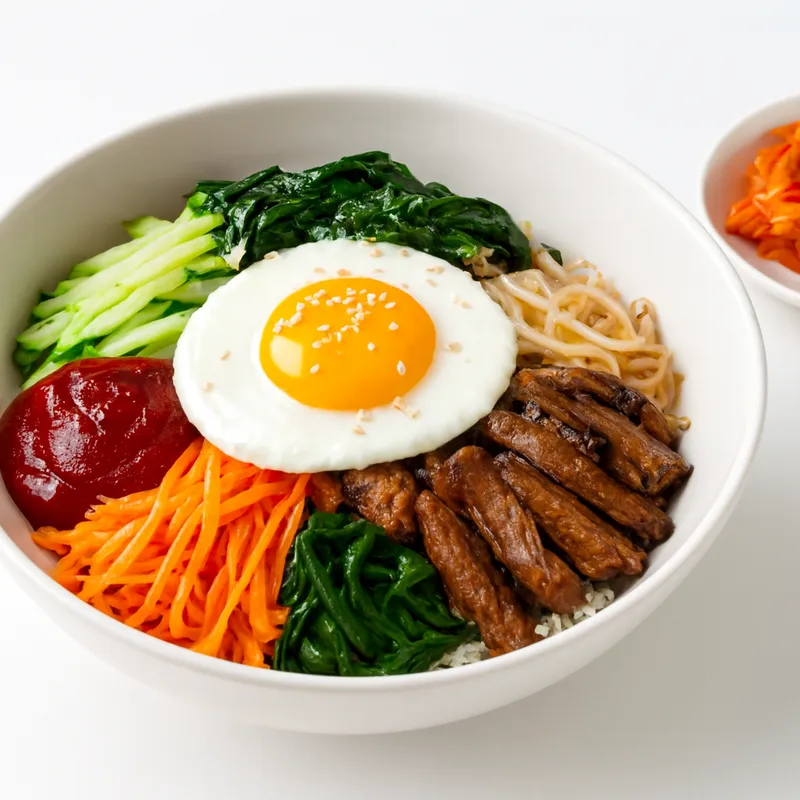
Bibimbap
A kaleidoscope of colors, textures, and flavors, bibimbap is a lesson in balance and harmony.
Bibimbap teaches you about the art of mixing and matching textures and flavors on a single canvas.
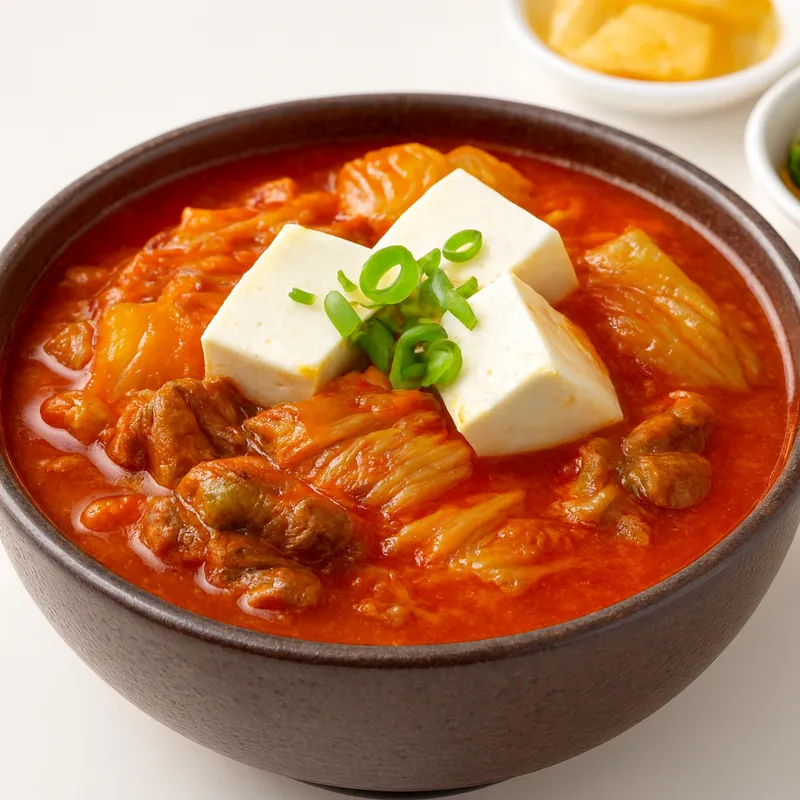
Kimchi Jjigae
The soul-warming stew that defines Korean comfort, with kimchi's aged tanginess at its core.
Kimchi Jjigae demonstrates the transformative power of fermentation and spice.
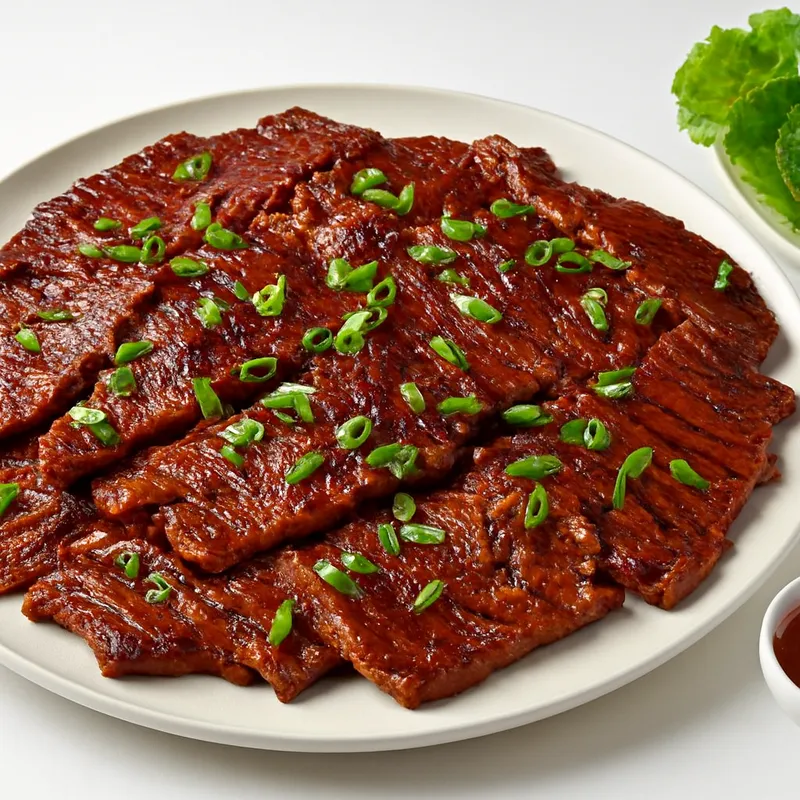
Galbi
Tender, marinated ribs grilled to caramelized perfection, a carnival of sweet and savory.
Galbi reveals the secret of Korean marinating magic, turning simple cuts into sublime bites.
Hotteok
A sweet, chewy, and crispy pancake filled with molten sugar, nuts, and spices.
Hotteok introduces the playful side of Korean street food, with its mix of textures and hidden sweetness.
Cooking options
Food choices favor cuisine selections and manageable preparation; check each recipe before cooking.
The Pantry






See all 313 ingredients›
Proteins




Vegetables







Herbs & Spices





Grains & Staples





Dairy & Fats









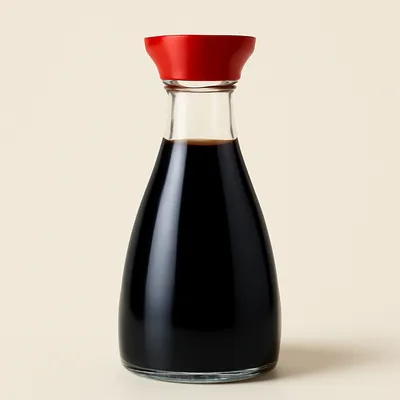
Sauces & Condiments








Regional Kitchens
Four regional kitchens, from Seoul to Jeju Island. Tap a region to see its table.
Royal Joseon palace inheritance + modern Seoul street — bulgogi, japchae, tteokbokki, fried chicken. The dominant face of Korean food worldwide.
The fermentation and banchan capital — Jeonju bibimbap, kimchi traditions deeper than anywhere else, dozens of side dishes per meal.
Volcanic island — heuk dwaeji (black pork), galchi-jorim (hairtail), tangerine, buckwheat. Distinct from peninsular Korea; the haenyeo diving culture shapes the seafood.
South-east coastal — milmyeon, dwaeji-gukbap, Dongnae pajeon. Bold, salty, seafood-heavy; Busan's port-city pragmatism on the plate.
Northeastern mountain — dakgalbi, buckwheat memil makguksu, gamja jeon.
Central Korea's quiet, unshowy table — doenjang-driven home cooking that prizes the plain taste of the ingredient over chili and seasoning. Chungnam's western coast brings tidal-flat seafood (Seosan oysters, blue crab, salt-fermented oyster jeotgal), while inland Chungbuk and the Daejeon–Cheonan corridor lean on mountain and river fare — acorn jelly, freshwater snails, tofu, ginseng. Where Jeolla piles on banchan and Gyeongsang hits hard with salt, Chungcheong is the understated middle: gentle, slow, and content to let a bowl speak for itself.
Pyongyang émigré tradition in Seoul — naengmyeon, mandu, bindaetteok.
The cooking of Korea's far northeast — cold, mountainous Hamgyong, now in North Korea. Its emblem is Hamhung-style cold noodles: chewy sweet-potato-starch strands tossed with a fiery raw-skate sauce. The region cures gajami-sikhae (fermented flounder with millet), seasons heavily with a garlic-chili dadegi paste, and eats potato-starch noodles and frozen-soybean porridge against the cold. Refugee cooks carried these dishes south to Sokcho's Abai village after the war.
How They Cook
Methods linked to dishes in this catalog
Fermentation
Fermentation in Korea is an art form, creating complex flavors from simple ingredients, with kimchi being the most iconic example.
See 17 more techniques›
Korean stir frying often uses a large, shallow pan called a 'tteokbokki tteok' to quickly sear ingredients like rice cakes and vegetables, as seen in dishes like Dakgalbi.
In Korean cuisine, grilling is about the social aspect as much as the taste, with tabletop grills enabling diners to cook and share meats like galbi right at the table.
Korean steaming uses bamboo baskets to gently steam tofu skin wraps, preserving their delicate texture and flavor.
Korean marinades, packed with soy sauce, sugar, garlic, and sesame oil, transform meats into flavor bombs, marrying sweet and savory in harmonious balance.
Korean kimchi jjigae simmers in an earthenware pot, allowing the fermented kimchi and pork to meld flavors over a medium flame for a rich, tangy stew.
Korean sauteing often starts with sesame oil in a hot pan, quickly cooking vegetables and meats for bibimbap to preserve their crispness and vibrant color.
Korean deep frying, particularly in dishes like Korean Fried Chicken, emphasizes a crisp, light crust achieved through a double-frying technique.