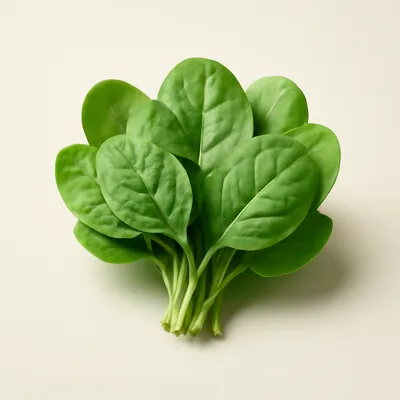
A pop of color and health in any dish, spinach is the leaf that never fails you.
Vibrant green leaves with a tender, slightly metallic taste; spinach is a powerhouse of nutrients, offering a fresh, earthy flavor that lightens dishes. Its delicate texture wilts beautifully in warm preparations.
Where it comes from
Spinach is believed to have originated in Persia, later spreading to Europe in the Middle Ages, where it became a staple of healthy diets.
In the kitchen
Used fresh in salads or cooked in dishes like spanakopita, spinach adds both nutritional value and a pleasing color contrast, enhancing the overall dish.
Across cuisines
In Korean cuisine, spinach is often blanched and seasoned as a banchan (side dish). Spinach is quickly blanched in boiling water, then mixed with sesame oil, garlic, soy sauce, and sesame seeds. This preparation emphasizes the spinach's natural flavor while adding a nutty, savory dimension.
In Persian cooking, spinach is often part of a larger herb mix. It is used alongside parsley, cilantro, and fenugreek in dishes like Ghormeh Sabzi, where the greens are slowly stewed to meld flavors. This mix creates a rich, aromatic base essential to the dish.
Nigerian cuisine incorporates spinach into rich stews. In dishes like Efo Riro, spinach is cooked with tomatoes, peppers, and a variety of spices. The spinach absorbs the flavors, contributing to the stew's depth and complexity.
Nutrition (per 100g)
FoodB-derived; record mapping unavailable.
Pairs well with