


The yufka tradition reaches back to the nomadic Turkic kitchens of Central Asia, where thin dough was rolled on a saç griddle. The layered pastry form developed in the Ottoman palace kitchens of Topkapı between the 15th and 17th centuries, where a dedicated börekçi corps existed. From there it spread across the empire — Greek, Balkan and Levantine versions all derive from the Ottoman model.
Topkapı palace kitchens ran a dedicated börekçi corps between the 15th and 17th centuries; the Greek, Balkan and Levantine layered pastries all branch from that Ottoman model. Yufka is just flour and water — fat between every sheet does the lift.
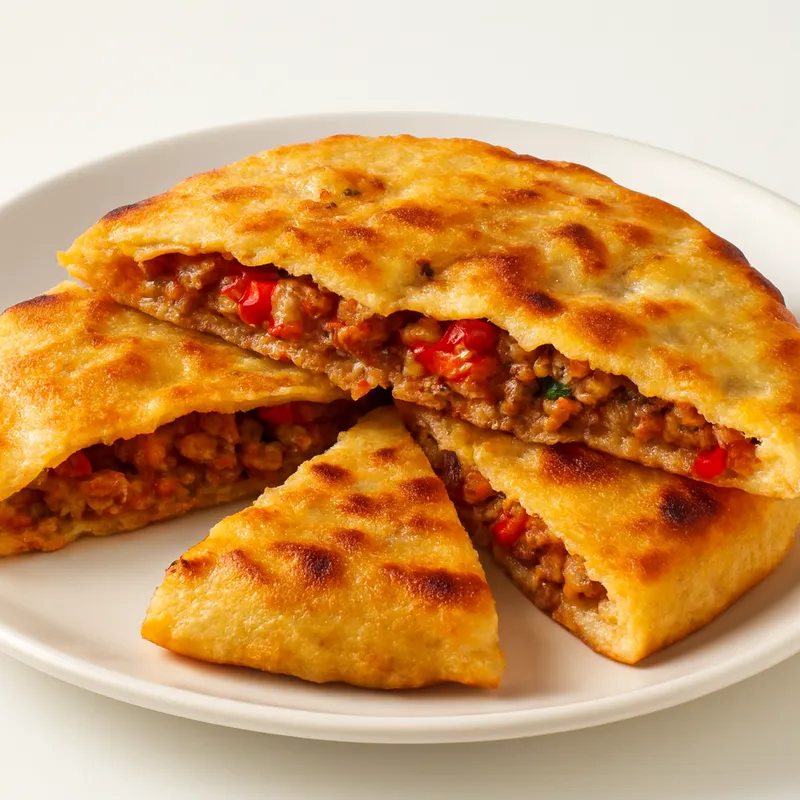
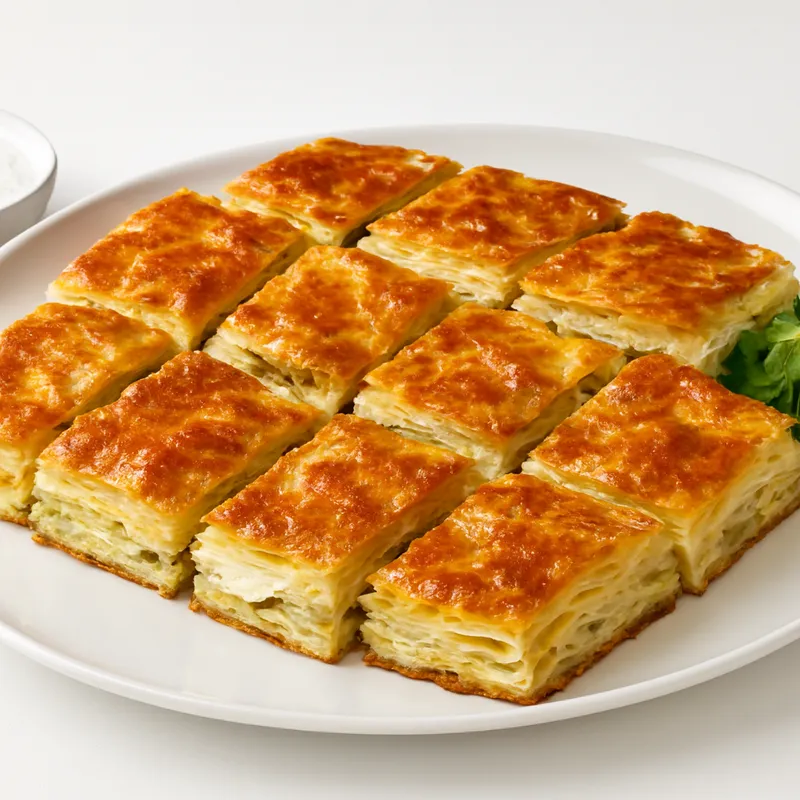
Layers of yufka, the Turkish phyllo, brushed with butter and oil, stacked or rolled around feta-and-parsley, spinach, or spiced beef, then baked or pan-fried until the top shatters at the fork. The bottom layer should brown deeper than the top and pull away from the pan in one piece. Soggy middle layers mean the filling went in wet.
The trick is fat between every layer, not in the dough. Yufka is essentially flour and water — the lamination comes from melted butter or oil painted on each sheet, which steams and lifts the layers in the oven. Wet fillings (spinach especially) must be pre-cooked and squeezed dry; raw spinach releases water that turns the bottom four layers into paste.
Variations
Su böreği (water-poached then layered, custard-soft inside); sigara böreği (cigar-rolled and pan-fried); kol böreği (long coiled rope from Bolu); Sarıyer börek shops in Istanbul are the printed reference.
On the Palate
Where Borek sits in the Turkish flavor cloud
Ingredients




How it's made
5 steps · 45 min
- 15 min
In a bowl, mix crumbled feta cheese with finely chopped spinach, onion, and parsley. Season with salt and pepper to taste.
Watch outTaste the filling before it goes in — feta is already salty, so go easy on added salt or it turns harsh once it bakes down.
- 25 min
Roll out the dough on a floured surface to a thin sheet. Cut into large squares, about 10 cm each.
Watch outMake sure the dough is rolled thin enough to achieve a flaky texture when baked.
- 310 min
Place a spoonful of the spinach mixture onto each square. Fold the dough over the filling and seal the edges by pressing them together firmly.
Watch outPress the edges firmly sealed so no filling leaks — an open seam lets steam and juice escape and the layer collapses there.
- 45 min
Preheat the oven to 200°C (392°F). Arrange the borek on a baking sheet and brush the tops with beaten egg for a golden finish.
Watch outMake sure the oven is fully preheated to ensure even cooking and browning.
- 520 min
Bake in the preheated oven until the borek are golden brown and crispy, about 20 minutes. Serve warm.
Watch outIt's ready when the top is deep golden and the pastry sounds crisp and hollow if you tap it — pale and soft means the layers are still doughy inside.
Archive tool suggestions — not reviewed
These legacy suggestions have not been evidence-reviewed and are not presented as required tools.