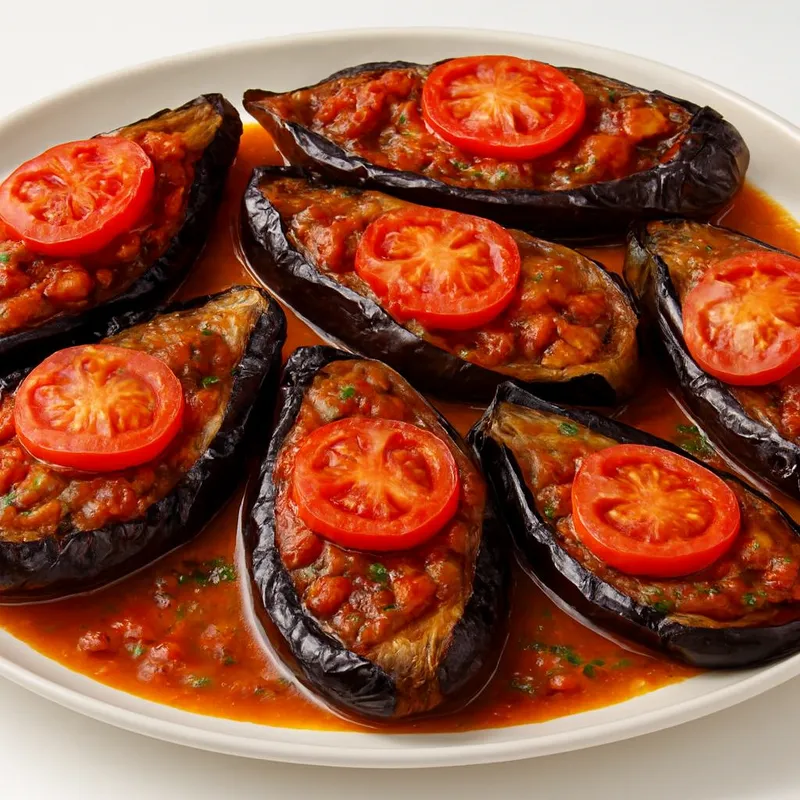





An Ottoman palace dish documented in 19th-century Istanbul cookbooks. The name translates as the imam fainted; the standing legend has an imam's wife serving stuffed eggplant on twelve consecutive nights using her olive-oil dowry, the imam fainting on the thirteenth when she said it was finished. Whether the story is real or kitchen lore, it correctly flags the dish's defining feature — extravagant oil use.
Documented in 19th-century Istanbul cookbooks; the name ("the imam fainted") refers to oil quantity, not flavor. Eggplant is mostly air pockets — it collapses and reabsorbs whatever fat is around. Skimping on olive oil leaves the flesh leathery.
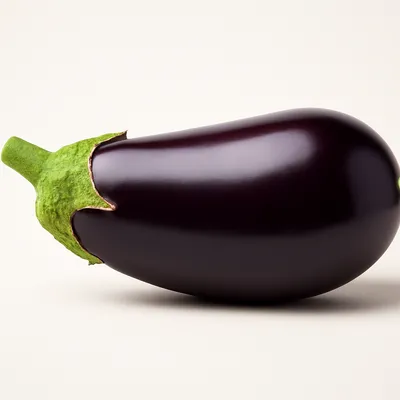
Long thin eggplants split and stuffed with onion, garlic, tomato and parsley cooked down in a generous slick of olive oil, then braised low until the flesh collapses to spoon-tender and the oil turns sweet. Served at room temperature, never hot. The good version cuts with the side of a spoon; if the eggplant is fibrous, the braise quit too early.
Olive oil is structural, not seasoning — eggplant is mostly air pockets that collapse and reabsorb whatever fat is around them. Skimping on oil leaves the flesh leathery and dry. The braise should be uncovered for the last twenty minutes so the surface oil concentrates and emulsifies with tomato pectin into the glossy sauce that sets when cooled. Reheating breaks the emulsion; that's why it's served cold.
Variations
Istanbul palace version stays restrained on garlic; Aegean homes pile in tomato and parsley; Greek papoutsakia adds béchamel and bakes hot, breaking the room-temperature rule that defines the Turkish original.
On the Palate
Where Imam Bayildi sits in the Turkish flavor cloud
Ingredients




How it's made
5 steps · 1 hour 15 min active + 15 min waiting
- 15 min
Slice the eggplants in half lengthwise and scoop out some of the flesh to create a cavity. Sprinkle with salt and let them sit for 15 minutes to draw out bitterness, then rinse and pat dry.
Watch outAfter salting fifteen minutes you'll see beads of bitter water on the cut surface — rinse and pat bone-dry before it goes in the oil.
- 210 min
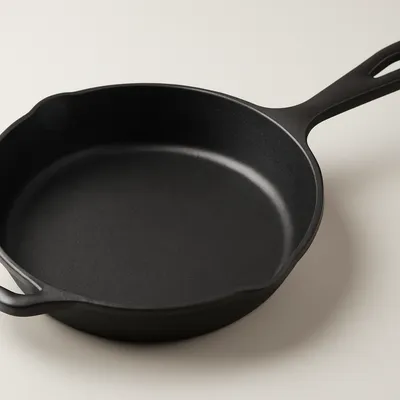
In a large skillet, heat olive oil over medium heat. Add finely chopped onions and garlic, sautéing until they become translucent and fragrant. Add diced tomatoes and a pinch of sugar, cooking until the mixture thickens slightly.
Watch outCook the onion and tomato down until the mixture thickens and no watery liquid pools — a wet filling steams the eggplant instead of braising it.
- 35 min
Stuff the eggplant halves with the onion-tomato mixture. Arrange them in a single layer in a baking dish. Drizzle with more olive oil and lemon juice.
- 450 min
Cover the dish with foil and bake in a preheated oven at 180°C (350°F) for 40-50 minutes, until the eggplants are tender and the filling is bubbling.
Watch outIt's done when a knife slides through the eggplant with no resistance and the flesh has collapsed into softness — firm still means it needs more time.
- 55 min
Remove from the oven and let cool slightly. Serve warm or at room temperature, garnished with fresh parsley.
Archive tool suggestions — not reviewed
These legacy suggestions have not been evidence-reviewed and are not presented as required tools.