In Practice
Cut matters: chuck, shank, oxtail — anything with collagen sheaths. Dry the surface fully and sear in batches until mahogany, deglaze with wine or stock to lift the fond. Liquid only halfway up the meat — full submersion robs the top of the second-stage flavor concentration. Dutch oven at 150°C oven heat for the most even bottom-and-sides convection. Failure modes: simmering above 95°C drives fibers tough before collagen melts; lid kept too tight loses reduction.
Background
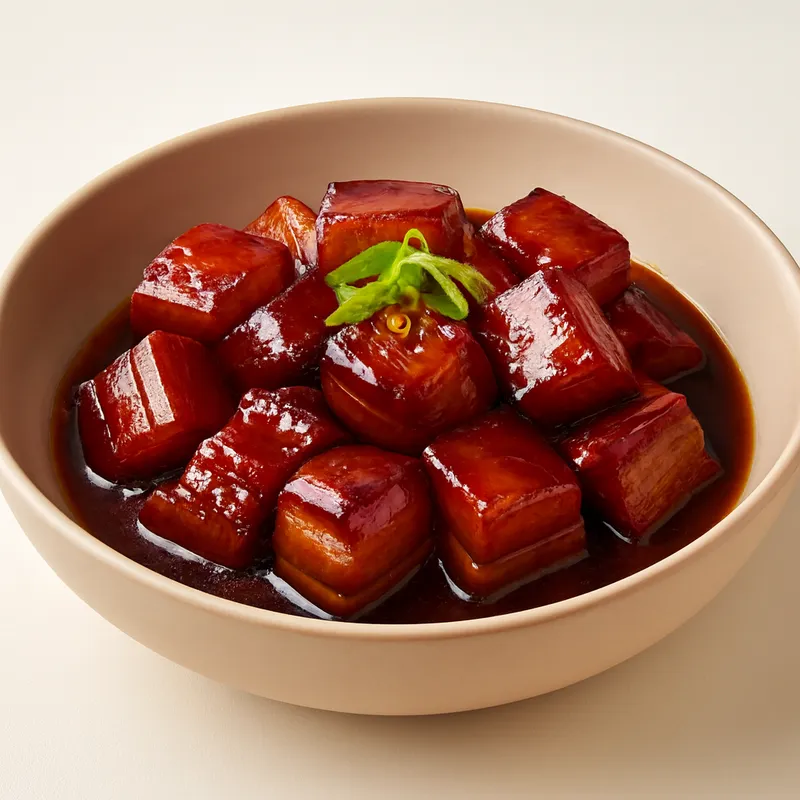
Braising is a universal technique, with many cultures adding their own flair. In French cuisine, dishes like Coq au Vin use wine and a Dutch oven to slowly cook meats until tender. Chinese Red Braised Pork Belly employs soy sauce and sugar in a clay pot for a rich, caramelized finish. Indian Rogan Josh combines spices and yogurt in a heavy-bottomed pan for deep flavor. Moroccan tagines use earthenware pots, blending spices and fruits for a unique taste.
How It Works
Two-stage thermal program: high-heat surface Maillard above 140°C builds melanoidins and fond, then 80-95°C wet-heat phase hydrolyzes type I collagen into gelatin over 2-4 hours. Connective tissue dissolves once internal temperature crosses 70°C and time accumulates; intramuscular fat renders, basting the fibers; pectin in mirepoix dissolves into the braising liquid as natural body.
Dish examples
1453 dishes · 149 cuisines


Through Time
Codified in Antoine Beauvilliers' 1814 *L'Art du cuisinier* as estouffade, refined by Carême and Escoffier; Elizabeth David's 1960 *French Provincial Cooking* exported boeuf bourguignon to anglophone home kitchens. Julia Child's 1961 *Mastering the Art of French Cooking* gave the modern bourgeois template. Asian parallels emerged independently — Song-dynasty hong shao predates the French codification by centuries.
Related cooking knowledge
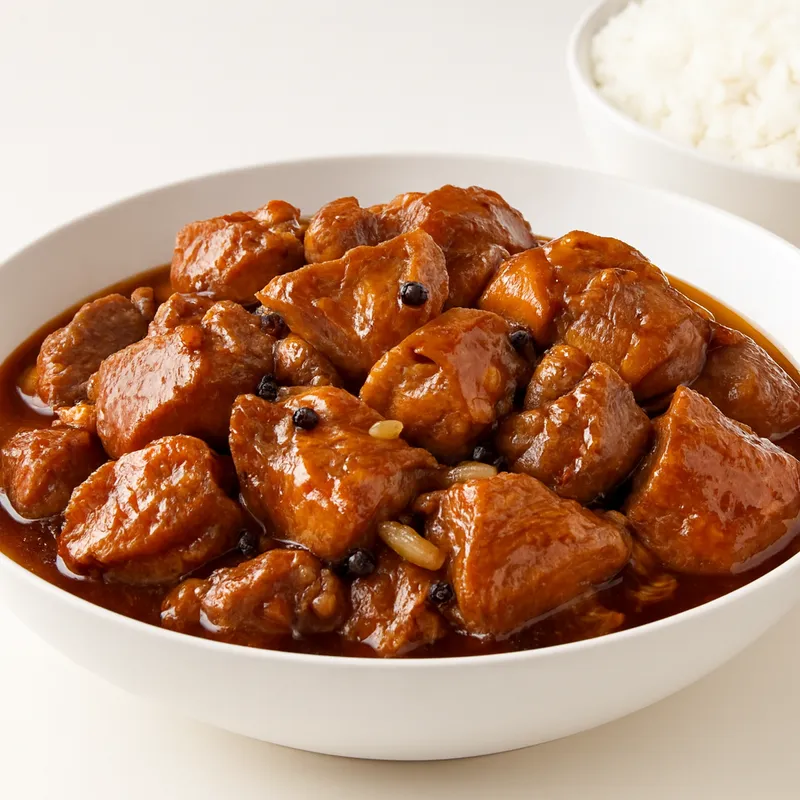
Wine-braising is the Burgundian sub-variant. Hong Shao and Kho Braising are the soy-caramel East Asian sisters. Tagine encloses the same physics in clay. Sous vide replicates the collagen-melt phase but skips the Maillard, requiring a finishing sear.


