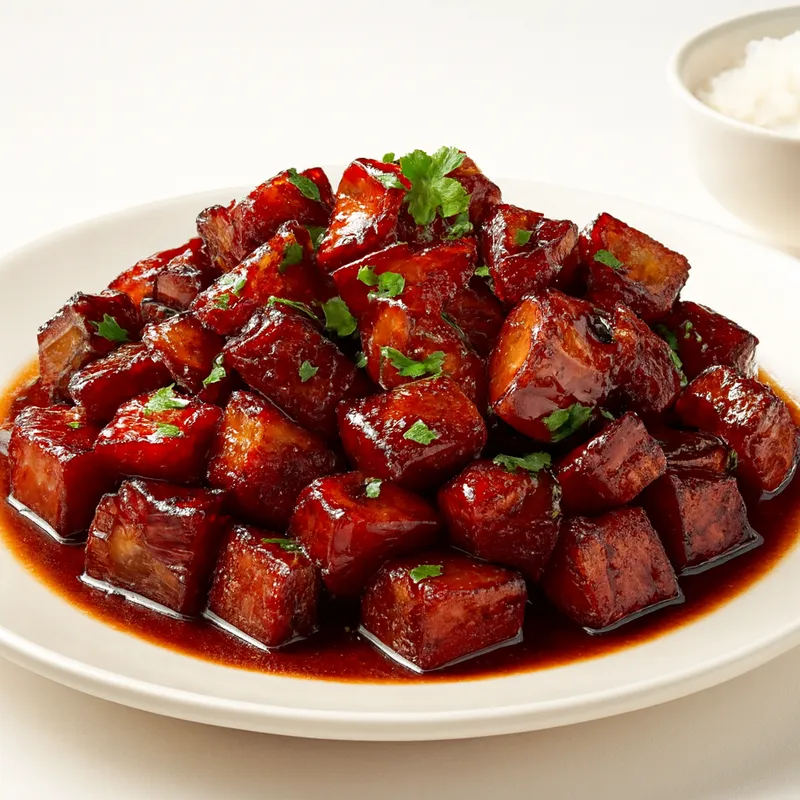
This dish features tender pork belly, braised in pure soy sauce to a deep savory richness (authentic Jinan Bazi Rou uses no sugar and is characteristically savory, not sweet), infused with aromatic spices.




A Shandong (Lu cuisine) banquet dish, formalized in the late Qing (19th century) in Jinan and Qufu kitchens that served Confucian-family feasts. 'Bazi' (把子) means 'a bundle' — referring to the wrapped form. Lu cuisine is China's oldest court tradition and emphasizes precise braising; Bazi Rou is one of the dishes that made the technique portable to other regions.
Late-Qing Lu cuisine banquet plate from Jinan and Qufu Confucian-family kitchens. 'Bazi' (把子) means 'a bundle' — pork belly strips wrapped around a scallion or radish core that releases moisture during the long braise, steaming the inside while soy sets the outside. Rock sugar (not granulated) caramelizes slower for that mahogany.
Pork belly cut into long strips, each strip bound with cattail or Chinese-iris grass (蒲草/马蔺草, now often cotton string) into a 'bundle' and braised in soy sauce until the bundle holds shape but the meat falls at a touch. Color is mahogany, almost black where the sauce reduces. Served on a small plate, three or four bundles to a portion. The skin is sticky; the lean is tender; the fat is gone — rendered into the sauce.
The grass binding isn't decorative — it holds the cut pork-belly blocks together so they keep their shape through hours of slow braising, and lends a faint vegetal note. The defining mechanism is the seasoning: flavor and color come purely from soy sauce, with no salt and classically no sugar, so the dish is deeply savory (咸香) rather than sweet — the opposite of southern sugar-glazed red-braised pork.
Variations
Jinan is the recognized authentic style — pure soy sauce, deeply savory. Southward in Jining/Xuzhou it overlaps with 甏肉 (bèng ròu), slow-cooked in a clay crock; the accompanying braised sides (四喜丸子 meatballs, soy-stewed tofu, eggs, kelp knots, wheat gluten) vary by shop, all simmered in the same master stock and ladled over rice.
On the Palate
Where Bazi Rou sits in the Chinese flavor cloud
Ingredients





How it's made
4 steps · 2 hours
- 110 min
Cut the pork belly into large chunks, ensuring the skin is left on for extra flavor. In a pot, add the pork belly, covering it with water. Bring to a boil over high heat, skimming off any impurities that rise to the top.
- 25 min
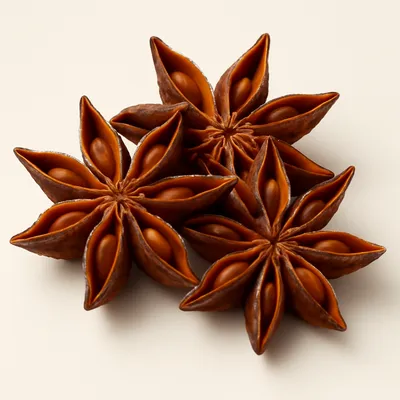
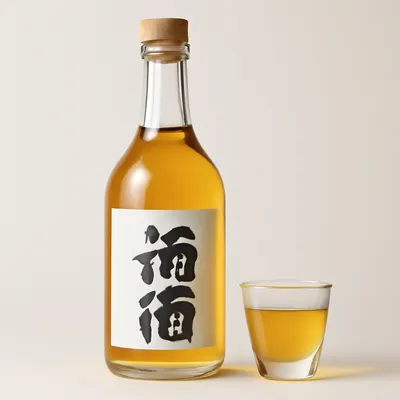
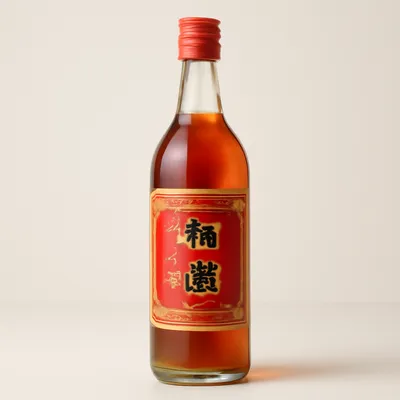
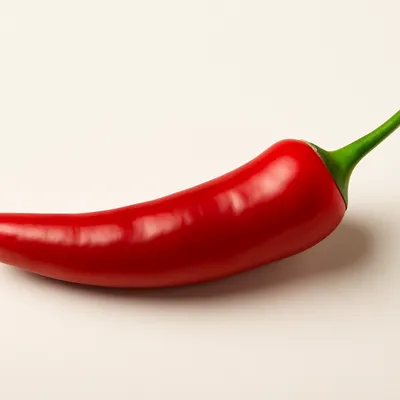
Drain the pork and return it to the pot. Add soy sauce, star anise, rock sugar, rice wine, ginger, scallions, garlic, and chili pepper. Pour in enough water to cover the pork by an inch.
- 390 min
Bring the mixture to a simmer over medium heat. Cover the pot and let it gently bubble until the pork is tender and the sauce is rich and aromatic.
Watch outEnsure the heat is low enough to prevent the sauce from burning or reducing too quickly.
- 415 min
Add the tofu skin to the pot, gently submerging it in the sauce. Cook for an additional 15 minutes until the tofu skin absorbs the flavors.