


Tea egg (茶葉蛋, cha ye dan) is documented in Qing dynasty cooking records but became urban street food across China and Taiwan in the 20th century, especially after 7-Eleven introduced them as convenience-store hot-counter items in Taiwan in the 1980s. The egg-in-tea simmer is a preservation technique — salt and tannin both cure the egg slightly, extending shelf life from one day to several when kept warm.
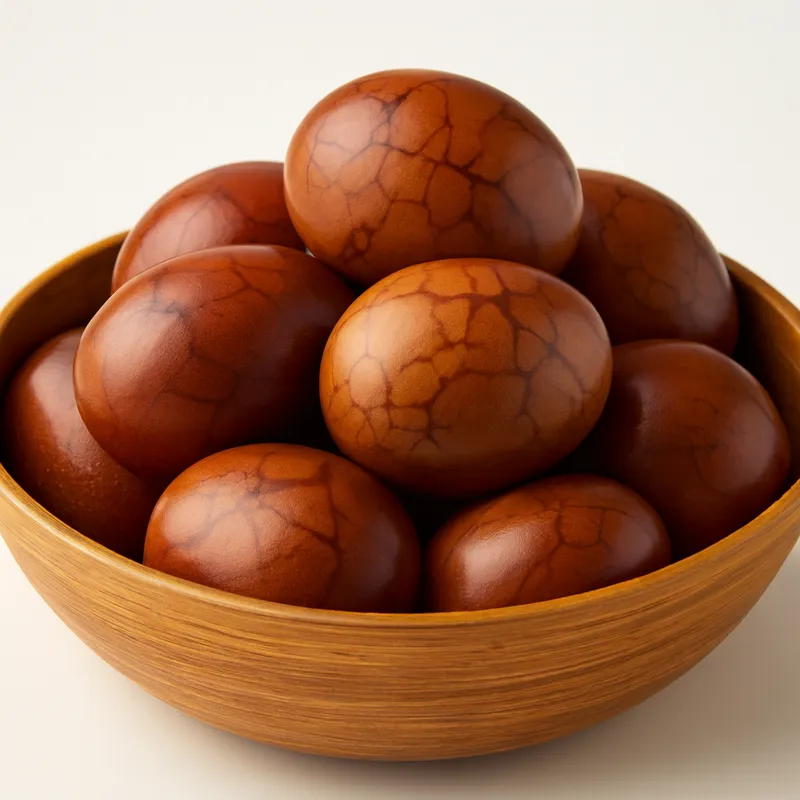
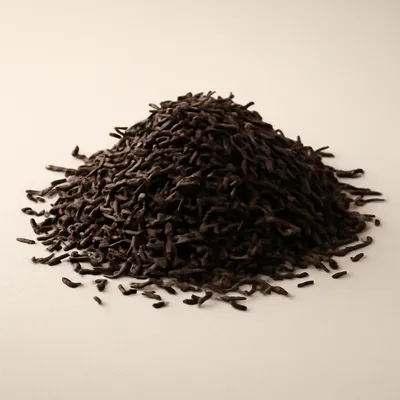
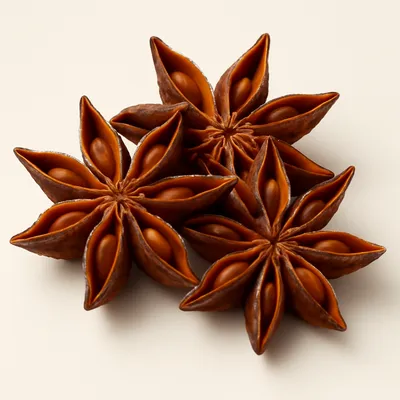
Cha ye dan — eggs cracked, not peeled, simmered in black tea, soy, star anise, and Sichuan peppercorn until the shell crack patterns marble the white. Convenience-store steam-cabinet staple in Taiwan; the longer the soak, the deeper the lines.
A hard-boiled egg with the shell cracked into a fine web and the white underneath stained dark amber in a marble pattern. Smells of black tea, star anise, and soy. The white is firm and lightly salty; the yolk has a chalky, slightly grainy edge from the long simmer. Sold from convenience-store hot pots and street vendors — eaten warm, peeled off the cracked shell on the spot.
The crack pattern matters: shell tapped lightly all over before the second simmer creates the web through which the dark liquid penetrates the white, making the marble. Crack too much and the white stains uniformly muddy; crack too little and it's just a regular boiled egg. The long simmer (often hours, then steeped overnight) is what drives the salt and aromatics into the yolk — short-soaked tea eggs taste only on the surface.
Variations
Mainland street version with soy and five-spice; Taiwanese 7-Eleven version uses oolong and licorice; Shanghai-style adds rock sugar; Hokkien iron-egg (tie dan) is repeatedly braised and air-dried until chewy.
On the Palate
Where Tea Egg sits in the Chinese flavor cloud
The marbling lives in the crack pattern: tap the shell to a fine web all over, then simmer long enough for the tea and salt to reach the yolk — surface-only staining means you rushed it.
Ingredients

How it's made
5 steps · 35 min active + 50 min waiting
- 110 min
Place eggs in a saucepan and cover with cold water by an inch. Bring to a gentle boil over medium heat. Once boiling, reduce heat and simmer for 7 minutes.
Watch outSeven minutes at a gentle simmer gives a just-set yolk that won't crumble when you crack and steep it; a hard boil makes it chalky.
- 25 min
Remove eggs from heat and cool under cold running water. Gently crack the shells all over with the back of a spoon, creating a mosaic pattern.
Watch outCool under cold running water first so the shell contracts and taps into a clean fine web instead of shattering off.
- 35 min
In a pot, combine brewed black tea, soy sauce, star anise, and spices. Add the cracked eggs and bring to a simmer over low heat.
Watch outMake sure the tea is brewed strong enough to impart flavor.
- 410 min
Simmer the eggs in the fragrant tea mixture for 1 hour, allowing the flavors to penetrate the cracks. Stir occasionally to ensure even coloring.
Watch outYou want the barest simmer for the full hour — steady tiny bubbles, lid ajar — and turn the eggs now and then so the color takes evenly.
- 55 min
Remove the eggs from the tea mixture and peel. Serve warm or cold, enjoying the marbled pattern and savory aroma.
Archive tool suggestions — not reviewed
These legacy suggestions have not been evidence-reviewed and are not presented as required tools.