In Practice
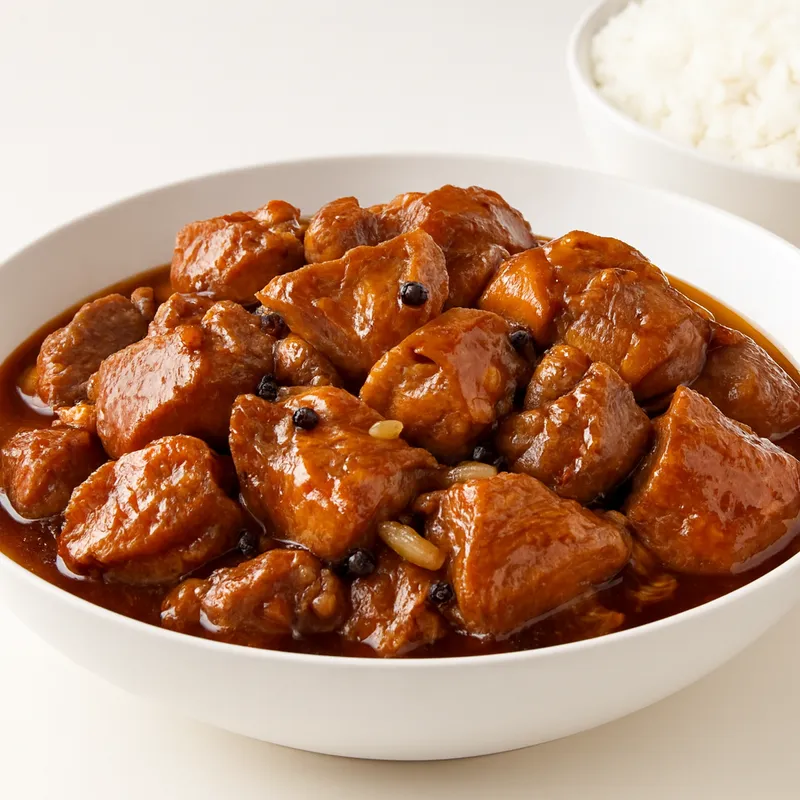
Visual cue: 'shivering' surface, occasional break, no rolling. Heavy-bottom pot diffuses heat; lid 80% closed regulates evaporation. Stocks: 4-8 hr beef, 2-3 hr chicken, 30 min fish — going longer than this releases bitter compounds from bones. Skim continuously for the first 30 min. Failure modes: lid fully closed pushes temp toward 100°C and emulsifies fat into cloudy stock; stirring breaks the protein raft and clouds clarification.
Background
Simmering is a universal technique, refined distinctively across cultures. In French cuisine, simmering is used in making stock, where ingredients are reduced in a copper pot for hours to extract deep flavors. Japanese dashi is created through a brief simmering of kombu and katsuobushi, focusing on umami. In India, simmering is key to dishes like dal, allowing spices to meld in a clay pot over a slow flame. In Italy, risotto is slowly simmered, gradually absorbing broth for creamy texture.
How It Works
Liquid held at 85-95°C with the surface barely breaking — small bubbles release from the pot floor but don't break the surface in volume. Convection is gentle, so suspended particles (raft of egg whites in consommé, mirepoix in stock) don't disperse. Collagen-to-gelatin conversion accelerates above 70°C; aromatic volatiles (terpenes, thiols) extract without driving off as steam would at full boil.
Dish examples
3502 dishes · 194 cuisines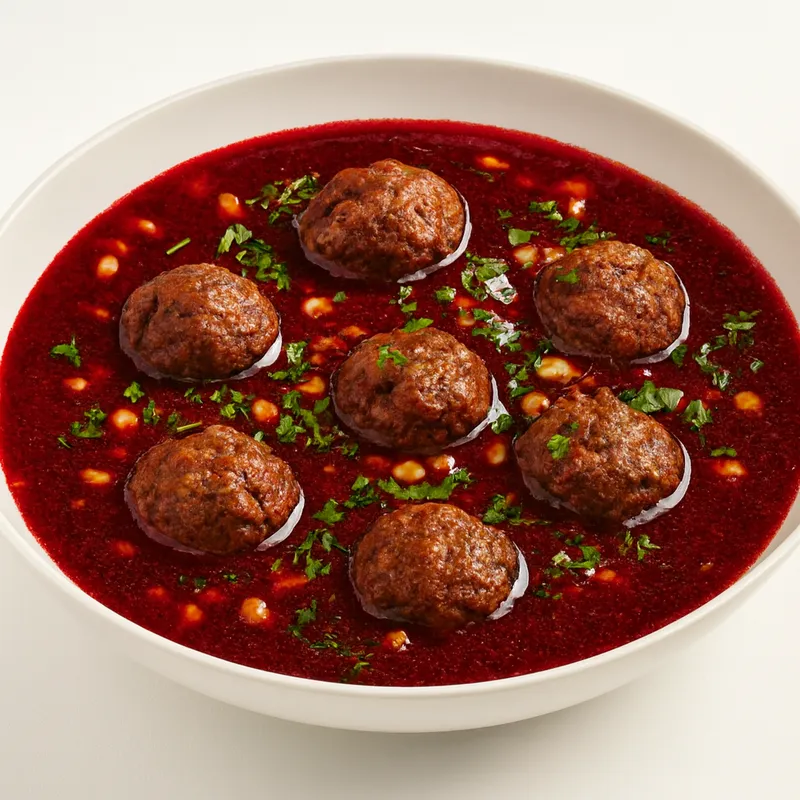


Through Time
Roman *ius* and medieval pottage are early simmered preparations. Marie-Antoine Carême's 1822 *Le Cuisinier parisien* established the fond brun protocol still taught at CIA and Le Cordon Bleu. Auguste Escoffier's 1903 codification of *fonds de cuisine* defined the modern eight-hour beef-stock standard. Daniel Boulud and Thomas Keller maintain the lineage.
Related cooking knowledge
Boiling sits one rung hotter; Poaching one rung cooler. Braising is two-stage simmering after a sear. Hong Shao, Kho Braising, and Tagine all use the simmer-phase chemistry under a flavored sauce. Sauce Espagnole depends on a foundational simmered fond brun.