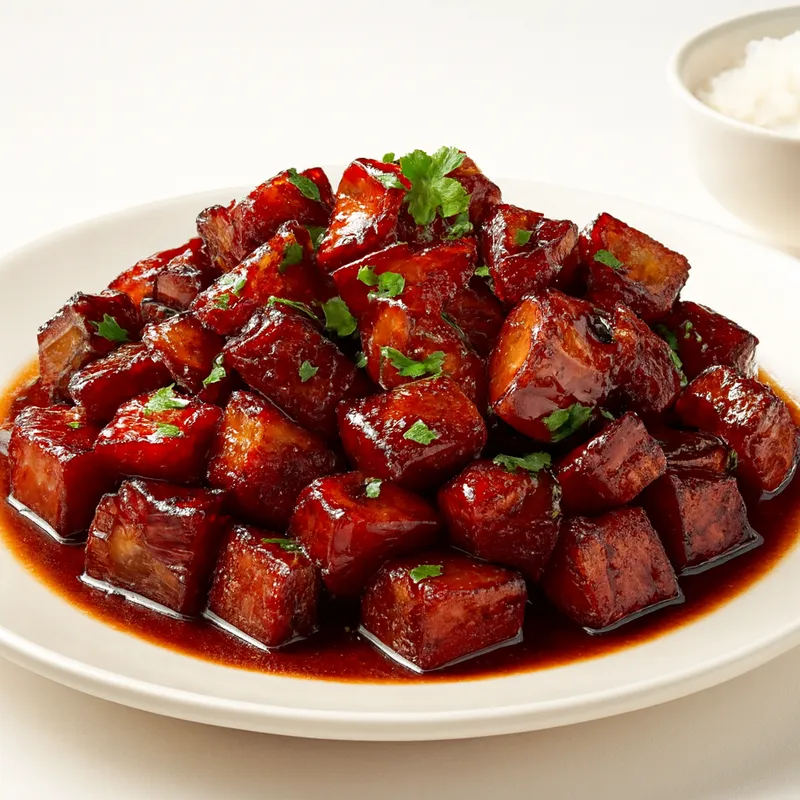
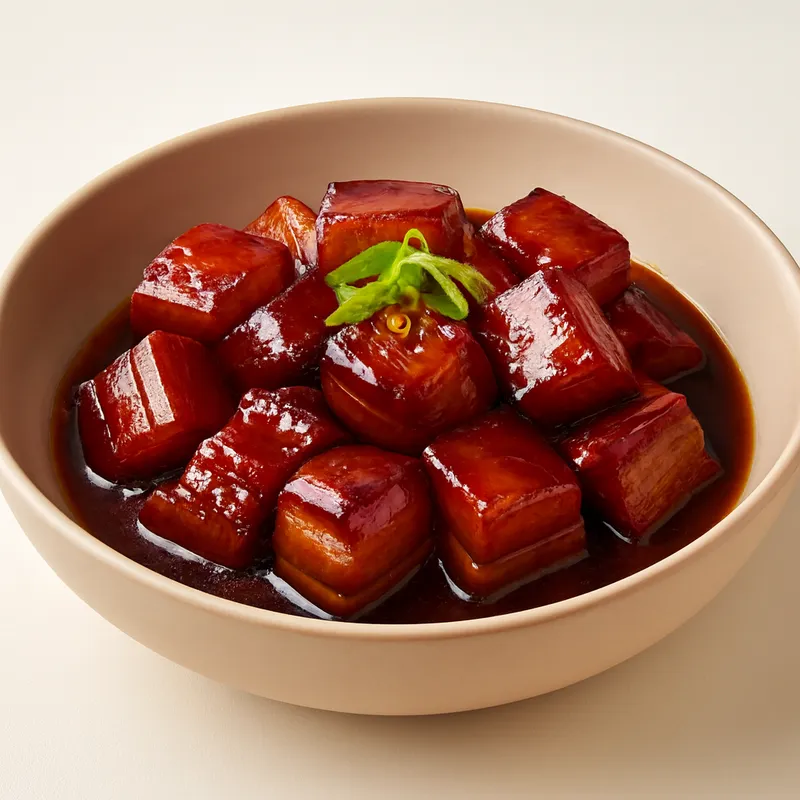
A luscious dance of tender pork belly, caramelized with rock sugar in a rich soy sauce glaze.



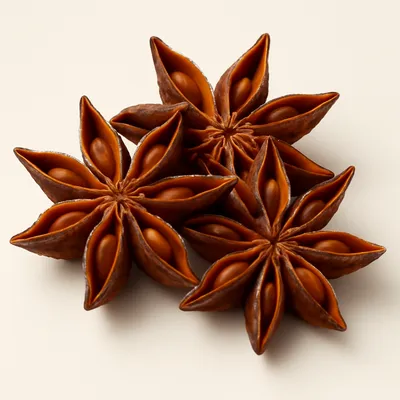

A Hunan-style red-braise (hong shao rou) tied to Mao Zedong, who was born in Shaoshan, Hunan in 1893 and famously favored this dish his entire life — he famously asked for a bowl of fatty red-braised pork after the 1947 Battle of Shajiadian in northern Shaanxi, explaining he needed the fat to nourish his brain after days without sleep, not as a victory feast. The Hunan version skips the soy sauce coloring used in Shanghai-style hong shao, relying on caramelized rock sugar alone for color and depth.
Mao Zedong's Shaoshan-style hongshaorou — no soy sauce in the original recipe; color comes from rock-sugar caramel alone, and dried chilies make it Hunan, not Shanghai.
Cubes of skin-on pork belly, each layer visible — skin, fat, lean — lacquered in a dark mahogany glaze that just clings, no pooling sauce. The first taste is rock-sugar caramel, then soy salt, then star anise. Fat should yield under chopsticks; if it's still chewy, the braise was rushed. Eaten with plain rice, no garnish needed.
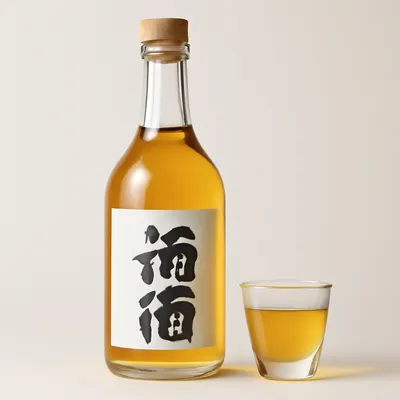
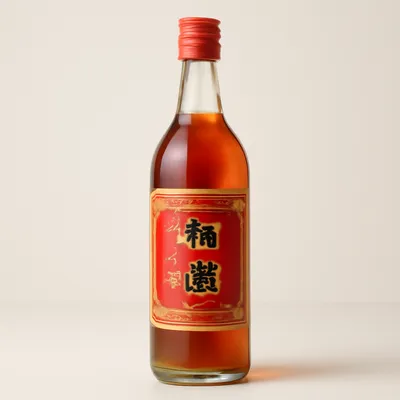
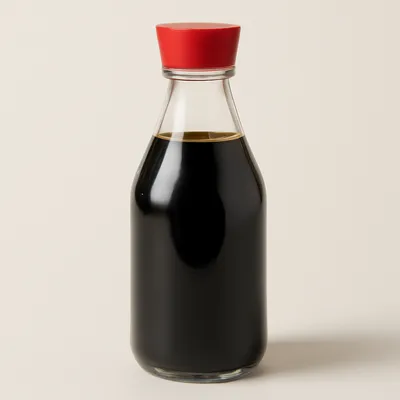
The color comes from dry-frying rock sugar to a hazelnut caramel before the pork goes in — too pale and the dish looks washed; too dark and it turns bitter. No water in the braise, only Shaoxing wine and a touch of soy; the pork releases its own liquid as the fat renders. Hunan cooks add dried chili, which Shanghai versions never do.
Variations
Shaoshan version (Mao's hometown) skips soy and leans on caramel and chili; Hunan restaurant version adds dark soy and ginger; Changsha home cooks finish with garlic stems.
On the Palate
Where Chairman Mao's Red-Braised Pork sits in the Chinese flavor cloud
Everything hangs on the caramel: dry-fry the rock sugar to a hazelnut-amber before the pork goes in — too pale and the dish looks washed out, too dark and it turns bitter, and there's no water in the braise, only wine and a little soy while the fat renders its own liquid.
Ingredients



How it's made
5 steps · 28 min active + 1 hour waiting
- 17 min
Cut pork belly into large cubes. In a large pot, bring water to a boil and blanch the pork briefly to remove impurities, about 5 minutes. Drain and set aside.
Watch outEnsure the water is at a rolling boil to effectively remove impurities.
- 25 min
In a clean pot, melt rock sugar over medium heat until it turns a deep amber color. Immediately add pork cubes, stirring to coat them in the caramelized sugar.
Watch outThe sugar's ready the moment it goes deep amber and smells nutty; get the pork in right then, before it darkens further.
- 33 min
Add soy sauce, rice wine, star anise, and dried chili to the pot. Stir to combine, then add enough water to cover the pork. Bring to a boil, then reduce to a simmer.
Watch outStir until every cube is coated in the caramel and glossed red-brown — that even coat is the color of the finished dish.
- 410 min
Simmer gently until the pork is tender and the sauce is rich and glossy, about 1 hour. Stir occasionally to prevent sticking.
Watch outKeep it at a lazy simmer, not a hard boil, and give it an occasional stir so the low sugar doesn't catch on the bottom.
- 53 min
Garnish with sliced green onions and serve hot, allowing the fresh aroma to complement the rich, savory pork.