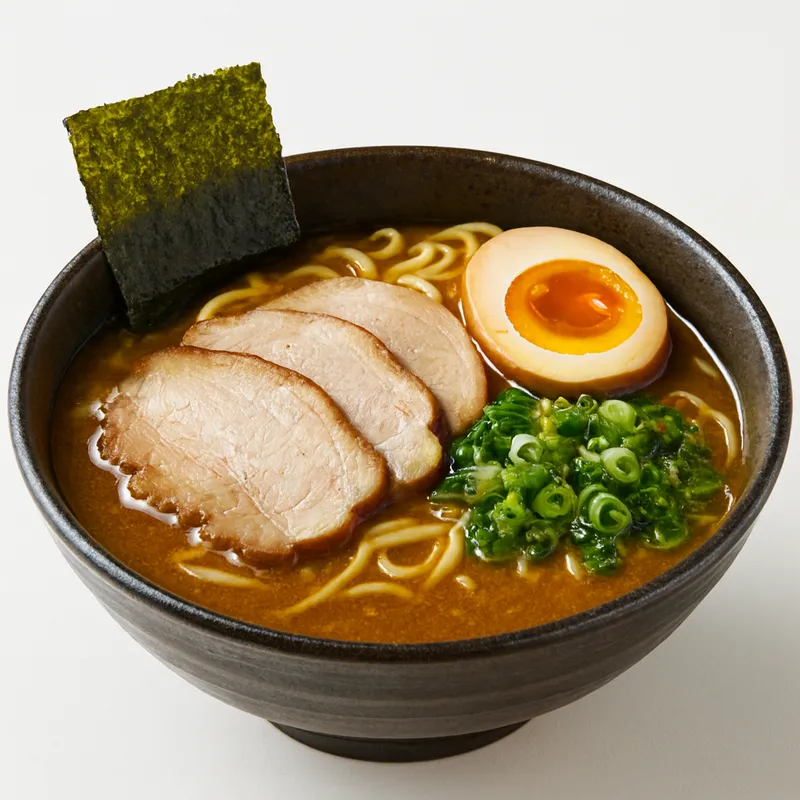
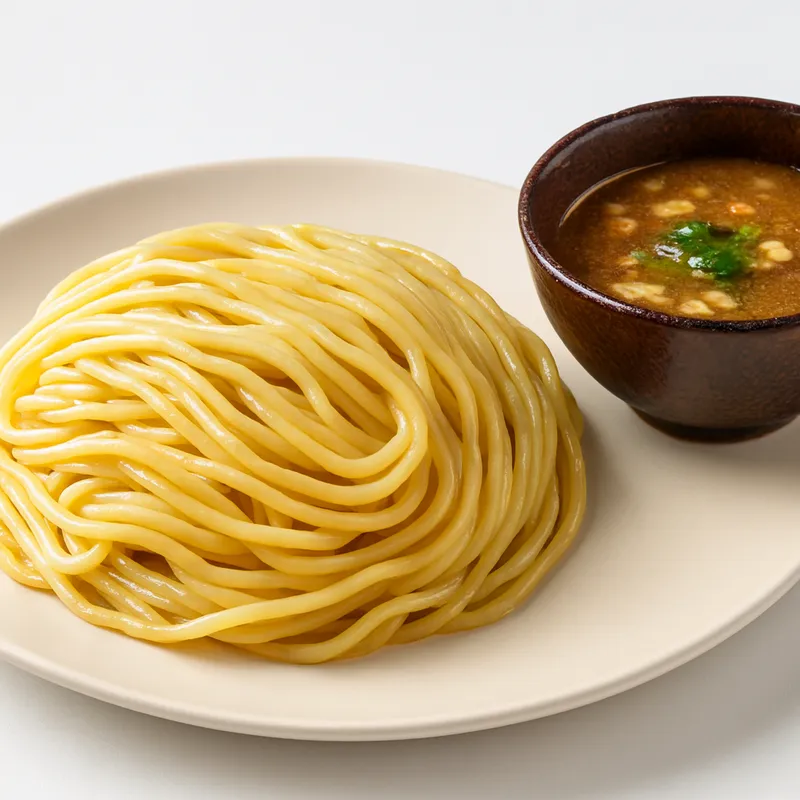
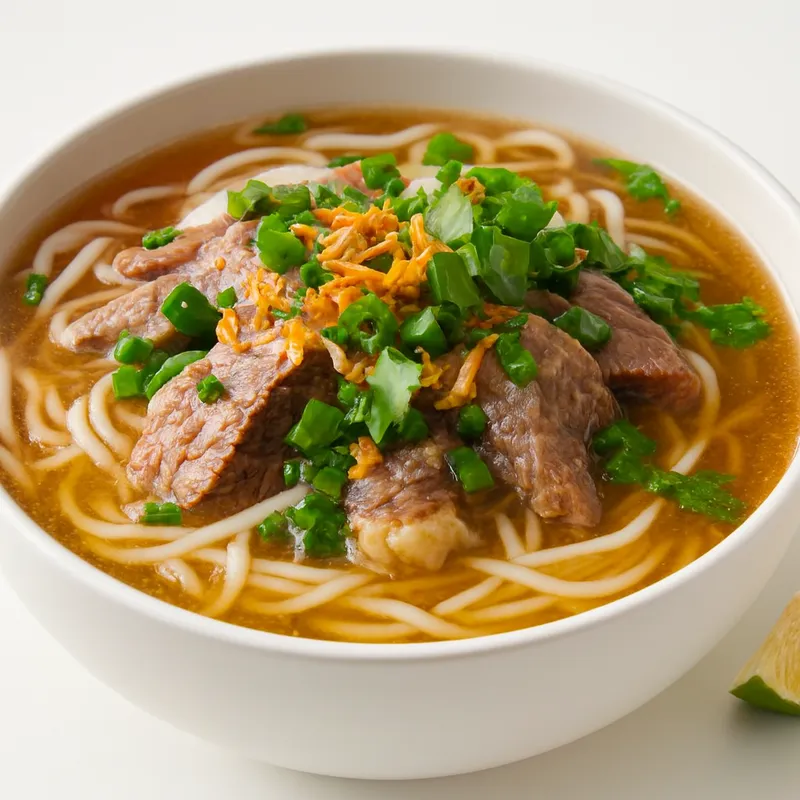
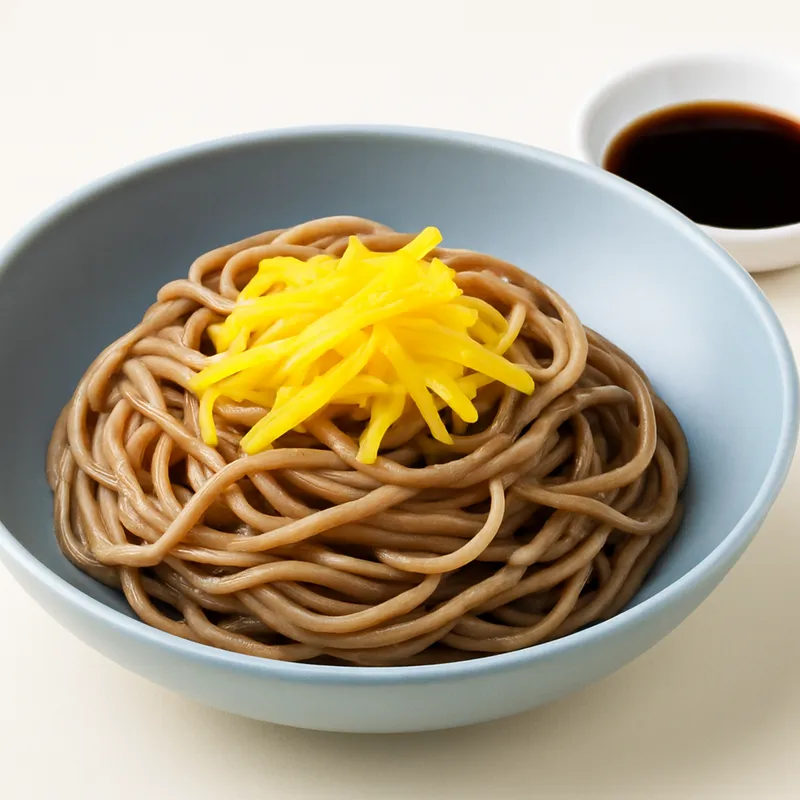
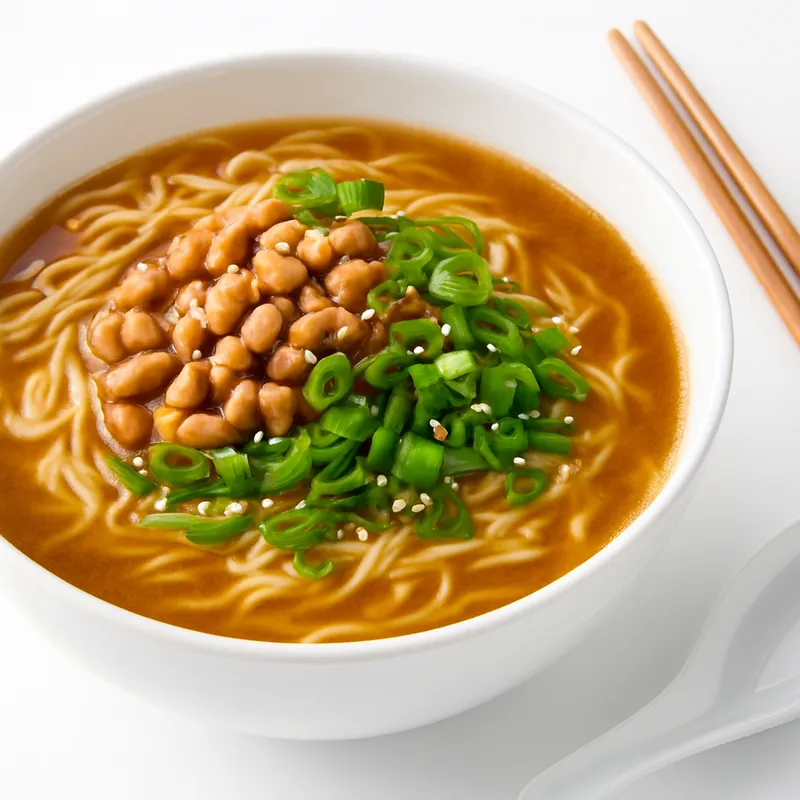
A bowl of rich, milky pork-bone broth over silky ramen noodles, deeply savory with umami.





Born in Kurume city (Fukuoka prefecture) in 1937 at a yatai stall called Nankin Senryo, where founder Tokio Miyamoto pushed pork-bone broth to a hard rolling boil by accident — and discovered the emulsified white result. Hakata's straight thin noodle and kaedama refill system developed in Fukuoka city's postwar yatai scene in the 1940s-50s as a way to feed dockworkers fast.
Tokio Miyamoto pushed the pork-bone broth to a hard rolling boil by accident at Nankin Senryo, a Kurume yatai stall, in 1937 — the emulsified white result is still the formula. Hakata's straight thin noodle and kaedama refill came out of postwar Fukuoka dockworker yatai. 8–12 hours of vigorous boil shears collagen and fat into suspension.
Cloudy bone-white broth, almost milk-thick, over thin straight noodles cooked barikata (very firm). Topped with chashu, scallion, beni shoga, sesame, sometimes a half-egg. The first sip coats the lips with collagen — runs down the chopsticks. Standard practice: eat the noodles fast before they bloat, then order kaedama (a refill of fresh noodles) to drop into the remaining broth.
The whiteness is emulsion, not milk: 8-12 hours of vigorous boiling (not gentle simmer like clear broths) shears collagen and fat into suspension. Stop the rolling boil and the broth re-separates into oil and water within an hour. The thin straight noodle is engineered for the broth — high alkaline (kansui) content makes it firm fast and resist bloat, which is what makes the kaedama system work.
Variations
Ichiran (concentrated, individual booth service); Ippudo (Daimyo-born, the global export); Shin-Shin and Hakata Ikkousha run city-favorite kotteri styles; Kurume's Daihachi keeps the older, gamier 1937-school broth; Nagahama-style at the fish-market stalls runs a thinner, faster broth designed for dockworkers eating in five minutes.
On the Palate
Where Hakata Tonkotsu Ramen sits in the Japanese flavor cloud
Keep the pork bones at a hard rolling boil, not a gentle simmer, because that violent motion is what shears collagen and fat into the white emulsion — drop to a simmer and the broth re-separates into oil and water within the hour.
Ingredients






How it's made
5 steps · 33 min active + 1 hour 50 min waiting
- 110 min
In a large pot, submerge pork bones in water and bring to a vigorous boil. Skim off any foam that rises, ensuring a clear, rich broth.
Watch outSkim relentlessly at the first boil — every grey bit you leave in muddies the final broth.
- 210 min
Lower the heat and add garlic, ginger, and scallions. Simmer gently, allowing the aromatics to infuse the broth with deep flavor for 2 hours.
Watch outAvoid boiling the broth too vigorously, which can cloud the flavor.
- 33 min
In a separate pot, bring water to a boil and cook the ramen noodles until tender yet firm, about 3 minutes. Drain and set aside.
Watch outPull the thin noodles at around three minutes while still firm; they keep cooking in the hot bowl.
- 45 min
Slice the pork belly thinly and sear in a hot pan until crisp and golden. Remove and drain on paper towels.
Watch outSear the pork belly until the edges crisp and gold, then drain, so it stays rich without greasing the soup.
- 55 min
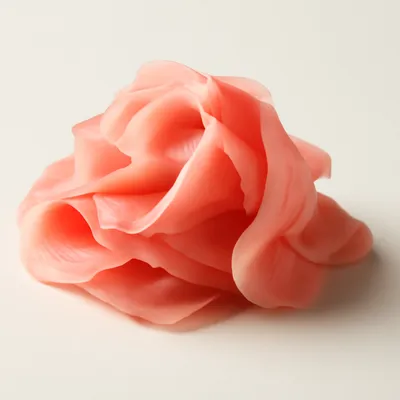
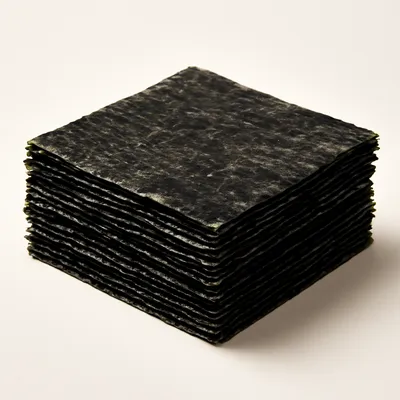
Assemble the ramen by placing noodles in bowls, ladling the hot broth over them. Top with seared pork, wood ear mushrooms, bamboo shoots, a sprinkle of sesame seeds, and nori. Garnish with pickled ginger and green onions before serving.
Archive tool suggestions — not reviewed
These legacy suggestions have not been evidence-reviewed and are not presented as required tools.