




A regional Tohoku variant rather than a famous codified style. Miso ramen itself originated in Sapporo in 1955 at the stall Aji no Sanpei. Natto-topped versions appear in northeastern Honshu (Iwate, Akita, Yamagata) where natto is a breakfast staple — the local logic is that fermented soy on fermented soy doubles down on the umami source already in the bowl.
Miso ramen was born at Aji no Sanpei in Sapporo, 1955; the natto-topped version is Tohoku-Iwate-Akita home logic — fermented soy stacked on fermented soy. The poly-gamma-glutamic acid in natto thickens the soup once stirred.
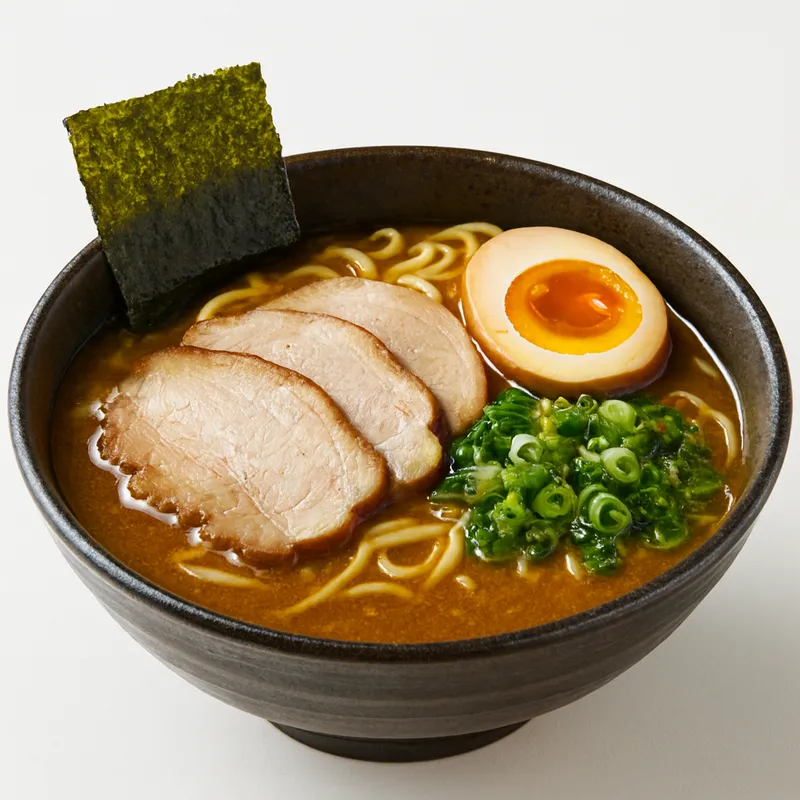
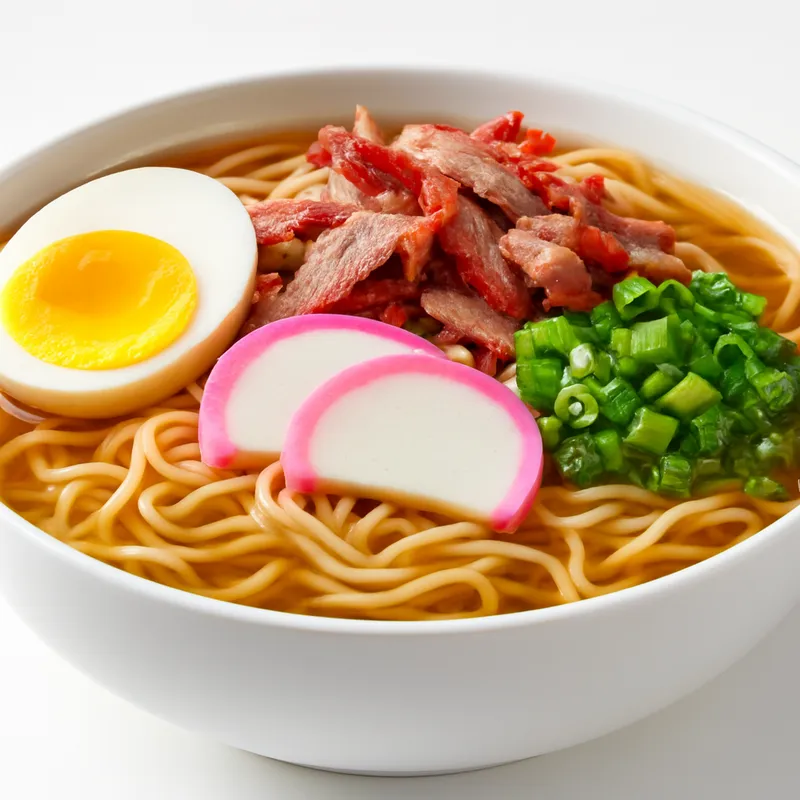
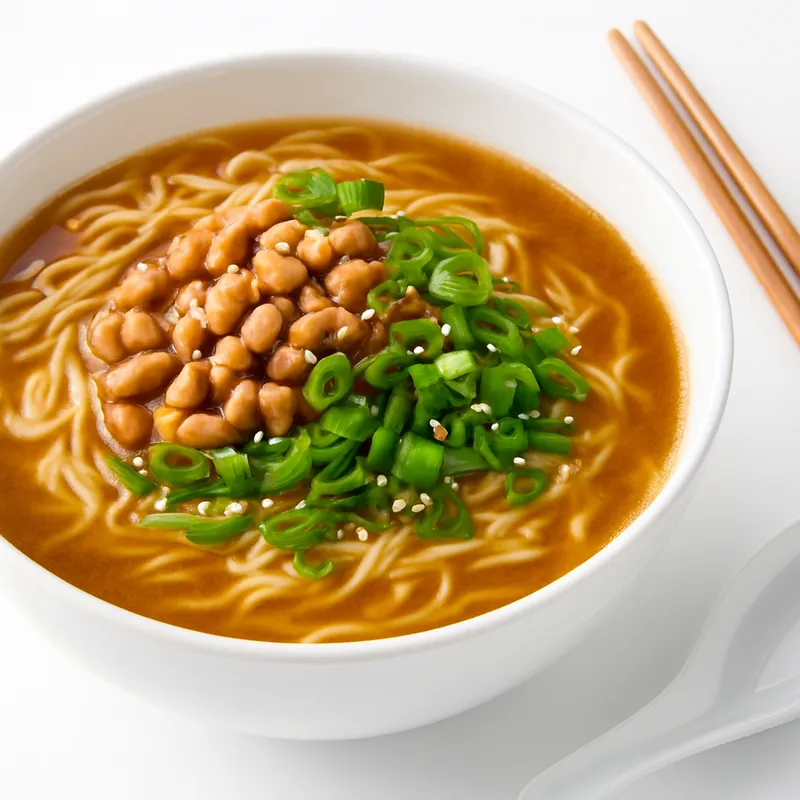
A bowl of cloudy miso-red broth with curly noodles; on top, a spoonful of natto pulled into long sticky threads. The smell hits before the spoon — fermented soybean ammonia stacked on miso funk. Stir the natto in and the broth thickens slightly, gripping the noodles. Tohoku winter food, eaten hot enough to fog glasses.
Natto's stickiness comes from a mix of fructan and poly-gamma-glutamic acid (PGA), the polymer produced by Bacillus subtilis natto that makes up the majority (~58%) of the goo. PGA dissolves in hot broth and acts as a mild thickener — that's why the soup grips the noodles after stirring. Add the natto at the table, never to the pot: cook it and the heat-sensitive active enzymes (e.g. nattokinase) progressively denature above ~50-60°C, killing the umami punch the dish is built on.
Variations
Sapporo miso (the codified parent at Sumire and Junren); Sendai-style with akamiso and ground pork; Akita kiritanpo-broth lean; Yamagata cold miso ramen runs the bowl over ice in summer.
- ·Adds natto; includes fresh vegetables
On the Palate
Where Ramen with Natto and Miso sits in the Japanese flavor cloud
Never boil the natto or the miso — keep the broth just below a simmer and stir the natto in off the heat, because both are live fermented foods whose umami enzymes die past roughly 50–60°C.
Ingredients


How it's made
5 steps · 10 min
- 13 min
Bring a pot of water to a rolling boil. Add the ramen noodles and cook for 3 minutes until they are just al dente. Drain and set aside.
Watch outEnsure the water is at a rolling boil before adding the noodles to prevent them from becoming mushy.
- 22 min
In a separate pot, bring water to a simmer and dissolve the miso paste in it, stirring gently to ensure it's fully incorporated. Keep the broth warm without boiling.
Watch outWatch the surface — you want a lazy shimmer, not bubbles; if it's rolling, pull it off before the miso goes in.
- 32 min
Add the natto to the miso broth, stirring gently. Let it heat through for 2 minutes, allowing the flavors to meld.
Watch outOnce the natto goes in, it should just warm and start to string; if you see the broth boil, you've gone too far.
- 42 min
Divide the cooked noodles into bowls. Ladle the hot miso and natto broth over the noodles.
Watch outMake sure the broth is hot enough to warm the noodles without overcooking them.
- 51 min
Sprinkle sliced scallions over each bowl for a fresh, aromatic finish.
Archive tool suggestions — not reviewed
These legacy suggestions have not been evidence-reviewed and are not presented as required tools.