



Iwate prefecture, particularly Morioka and Hanamaki, with origins traced to 17th-century lord Nanbu Toshinao serving small portions to guests so each could be fresh. The competitive-eating presentation hardened in the Showa era as a tourist format; today it's a regional spectacle dish, with stamped certificates issued at certain restaurants for hitting bowl-count milestones.
Traced to 17th-century lord Nanbu Toshinao serving small fresh portions to Morioka and Hanamaki guests. Showa-era tourism turned it competitive — cooked soba has a 5-minute texture window, so a tiny bowl is the only way to keep every refill inside it. Slap the lid down to stop.
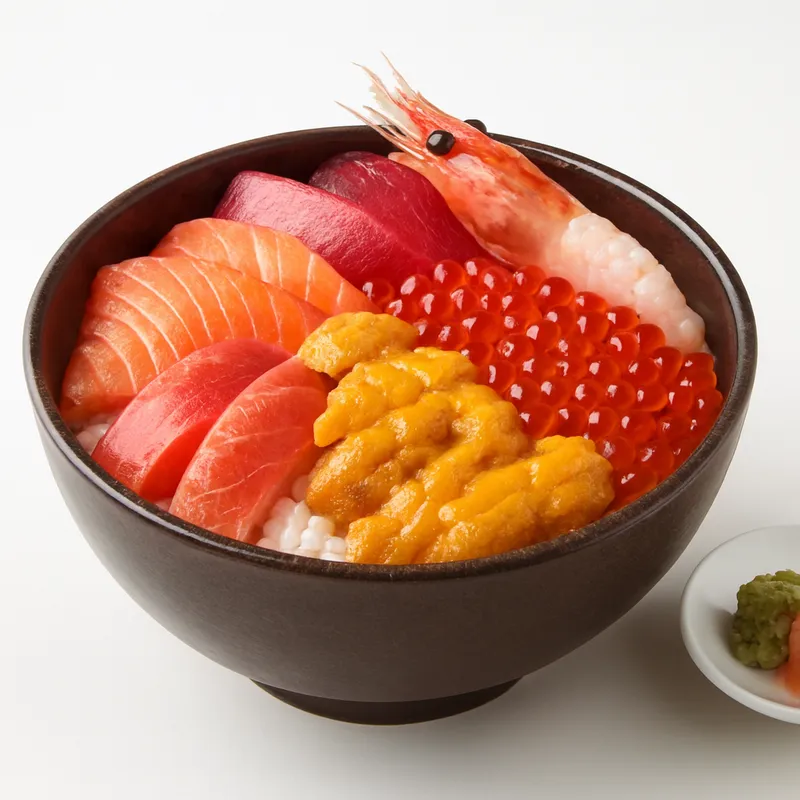
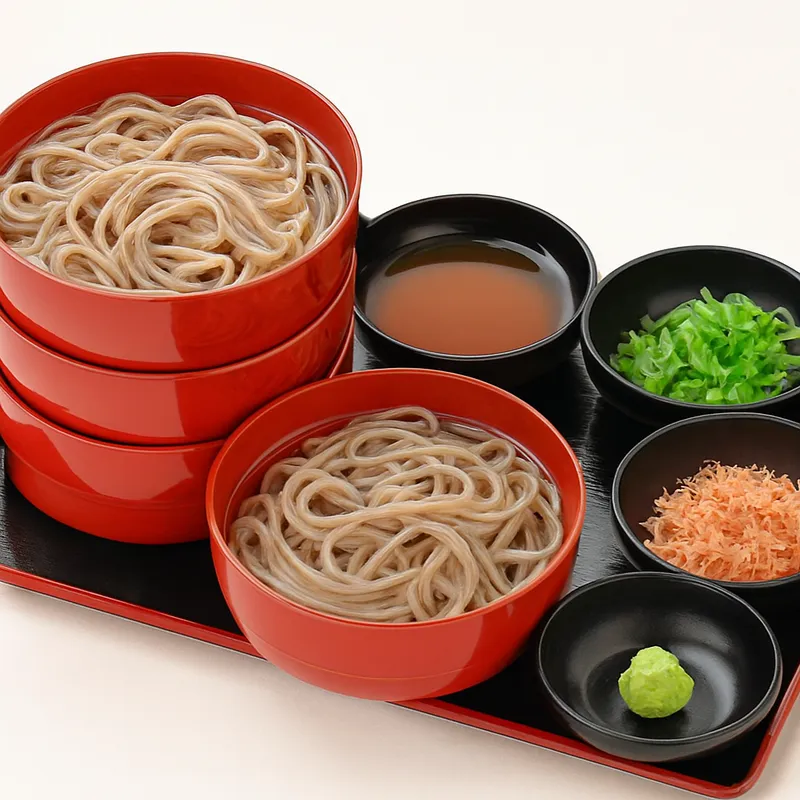
Tiny lacquer bowls of buckwheat noodles, each holding maybe one mouthful, served by an attendant who refills the bowl the moment you finish. You eat until you slap the lid on top — that's the stop signal. Toppings (tuna sashimi, grated yam, mushroom, sesame) sit on the side; you grab a bite between refills. Counts of 50, 100, 200 bowls are common; the scoreboard is part of the room.
The format only works because soba dough, once boiled, has a roughly 5-minute window before texture collapses. Tiny portions let the kitchen run a constant rolling-boil-and-shock production line so every bowl hits the diner inside that window. A normal restaurant plate of soba is a statistical compromise; wanko-soba is what soba tastes like with the timing problem solved by labor.
Variations
Azumaya in Morioka claims the Showa-era format; Yabuya in Hanamaki is the second canonical house; Hanamaki Onsen runs a hotel-version with the same 100-bowl certificate; Tokyo branches exist but the live attendant-and-lid ritual rarely transplants out of Iwate.
On the Palate
Where Wanko Soba sits in the Japanese flavor cloud
Ingredients

How it's made
5 steps · 20 min
- 15 min
Bring a pot of water to a rolling boil and add the soba noodles. Cook until they are tender but still have a slight bite.
Watch outDo not overcook the soba noodles; they should remain slightly firm to the bite to maintain their texture.
- 22 min
Drain the noodles and rinse them under cold water to stop the cooking process and remove excess starch.
- 35 min
In a small saucepan, combine dashi, soy sauce, and mirin. Heat gently until warmed through and the flavors are well combined.
- 43 min
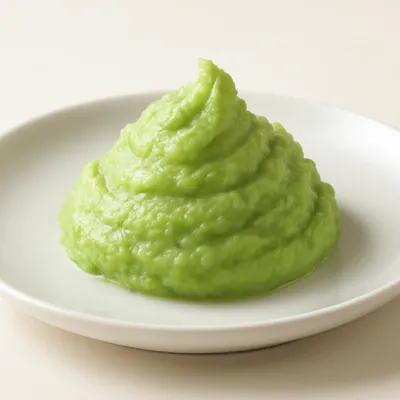
Finely slice the green onions and set aside. Prepare the wasabi for serving.
- 55 min
Serve the soba noodles in small bowls with the warm broth, topped with sliced green onions and a dab of wasabi.
Archive tool suggestions — not reviewed
These legacy suggestions have not been evidence-reviewed and are not presented as required tools.