


Soba as cold dipping noodles emerged in Edo (Tokyo) in the late 17th century as 「もりそば」(mori-soba). The 「ざる」 name originated at the Iseya shop in Fukagawa Susaki in Edo — noodles were drained and served on a bamboo basket (zaru) — and was known as an Edo specialty by the mid-18th century. The defining shredded-nori garnish, richer tsuyu, and higher-grade positioning came much later, in the late Edo to Meiji period (c. 1860s onward). Edo's hard volcanic-soil water suited buckwheat noodle culture; Kanto became soba country, Kansai stayed udon.
Late-17th-century Edo cold-soba; the zaru-on-bamboo presentation was differentiated at Iseya in the early 1700s. The dip-only-the-tip rule is structural — the tsuyu is too concentrated to drown the noodle's surface starch in.
Cold buckwheat noodles drained on a bamboo zaru, served with a small cup of cold tsuyu (dashi-soy-mirin) and a tray of wasabi, grated daikon, scallion. You dip the bottom third of a noodle bunch into the tsuyu — never submerge — and slurp loud. Real soba breaks under chopsticks if old; fresh soba bends. After noodles, the soba water (sobayu) is poured into the leftover tsuyu and drunk as broth.
The dip-only-the-tip rule is structural, not etiquette: tsuyu is concentrated and salty enough that a fully soaked bunch overpowers the buckwheat's earthy aroma, which lives in the noodle's surface starch. The sobayu finish is functional too — the cooking water carries dissolved buckwheat protein and B-vitamins, and dilutes the leftover salty tsuyu into a digestif that settles the meal.
Variations
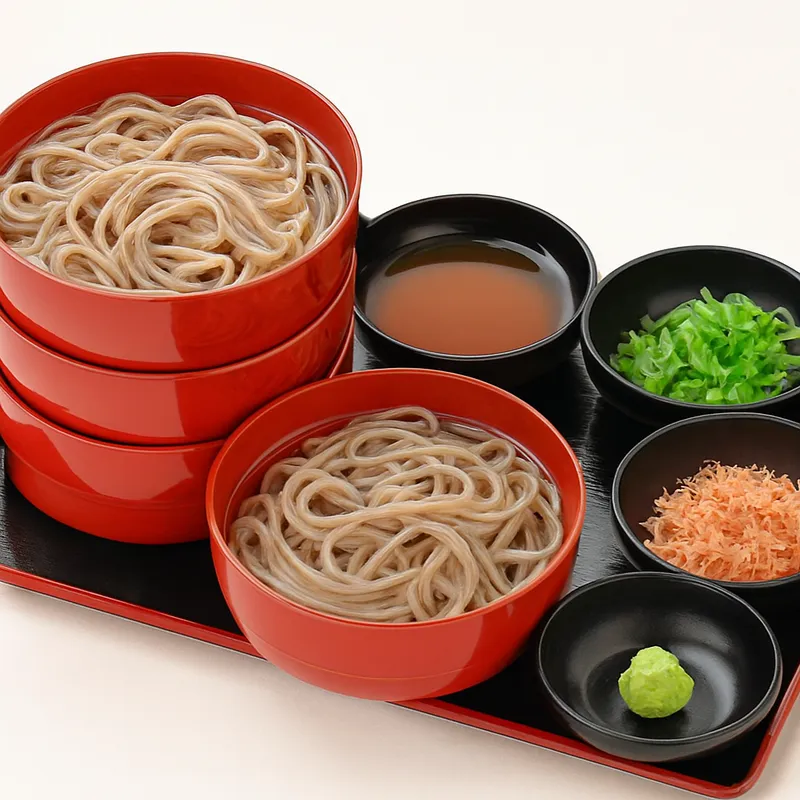
Mori-soba drops the nori sheet (older and plainer); ni-hachi at Edo shops runs 80% buckwheat 20% wheat; juwari is 100% buckwheat (snaps if stale); Izumo's wariko soba stacks three lacquer trays vertically.
On the Palate
Where Zaru Soba sits in the Japanese flavor cloud
Ingredients


How it's made
5 steps · 15 min
- 15 min
Cook soba noodles in boiling water until al dente, then cool in ice water.
Watch outPull the soba the instant it's al dente and plunge it straight into ice water — the shock stops the cooking and tightens the strands so they stay springy, not gummy.
- 25 min
Prepare the dipping sauce by mixing dashi, soy sauce, and mirin.
- 32 min
Serve the chilled noodles on a bamboo tray.
Watch outDrain and fan the noodles out on the bamboo tray so they don't clump — pooled water dilutes the tsuyu and drowns the buckwheat aroma.
- 42 min
Garnish with sliced green onions and shredded nori.
- 52 min
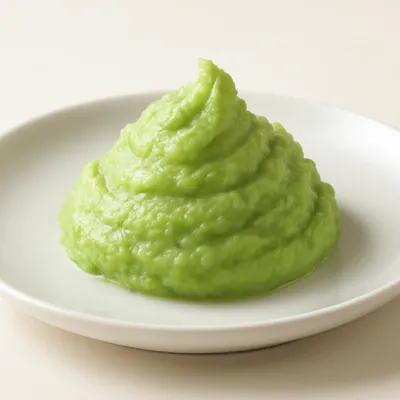
Serve with wasabi on the side.
Archive tool suggestions — not reviewed
These legacy suggestions have not been evidence-reviewed and are not presented as required tools.