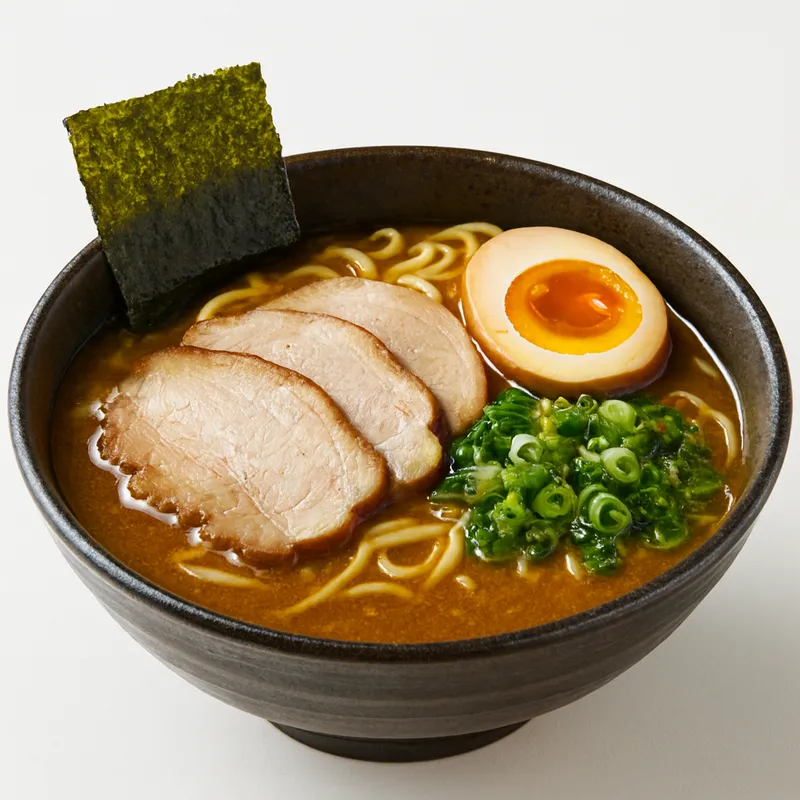
Kake soba is the base hot form of buckwheat noodles: boiled soba served in a bowl of hot kakejiru broth, finished with little more than chopped scallion and a shake of shichimi togarashi. The kakejiru is a dashi broth seasoned with a soy-mirin-sugar base (kaeshi). 'Kake' means 'to pour over' — the hot broth is poured over the drained noodles, and unlike the cold dipping styles the soba sits directly in the soup, to be slurped and finished. It is the plainest, most foundational soba dish, on which tempura soba, tsukimi soba and the rest are built.




Kake soba is the soup-served counterpart to the cold mori/zaru style, and the two diverged in Edo (Tokyo) during the Edo period as the city's soba-shop culture took shape. The name distinguishes 'kake' (broth poured over the noodles) from 'mori' (noodles heaped dry beside a dipping cup). The seasoning base, kaeshi, comes from the Edo-period soy-sauce technique of simmering soy with mirin and sugar so the raw edge softens before it is let down with dashi into kakejiru. Kanto's hard volcanic-soil water and the city's preference for buckwheat made Edo soba country, while Kansai stayed with udon.
A bowl of warm, earthy buckwheat noodles in a clear amber broth, fragrant with dashi and just salty enough to drink. The first mouthful is the smell of the soba itself rising on the steam, then the savory broth, then the bite of raw scallion and the slow heat of shichimi at the back. The noodles should be soft but still have spring; a good bowl is eaten fast while the broth is hot, before the soba swells and goes slack.
The broth is the whole dish, and it rests on dashi's umami synergy: glutamate from kombu and inosinate from katsuobushi (bonito) multiply each other's savoriness far beyond either alone, which is why a kombu-and-bonito dashi tastes deeper than a stock simmered ten times as long. The kaeshi is made ahead and rested so the soy's harshness mellows; let down with dashi it gives a broth seasoned enough to sip without overwhelming the buckwheat. Because there is nothing to hide behind, the soba is cooked just to the bite and drained well — a watery or overcooked noodle has nowhere to hide in so plain a bowl.
Variations
Add toppings and the bowl is renamed: a raw egg makes tsukimi soba (the yolk a 'moon'), tempura makes tempura soba, deep-fried tofu pouch makes kitsune soba, and tempura crumbs (tenkasu) make tanuki soba — though in Osaka 'tanuki' means soba in broth with fried tofu, the reverse of Tokyo usage. Kake udon is the identical dish made with wheat udon. Regional broths split by soy: Kanto uses dark koikuchi soy for a near-black broth, Kansai uses pale usukuchi for a lighter-colored one.
On the Palate
Where Kake Soba sits in the Japanese flavor cloud
Ingredients
Serves 2
How it's made
8 steps · 15 min
- 14 min
Make kaeshi (or use a ready one): gently warm soy sauce with mirin and sugar until the sugar dissolves, without boiling hard; cool and rest if you have time.
- 26 min
Make dashi: steep kombu in cold water, heat to just below a boil and remove the kombu, then add katsuobushi, let it settle off the heat for a few minutes, and strain.
Watch outHeat the kombu dashi to just below a boil and remove the kombu before it boils — hard boiling turns the stock slimy and bitter.
- 32 min
Combine dashi with kaeshi to taste to make the kakejiru; it should be savory enough to sip. Keep it hot.
- 45 min
Boil plenty of unsalted water and cook the soba per its package until just tender with a little spring.
Watch outBoil the soba just to tender with a little spring — in so plain a broth an overcooked, watery noodle has nowhere to hide.
- 52 min
Drain the soba and rinse briefly to remove surface starch, then dip back into hot water to rewarm.
Watch outRinse off the surface starch, then dip back in hot water to rewarm — skip the rinse and the broth turns cloudy and starchy.
- 61 min
Divide the hot noodles into warmed bowls.
- 71 min
Pour the hot kakejiru over the noodles to cover.
- 81 min
Top with chopped scallion and serve at once, with shichimi togarashi at the table.
Archive tool suggestions — not reviewed
These legacy suggestions have not been evidence-reviewed and are not presented as required tools.