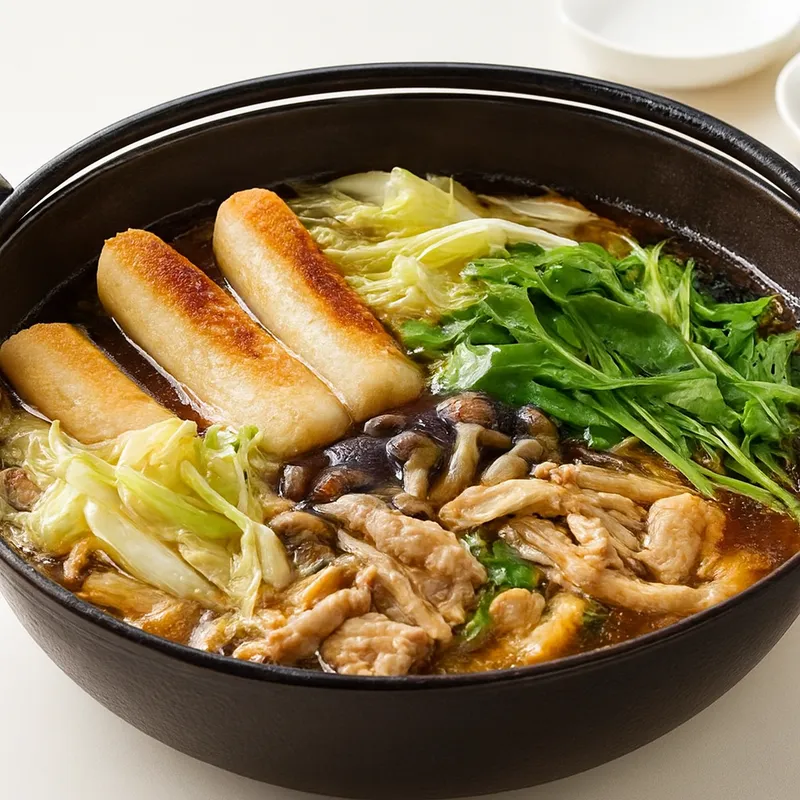
The archetypal Tokyo ramen, built on a soy-sauce seasoning base (shoyu tare). A clear brown broth of chicken bones and dashi (kombu and dried fish) is seasoned in the bowl with the tare, then poured over thin, curly wheat noodles. Standard toppings are sliced chashu pork, menma (fermented bamboo shoots), a slice or two of pink-and-white naruto fish cake, chopped scallion, and a sheet of nori. It is the oldest of Japan's four main ramen styles (shoyu, shio, tonkotsu, miso) and the template from which most others descend.





Shoyu ramen is the oldest of Japan's four major ramen styles and its origin is placed in Tokyo. According to ramen historian Hiroshi Osaki, the first dedicated ramen shop was Rairaiken, opened in 1910 in Asakusa by former customs official Kanichi Ozaki, who hired Cantonese cooks from Yokohama's Chinatown to serve a light soy-broth noodle dish then called Nankin soba, later Shina soba and eventually chuka soba — widely regarded as the ancestor of Tokyo (and Japanese) ramen. The dish's exact ancestry is debated and the Rairaiken claim is an attribution rather than settled fact, but the soy-tare bowl crystallized into Tokyo's house style, and Rairaiken was reconstructed inside the Shin-Yokohama Ramen Museum in 2020.
Thin, springy curls of yellow wheat noodle in a translucent brown broth you can see the bottom of. The first sip is clean and salt-forward, the soy reading as savory depth rather than as soy sauce; chicken and dried-fish dashi sit underneath. Chashu is soft and faintly smoky, menma crunches, the naruto is mild and chewy, scallion cuts through. The broth is light-bodied, not fatty — eat fast, because the thin noodles soften within a few minutes.
Tare is the load-bearing element. The broth itself is relatively neutral; what defines a shoyu bowl is the soy-based seasoning concentrate spooned into the bottom of each bowl before the broth is poured in. A good tare blends light (usukuchi) and dark (koikuchi) soy with mirin and sake, often steeped with kombu and dried fish (katsuobushi or niboshi) so it carries its own umami. The depth comes from glutamate-inosinate synergy: glutamate from kombu and soy multiplies with inosinate from the chicken and dried bonito, so the two together taste far more savory than either alone. Substitute plain table soy for the tare and the bowl tastes flat and merely salty.
Variations
Tokyo's classic uses a chicken-and-dashi clear broth with thin curly noodles; the niboshi-heavy bowls of Tokyo's old shops lean fishy and assertive. Beyond Tokyo, shoyu tare anchors many regional bowls: Kitakata (Fukushima) pairs it with flat, wide, wavy noodles in a pork-and-niboshi broth; Asahikawa (Hokkaido) builds a pork-, chicken- and seafood-based soy stock with a lard cap for the cold; Onomichi (Hiroshima) finishes its soy broth with floating back-fat. The other three base styles — shio (salt), tonkotsu (pork-bone), and miso — swap the tare or the broth.
On the Palate
Where Shoyu Ramen sits in the Japanese flavor cloud
Ingredients
Serves 2


How it's made
7 steps · 40 min
- 1120 min
Make a clear broth: gently simmer chicken bones (skimming foam) for about 2 hours; in a separate pot, steep kombu and dried fish (katsuobushi or niboshi) in warm water to make dashi, then combine and strain.
Watch outSkim the foam and keep the broth at a bare simmer — a hard boil emulsifies the fat and clouds what should be a clear shoyu base.
- 220 min
Make the shoyu tare: warm light and dark soy sauce with mirin and sake, add a piece of kombu and a handful of katsuobushi, steep off the heat, then strain.
- 310 min
Slice the chashu pork and warm it; prepare toppings: menma, naruto fish cake, sliced scallion, and a sheet of nori.
- 42 min
Boil the thin curly noodles in plenty of water for the time on the package (usually about 1.5–2 minutes), keeping them firm.
Watch outBoil the thin noodles just 1.5 to 2 minutes, keeping them firm — they carry on softening in the hot bowl.
- 51 min
Spoon 2–3 tablespoons of tare into the bottom of each warmed bowl, then pour in the hot strained broth and stir.
Watch outSpoon the tare into the bowl first, then pour the broth — the seasoning concentrate is the load-bearing flavor; plain broth alone tastes flat.
- 61 min
Drain the noodles thoroughly and lift them into the broth, arranging them in a neat mound.
- 71 min
Top with chashu, menma, naruto, scallion, and nori, and serve immediately while the noodles are firm.
Archive tool suggestions — not reviewed
These legacy suggestions have not been evidence-reviewed and are not presented as required tools.