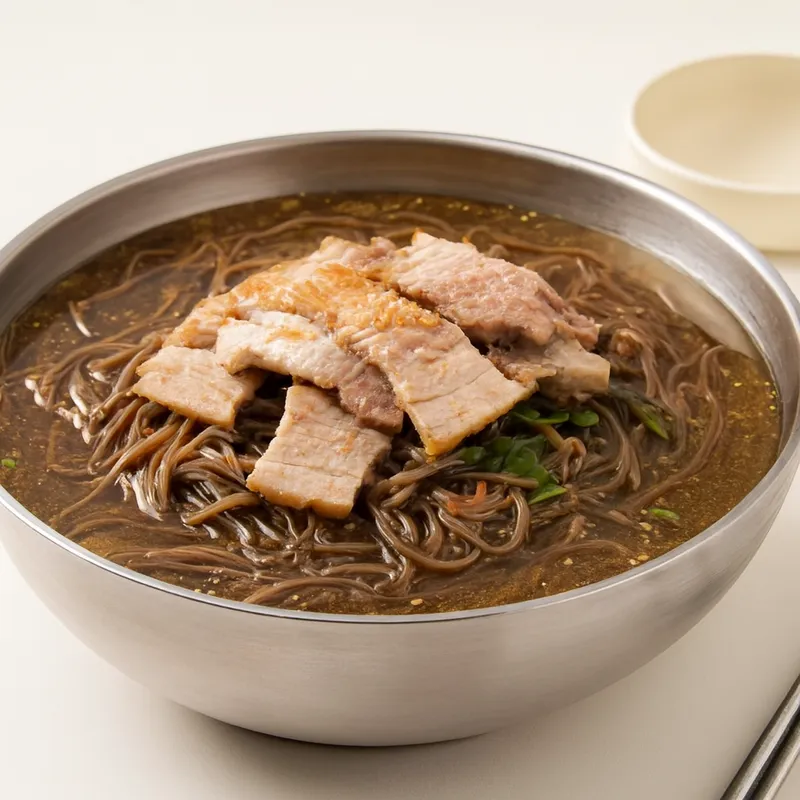
Buckwheat possesses a nutty flavor and earthy aroma, with a slightly chewy texture that adds heartiness to dishes. Its versatility makes it a favorite in both sweet and savory applications.
Where it comes from
Originally cultivated in Asia and Eastern Europe, buckwheat has been a staple food for centuries, often used in pancakes and porridge.
In the kitchen
Ground into flour or used whole, buckwheat adds substance to baked goods, salads, and savory dishes, enhancing nutritional value and flavor.
Across cuisines
Buckwheat (ajda) — the Alpine-Slavic grain that distinguishes Slovenian cuisine from other Balkan cuisines. Used in žganci (buckwheat polenta), kaša (porridge), and as flour for štruklji.
Buckwheat (hrechka) is the Slavic grain — toasted dry before cooking to develop the deep nutty aroma, then simmered with butter and onion into kasha hrechana. Eaten as a side dish across the Ukrainian table and as a breakfast porridge. Naturally gluten-free, central to traditional cuisine long before wheat dominated.
Buckwheat (grechka) — universal Slavic grain, kasha or with pork. Source: Wikipedia (Belarusian cuisine).
Nutrition (per 100g)
AI-estimated; model and run unavailable.