

Northern Korean origin, specifically Pyongyang (mul-naengmyeon) and Hamhung (bibim-naengmyeon, traditionally with raw skate). Eaten historically as a winter dish — the cold noodles paired with a heated ondol floor — using buckwheat that grew in the colder north. The 1953 partition sent refugee cooks south; both styles became Seoul restaurant staples through the 1950s–60s, eventually inverting into a summer dish.
Buckwheat noodles in iced beef-and-radish broth — Pyongyang's winter dish, eaten on heated ondol floors. Hamhung's version is the dry, gochujang-tossed cousin. Refugees brought both south after 1953.
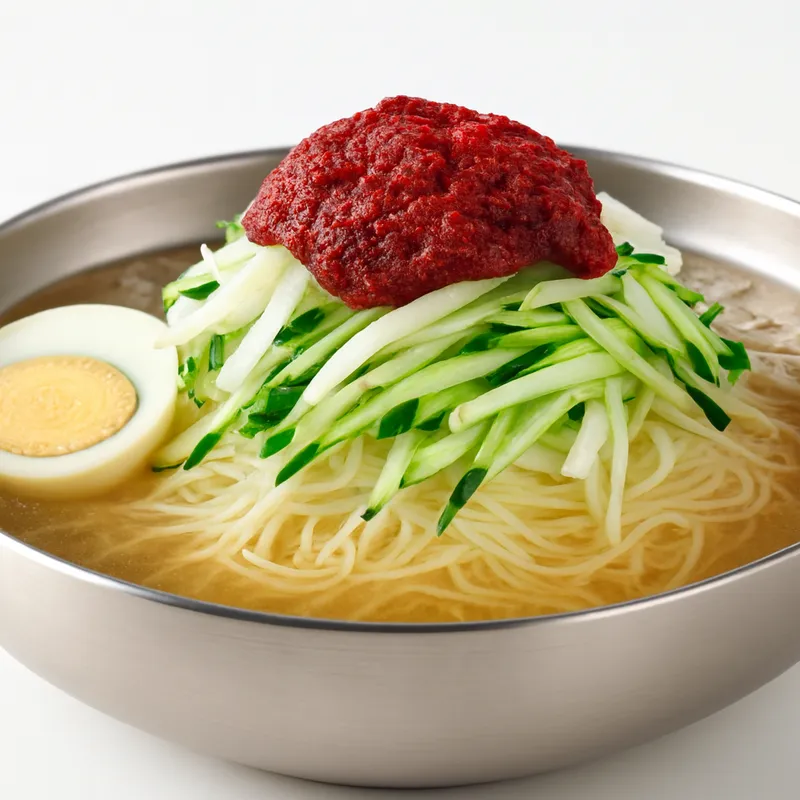
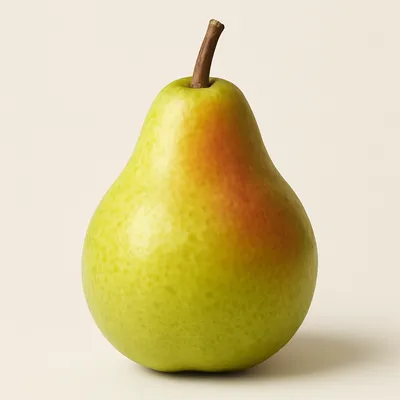
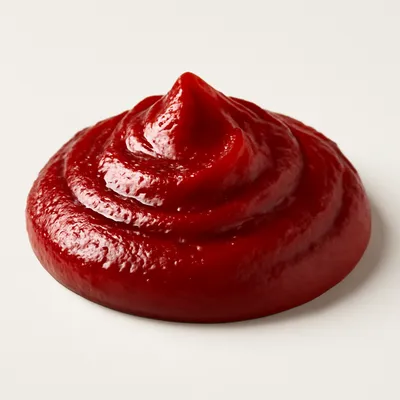
Two main forms. Mul-naengmyeon: chewy buckwheat-and-starch noodles in icy beef-and-radish broth, with slush still floating, topped with cucumber, pear, boiled egg, brisket. Bibim-naengmyeon: same noodles tossed dry in gochujang-vinegar paste, no broth. Cut with scissors at the table — the noodles are too elastic to bite cleanly. The first sip of mul broth should ache the teeth from cold.
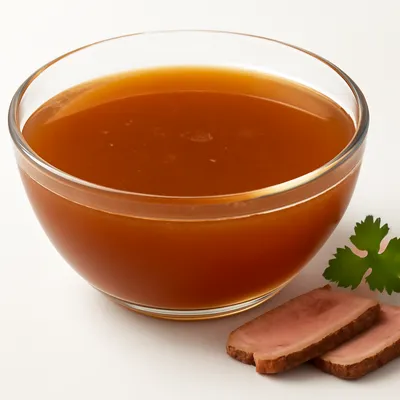
The noodle is the trick — pure buckwheat is too brittle, so it's cut with potato or sweet-potato starch in proportions each shop guards. The dough is extruded under pressure (an old hand-screw press, now hydraulic) directly into boiling water — buckwheat won't roll out by hand. Mul broth must be made from beef brisket and Korean radish, never bouillon; supermarket naengmyeon broth tastes flat because it's MSG-water without the radish minerality.
Variations
Pyongyang mul-naengmyeon (clear cold broth, the canonical); Hamhung bibim-naengmyeon (dry, with gochujang and skate); Jinju naengmyeon (a mixed dried-seafood-and-beef broth — anchovy, dried half-beak, mussel, clam, dried pollack — finished with aged soy sauce, topped with egg-battered beef); kongguksu is the soybean-broth summer cousin.
On the Palate
Where Naengmyeon sits in the Korean flavor cloud
Ingredients






How it's made
5 steps · 45 min
- 110 min
Prepare the buckwheat noodles according to package instructions. Rinse under cold water until completely chilled and the water runs clear, ensuring a chewy texture.
Watch outKeep rinsing until the rinse water runs completely clear and the noodles squeak cold between your fingers — cloudy water means starch is still coating them.
- 215 min
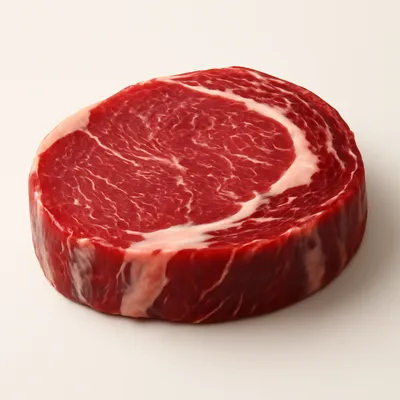
In a pot, simmer beef with garlic and ginger until tender. Remove the beef and slice thinly. Reserve the broth and chill it in the refrigerator.
Watch outSimmer the brisket at a bare tremble, never a hard boil, and skim the grey foam — a rolling boil turns the broth cloudy and greasy.
- 310 min
Julienne the cucumber and peel and slice the pear thinly. Prepare hard-boiled eggs by cooking them for 8 minutes, then cool and peel.
Watch outCool the eggs in ice water immediately after cooking to prevent a green ring.
- 45 min
In chilled bowls, arrange the noodles, topped with sliced beef, cucumber, pear, and half an egg. Pour the cold beef broth over the noodles.
Watch outEnsure the broth is adequately chilled to maintain the dish's refreshing quality.
- 55 min
Finish with a sprinkle of sesame seeds and a dollop of mustard for a tangy kick. Serve immediately, savoring the refreshing contrast of flavors and textures.
Archive tool suggestions — not reviewed
These legacy suggestions have not been evidence-reviewed and are not presented as required tools.