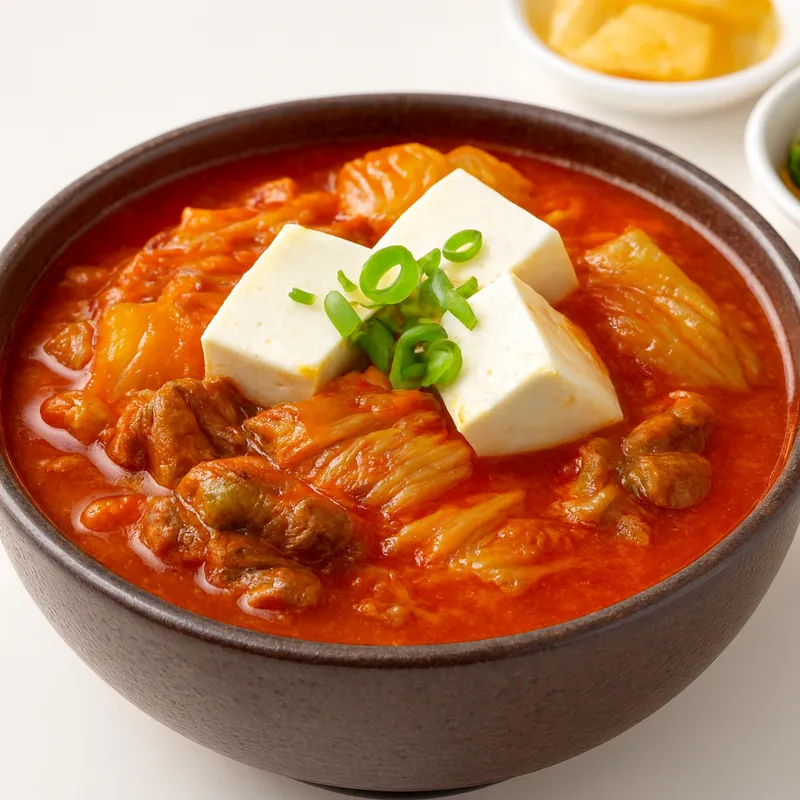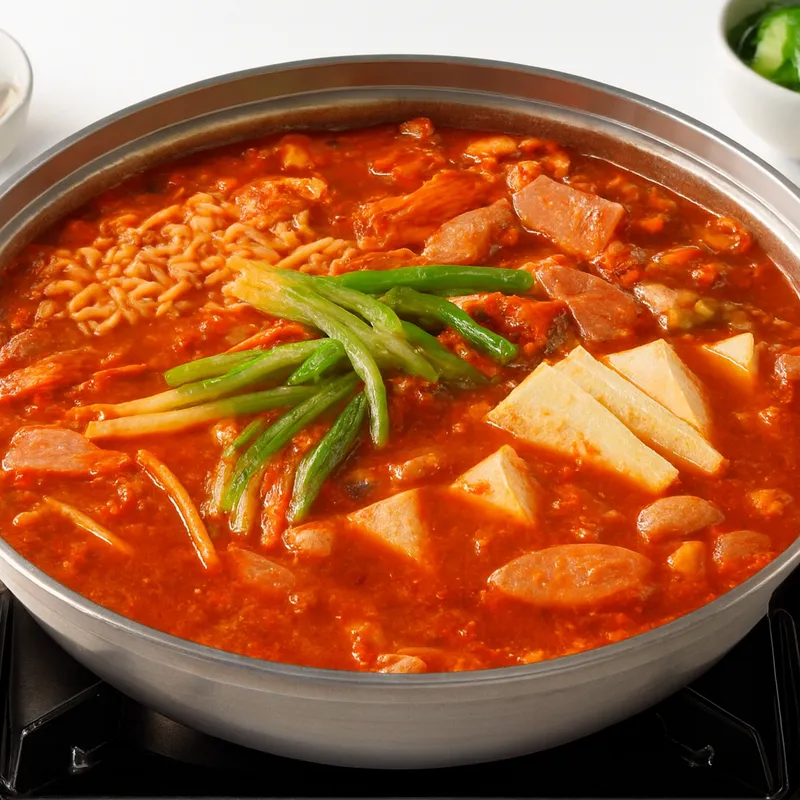



Born in Uijeongbu and Pyeongtaek in the 1950s, just after the Korean War, around US Army bases. Korean civilians scavenged surplus or smuggled Spam, hot dogs, and processed cheese from base mess halls — meat was scarce, this was protein — and combined it with kimchi and gochujang into a stew. The name means "army base stew." Uijeongbu still has Budae Jjigae Street, with shops dating to the 1960s.
Korean War 1950s improvisation — Spam, hot dogs, baked beans, and American cheese smuggled out of US Army bases (budae = army base) into a kimchi-gochujang stew. Uijeongbu still owns the lineage.
An aluminum pot set bubbling at the table: kimchi, sliced Spam, sliced hot dogs, ground beef, baked beans, tofu, scallion, gochujang-gochugaru broth, instant ramen noodles dropped in last, sometimes a slice of American cheese on top. The Spam-and-kimchi cross-cure is the flavor pivot — pickled-funky meets industrial-salty. Eat noodles first while still bouncy; rice goes in at the end.
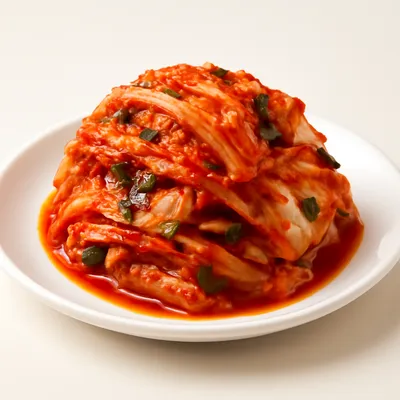
Aged kimchi (mukeun-kimchi, fermented past three months) is non-negotiable — fresh kimchi has too much sweet-crisp bite; aged kimchi brings the lactic depth that makes the broth taste cooked-down rather than thrown together. Ramen noodles must go in at the end and be eaten immediately; left to soak, they swell and the broth drops in salinity. Cheese is optional but melts into the kimchi-fat for an extra round body.
Variations
Uijeongbu-style (the original, lighter on cheese); Songtan-style (heavier on Spam, near Osan Air Base); modern restaurant versions add ramyeon noodles and rice cakes; vegetarian buseot-budae uses mushroom and tofu sausage.
On the Palate
Where Budae Jjigae sits in the Korean flavor cloud
Use well-aged kimchi, fermented past three months — its deep lactic sourness is what makes the broth taste slow-cooked and whole; fresh kimchi is too sweet and crisp and leaves the stew tasting merely thrown together.
Ingredients




How it's made
4 steps · 35 min
- 15 min
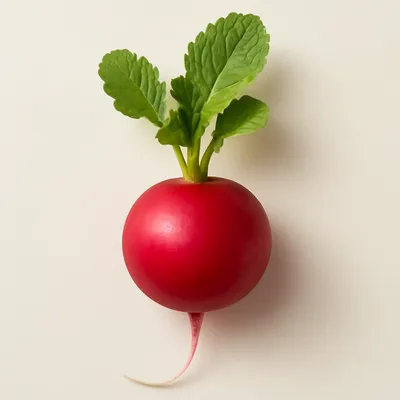
In a large, wide pot, arrange the onion, radish, Spam, sausages, and kimchi in separate piles. Sprinkle gochugaru, gochujang, soy sauce, fish sauce, and garlic over the top, then pour in 6 cups of cold water.
Watch outStart from cold water and keep the ingredients in neat separate piles — a slow start pulls flavor out of each one as the pot heats.
- 220 min
Cover the pot and bring to a rolling boil over high heat. Reduce to a gentle boil and stir the liquid occasionally while keeping the piles intact, allowing the flavors to meld for 15 to 20 minutes.
Watch outOnce it's boiled, back it down to a lazy bubble; a hard rolling boil breaks the piles apart and clouds the broth.
- 35 min
Nestle the noodles into the stew and cook according to package instructions, ensuring they become loose and chewy. Remove the pot from heat, place a slice of American cheese on top, and cover until the cheese melts.
Watch outSlide the noodles in last and pull the pot off heat for the cheese; you want it just melted into the fat, not boiled away.
- 45 min
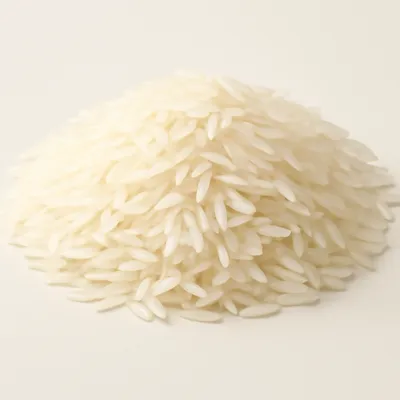
Scatter sliced scallions over the stew. Serve immediately, family-style, in the center of the table with bowls of steamed white rice.
Archive tool suggestions — not reviewed
These legacy suggestions have not been evidence-reviewed and are not presented as required tools.