


Original 17th-century japchae had no noodles — it was a royal-court vegetable dish recorded in 1670s Joseon palace banquet menus, served to Gwanghaegun. Sweet-potato starch noodles were added in the 1900s after dangmyeon production became industrial in Korea. The noodled version overtook the original by mid-century and is now what "japchae" means; the older noodle-less form has nearly vanished.
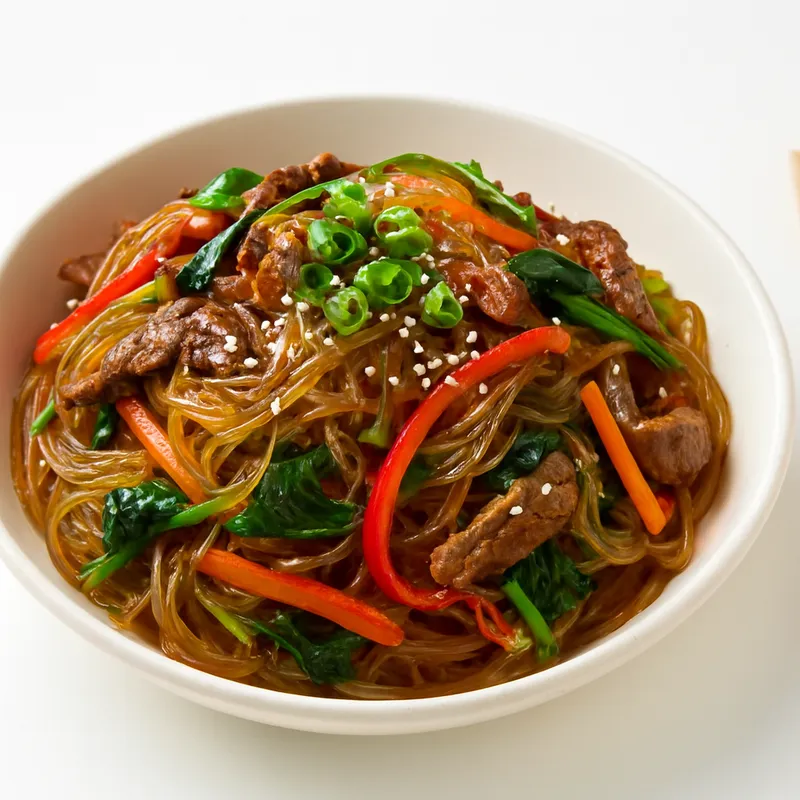
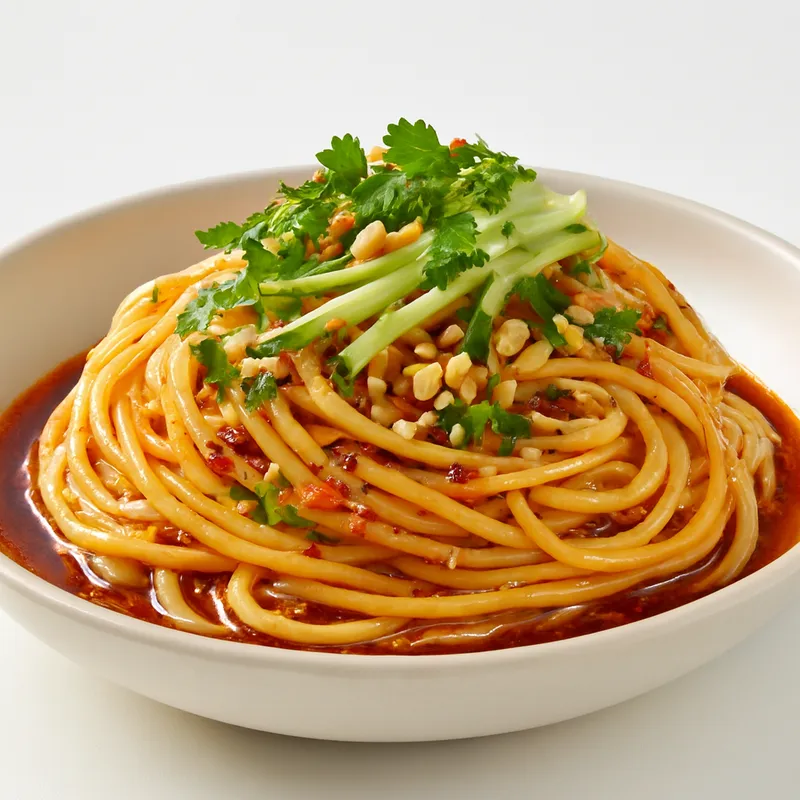
Japchae — sweet potato starch noodles (dangmyeon) tossed with sesame oil, soy, and stir-fried vegetables and beef. A 1600s Joseon court dish that originally had no noodles; King Gwanghaegun's chef added them later.
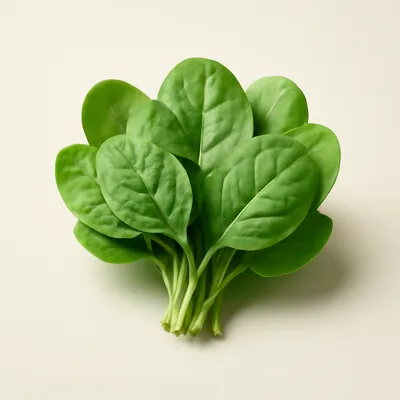
Japchae: translucent, springy sweet-potato starch noodles (dangmyeon) tossed with thin-sliced beef, julienned carrot, spinach, shiitake, onion, scallion, in a soy-sesame-sugar dressing. Served warm or at room temperature. Each vegetable is sautéed separately then combined — the colors stay distinct, no muddy brown. Sesame oil on top right before serving.
Dangmyeon is the load-bearer — sweet-potato starch noodles, not mung-bean (which collapse under heat) or rice (too soft). Soak in warm water, cook briefly, rinse, dress with sesame oil immediately to keep them from clumping. The cardinal sin is cooking everything in one pan — vegetables release water, noodles overcook, the dish goes gray. Each component sautéed separately, then folded in at the end.
Variations
Royal-court japchae (no noodles, the original); home-style with dangmyeon, beef, spinach, mushroom, carrot; vegetarian version skips beef; Jeolla-style adds octopus or squid.
On the Palate
Where Sweet Potato Noodle Salad sits in the Korean flavor cloud
Sauté each vegetable and the beef separately, then fold everything together only at the end — cooking it all in one pan makes the vegetables weep water and the noodles overcook, turning the whole dish gray and soggy.
Ingredients


How it's made
4 steps · 20 min
- 18 min
Bring a large pot of water to a boil. Add the sweet potato noodles and cook until they are tender yet chewy, about 6-8 minutes.
Watch outPull the noodles at tender-but-chewy — bite one; it should give with a little spring, not mush.
- 25 min
Drain the noodles and rinse them under cold water to stop the cooking process. Toss them with a drizzle of sesame oil to prevent sticking.
Watch outRinse under cold water right away and coat with sesame oil while warm so the strands separate and shine.
- 35 min
In a large bowl, combine the noodles with spinach, soy sauce, sugar, and any other vegetables you prefer. Toss gently to coat everything evenly.
Watch outFold gently just to combine — over-tossing shreds the soft noodles and muddies the colors.
- 42 min
Serve the salad chilled or at room temperature, garnished with additional sesame seeds if desired.