In Practice
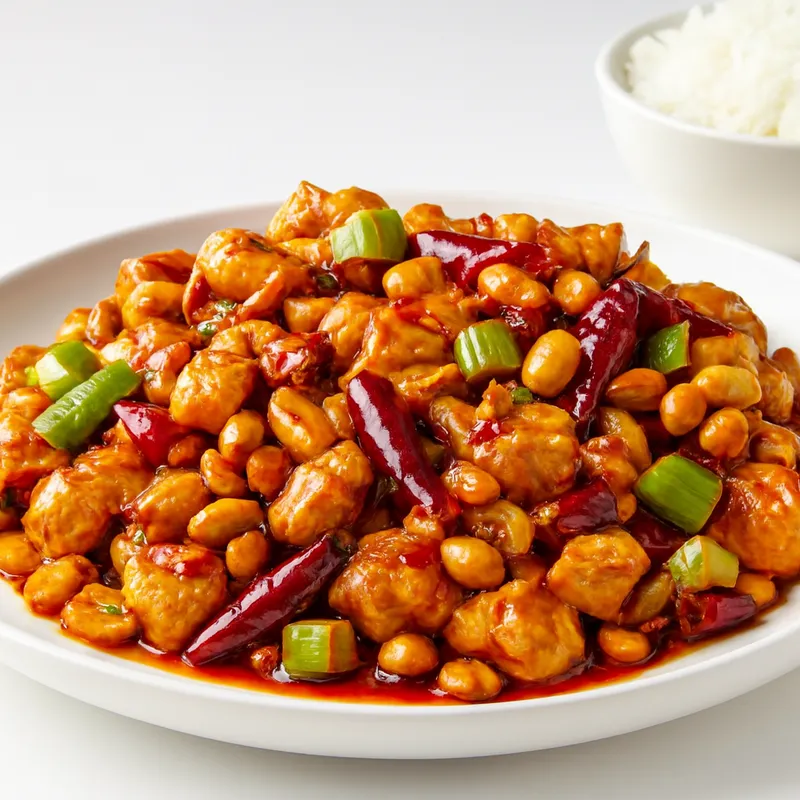
Mise en place absolute — 30 seconds means everything pre-cut and beside the stove. Wok screaming hot, then oil ribboned around the rim to cascade down (long-yau, 'pass through oil'). High-flash-point oil: peanut, rice bran, lard. Ingredients staged by cook time: aromatics first (8 sec), proteins (20-40 sec), hard veg (30 sec), leafy last. Failure modes: home electric burners can't recover heat — adding cold food crashes wok to 150°C and the dish steams; wok overfilled lacks the lift-and-fall airspace required for wok hei.
Origin
Stir frying, as we know it today, finds its roots in Han-dynasty China, around 206 BCE to 220 CE. The technique was developed to quickly cook food over high heat using a wok, a versatile and efficient cooking utensil. The method allowed for the retention of food's natural flavors and nutrients, making it an ideal choice for the bustling life in ancient Chinese cities. Over centuries, stir frying spread throughout Asia, adapting to local ingredients and tastes, eventually becoming a staple in many cuisines worldwide.
How It Works
Carbon-steel wok glowing at 300-400°C generates wok hei — a complex of pyrazines, furans and aerosolized oil compounds released when food, oil micro-droplets, and ferrous surface flash-react. Each tossed lift exposes fresh surface to the curved hottest zone; constant motion prevents stalled contact that would steam rather than sear. Total cook 60-180 seconds, retaining vegetable cellular turgor.
Dish examples
545 dishes · 40 cuisines


Through Time
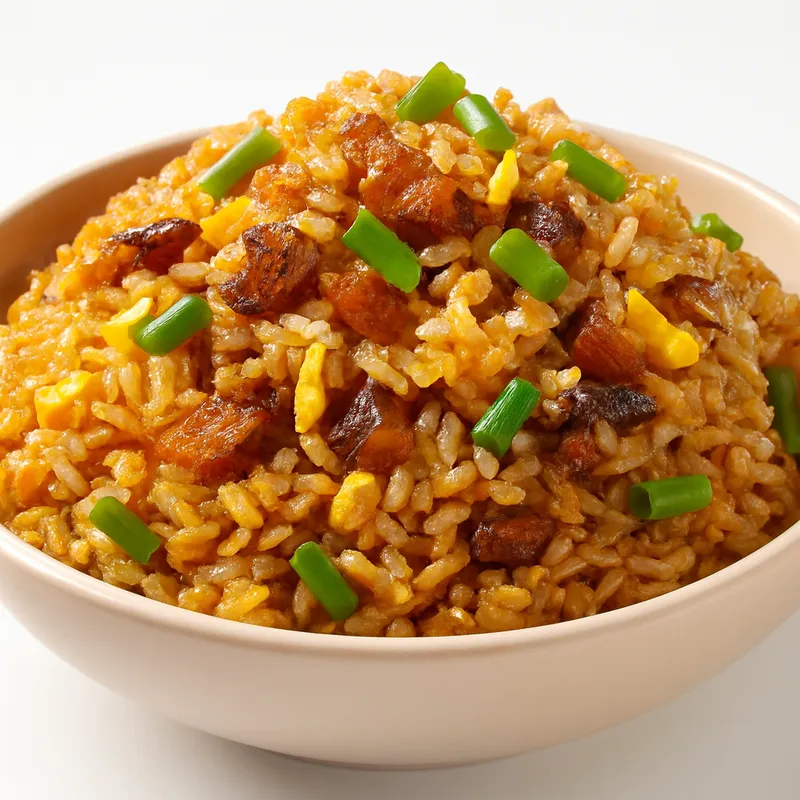
Wok cookery emerged Han-dynasty c. 200 BCE alongside iron-smelting advances. The Tang-dynasty Yang-Ye texts and Song-dynasty Lin Hong's *Shanjia Qinggong* (山家清供, c. 1241) describe rapid wok methods. Grace Young's *The Breath of a Wok* (2004) brought scientific scrutiny to wok hei chemistry; Kenneth Lo and Fuchsia Dunlop carry the contemporary English-language torch.
Related cooking knowledge
Sauteing is the smaller-flatter Western cousin — same fat-medium principle without the wok curvature. Karahi is the Punjabi sister using the same curved geometry. Deep Frying takes the next step in oil-depth. Tadka is the spice-bloom prelude that often precedes stir frying in Indian crossover dishes.


