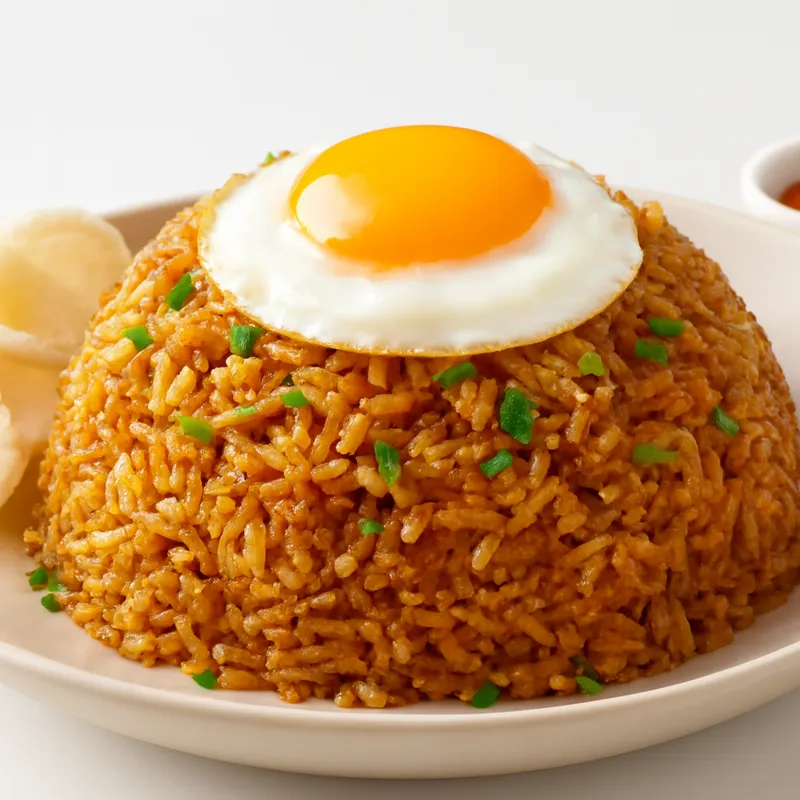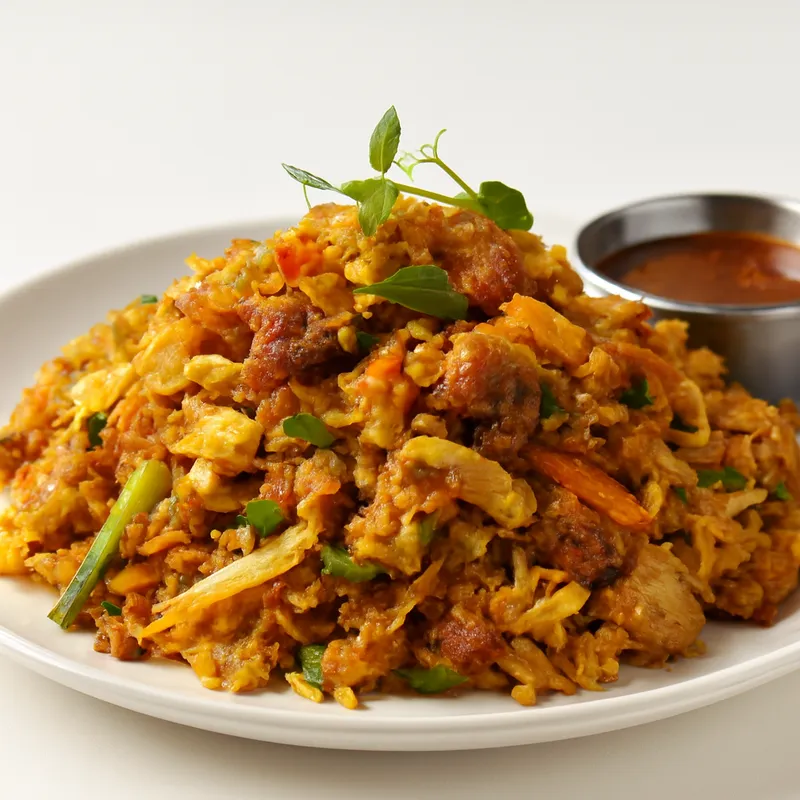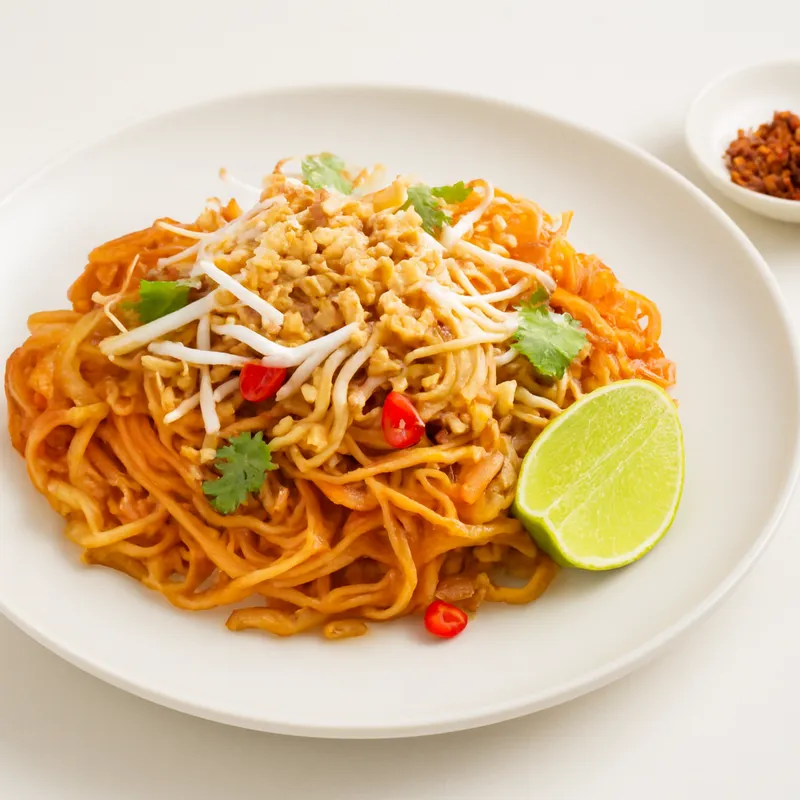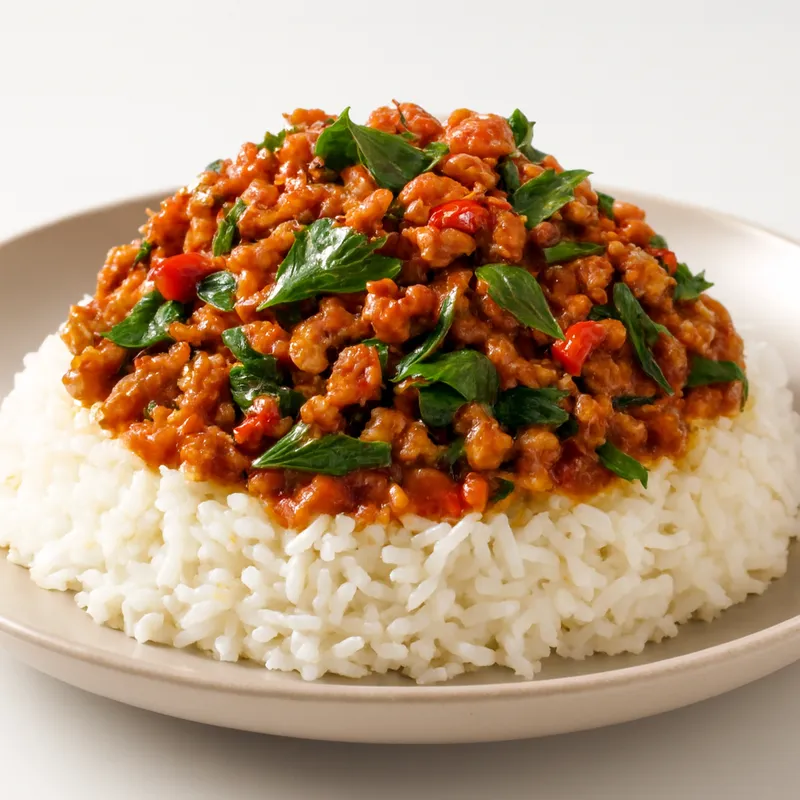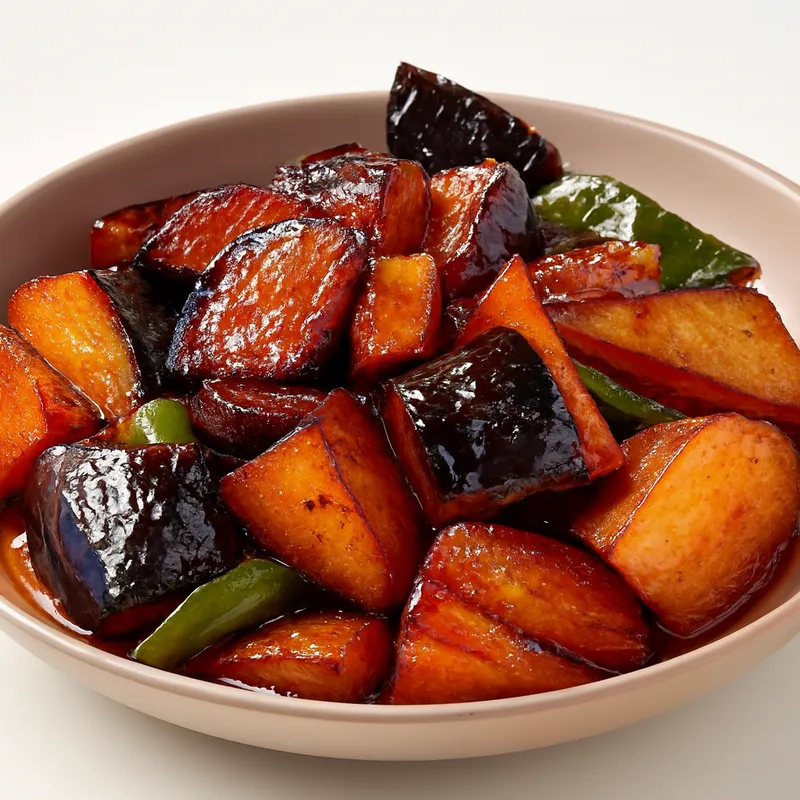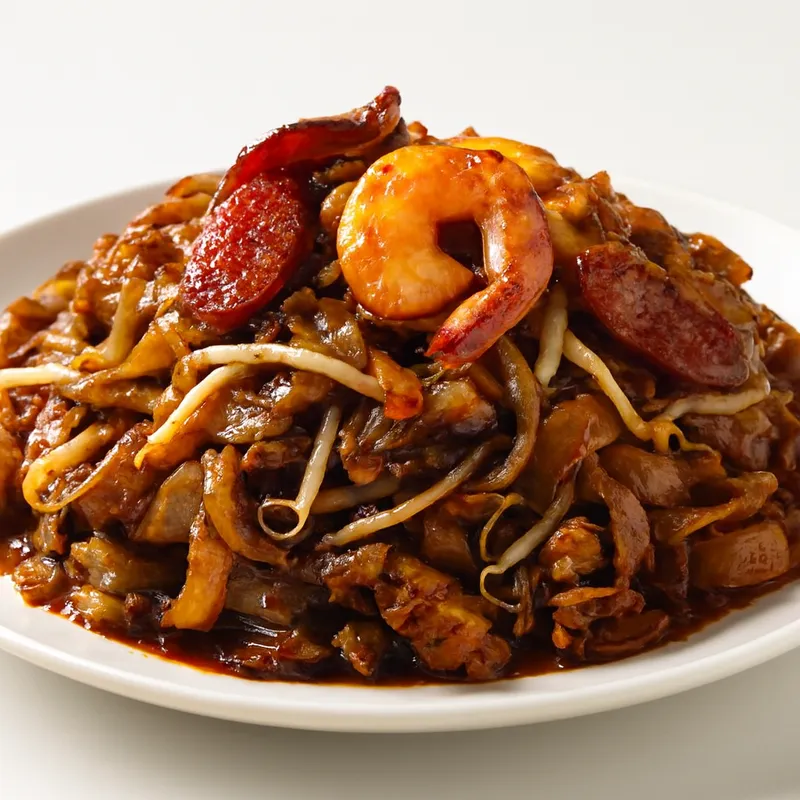
Malaysian wok-fried flat rice noodles with shrimp, cockles, Chinese sausage, bean sprouts, and dark soy sauce.


Created by Chinese (mostly Teochew, with Hokkien) immigrant laborers in 19th-century British Malaya, originally a hawker breakfast for dock and farm workers — calorie-dense and cheap. It began as a Teochew dish from Chaoshan in Guangdong; in Penang, where Teochews are the second-largest Chinese group after the Hokkiens, fishermen, farmers and cockle-gatherers moonlighting as evening hawkers sold an early version made of little more than kway teow, garlic, soy and lard. The Penang version (with cockles, lard, and minimal vegetables) is the most defended; Kuala Lumpur and Singapore versions adapted later. The dish and its name come from the Teochew/Hokkien word 粿條 (rice ground to a slurry, steamed into sheets, and cut into strips), meaning fried flat rice noodles.
19th-century British Malaya hawker breakfast for dock laborers, name from Hokkien 炒粿條. Wok hei needs three things: 230°C+ pan, single-portion batches, lard not oil. Vegetable oil reads wrong.
Wide flat rice noodles, lacquer-dark from sweet dark soy, tossed in a screaming-hot wok with shrimp, blood cockles, slices of Chinese sausage, garlic chives, bean sprouts, and egg. The noodles should taste of smoke before they taste of soy — that's wok hei. Char on the noodle edges, just-set egg in pockets. Order with extra cockles if you eat them; they're the marker dish.
Wok hei is the whole point and it requires three things: a wok hot enough to smoke the oil (around 230°C+), small batches (one or two portions max), and lard, not just oil — animal fat carbonizes at the right temperature for that toasted-meat smoke. Modern stalls using vegetable oil on a not-quite-hot wok produce a soggy, sweet noodle that tastes correct but reads wrong. The smoke is non-negotiable.
Variations
Penang version (cockles, lard, minimal greens — the most defended); Kuala Lumpur runs sweeter with thicker dark soy; Singapore adds Chinese sausage and fish cake; Ipoh stalls slip in chives over bean sprouts.
On the Palate
Where Char Kway Teow sits in the Malaysian flavor cloud
Get the wok screaming-hot and fry one portion at a time in lard — that smoke-charred wok hei is the entire dish, and a lukewarm wok or a crowded pan gives you soggy sweet noodles that taste wrong.
Ingredients





How it's made
5 steps · 9 min
- 12 min
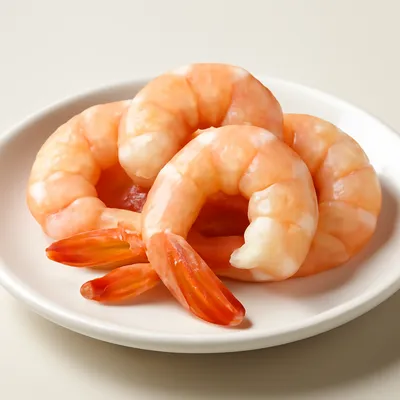
Heat a wok over high heat until smoking. Add oil and swirl to coat. Add shrimp and cook until they turn pink and opaque, about 2 minutes.
Watch outThe oil should shimmer and just start to smoke before the shrimp go in — that's your wok-hei window.
- 21 min
Add sliced Chinese sausage and stir-fry for another 1 minute until they release their oils and become fragrant.
Watch outAvoid overcooking the sausage to prevent it from becoming tough.
- 32 min
Push the shrimp and sausage to the side and crack an egg into the center of the wok. Scramble quickly until just set, then mix with the other ingredients.
Watch outDo not overcook the egg; it should remain soft and slightly runny.
- 43 min
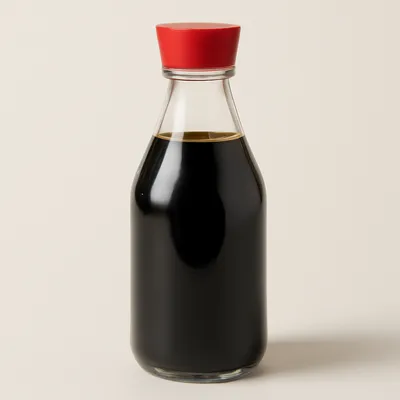
Add shahe fen noodles, soy sauce, and chili paste. Stir-fry vigorously, tossing to coat the noodles in the sauce, about 3 minutes.
Watch outKeep the noodles moving and pressed against the hot metal; you want scorch marks and a dry, glossy toss, not a wet slick.
- 51 min
Add bean sprouts and Chinese chives. Stir-fry for another minute until the sprouts are slightly wilted but still crisp. Serve immediately.
Watch outPull the pan the instant the sprouts turn glassy at the edges but still crunch — a few seconds too long and they weep water.