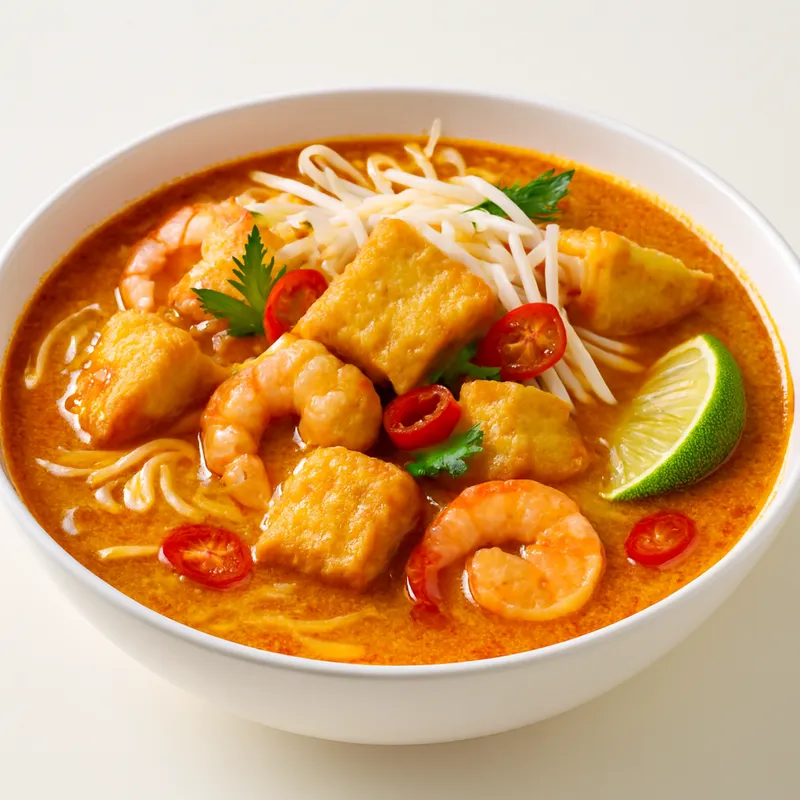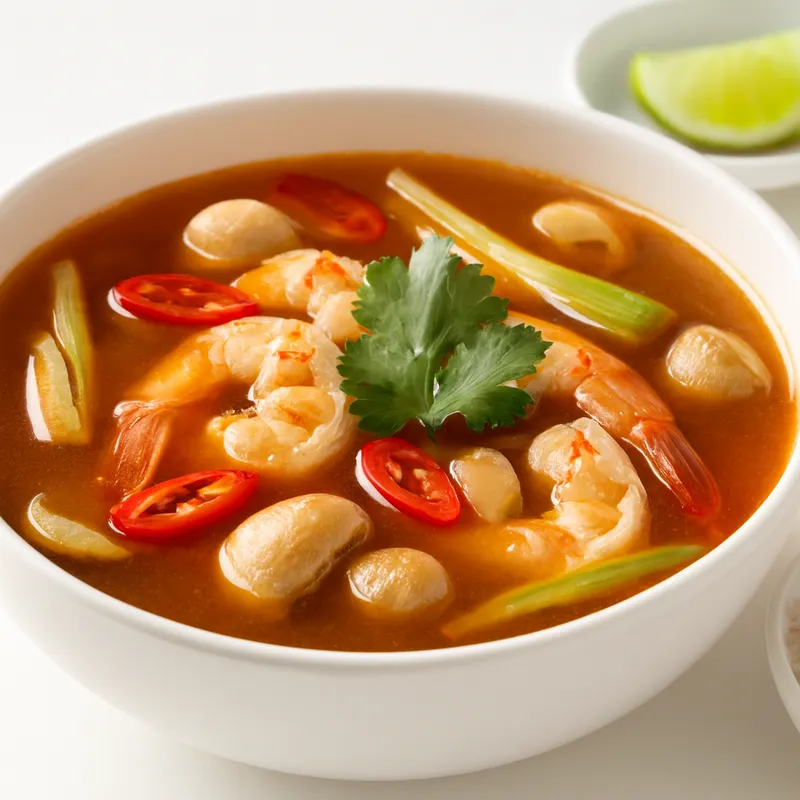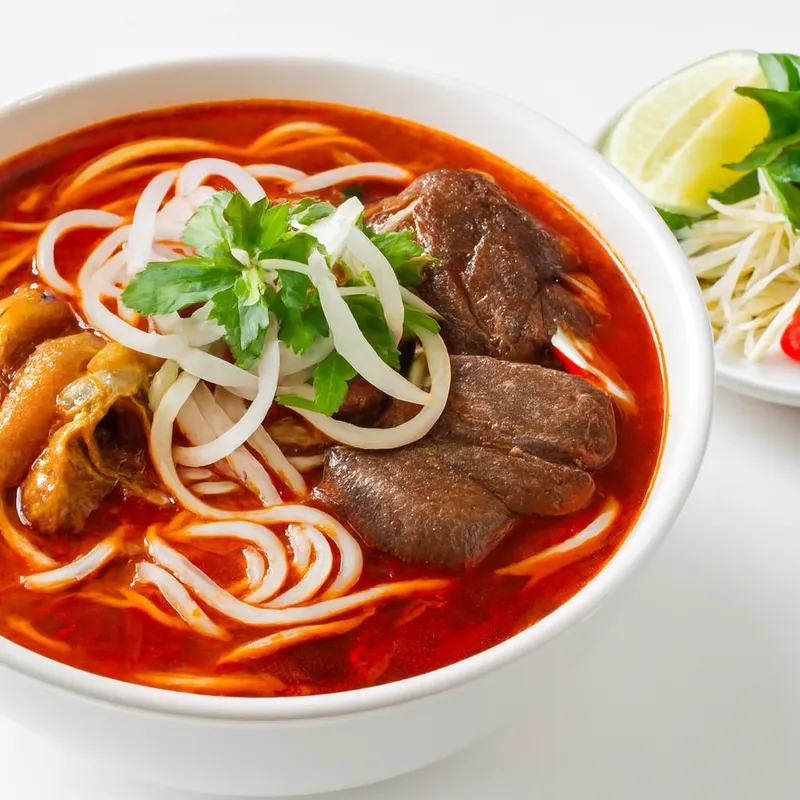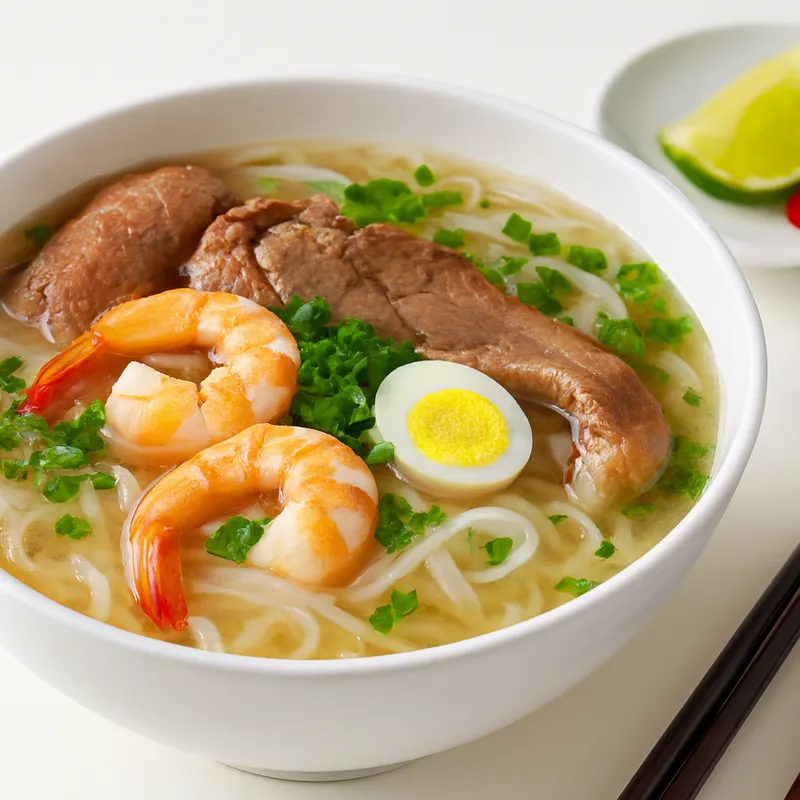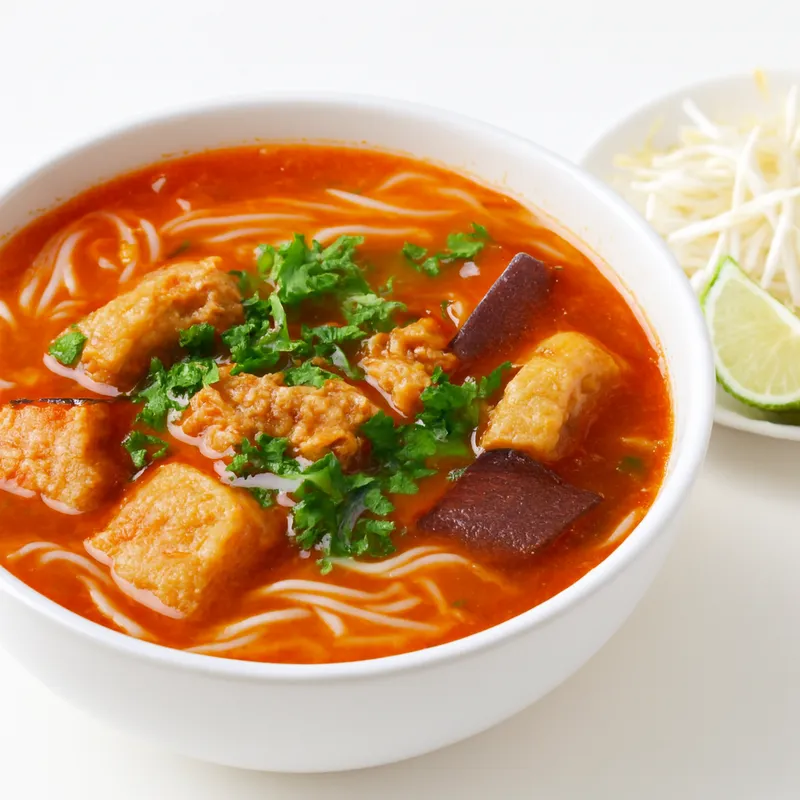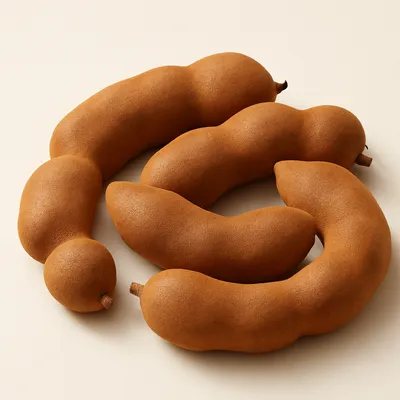




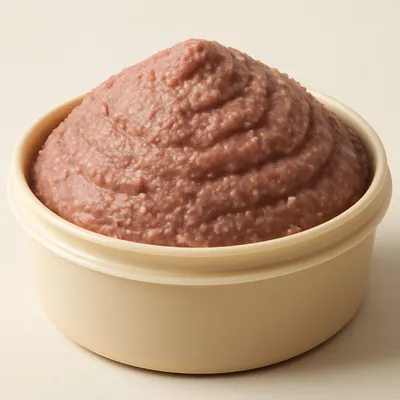
A Peranakan-Nyonya dish from Penang, where Chinese-Malay creole cuisine took shape from the 17th century onward. 'Asam' means tamarind in Malay; the dish is the Penang Nyonya answer to the coconut-milk laksas of further south — Penang is closer to Thailand and absorbed sour-fish-soup ideas from there rather than the coconut-curry idiom of the southern states. Hae ko (蝦膏), the dark shrimp paste finish, is Hokkien Chinese in origin.
Penang Nyonya answer to the southern coconut laksas — closer to Thailand and so absorbed sour-fish-soup ideas instead. Asam gelugor, not tamarind, is what makes the broth sour-without-being-sharp; bunga kantan does the floral lift.
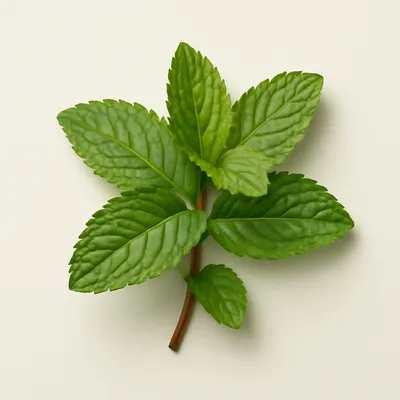
Thick rice noodles in a sour, dark-brown fish broth — mackerel boiled and flaked back into the soup, tamarind and asam gelugor (slices of dried sour fruit) doing the heavy souring, torch ginger flower providing a floral edge. Topped with cucumber slivers, pineapple chunks, mint, sliced onion, red chili, and a spoon of black hae ko (shrimp paste) the diner stirs in. Penang street food. Sour first, fishy second, sweet last.
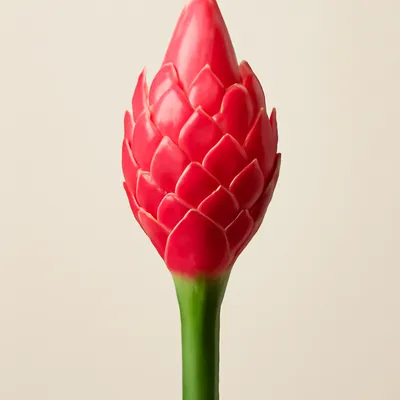
Asam gelugor is what makes Penang's version sour-without-being-sharp: it supplies a mellow, slightly fruity acidity that tamarind alone reads as flat against, and crucially it doesn't break down with long simmering the way lime or vinegar would. Restaurants substituting tamarind concentrate alone produce a one-note sour. The torch ginger flower (bunga kantan) is the second non-negotiable — its perfume is what separates Penang asam laksa from a generic sour fish soup.
Variations
Penang Air Itam Market stall (the canonical reference); Ipoh-style (slightly sweeter, more pineapple); Kedah laksa (rice noodles thicker, broth thinner, less hae ko); Sarawak laksa (entirely different — sambal-based, not sour fish).
- ·Penang-style — sour tamarind-based broth
- ·Uses flaked mackerel
- ·Includes aromatic herbs like mint
On the Palate
Where Assam Laksa sits in the Malaysian flavor cloud
Build the sour backbone from asam gelugor (tamarind slices) so the acidity stays mellow and fruity through a long simmer, then finish with torch ginger flower for the perfume that makes it Penang asam laksa rather than a generic sour fish soup.
Ingredients





How it's made
5 steps · 45 min
- 115 min
In a large pot, bring water to a boil and add tamarind, lemongrass, and chili peppers. Simmer until the broth is fragrant and the tamarind has dissolved, about 15 minutes.
Watch outSimmer until the broth smells sour and fragrant and the tamarind has fully dissolved, not just gone cloudy.
- 210 min
Add fish and continue to simmer until the fish is cooked through and flakes easily with a fork. Remove the fish, debone, and flake the flesh back into the pot.
Watch outThe fish is ready the instant it flakes with a fork; deboning is easier while still warm.
- 310 min
Add noodles to the broth and cook until they are tender yet firm. Stir occasionally to prevent sticking.
Watch outCook noodles just to tender-with-bite; they keep softening in the hot broth.
- 45 min
Prepare your garnishes: slice cucumber, pineapple, and onion thinly. Set aside mint leaves for garnish.
- 55 min
Ladle the laksa into bowls, ensuring a good mix of noodles and broth. Top with fresh cucumber, pineapple, onion slices, and mint leaves. Serve hot.
Watch outServe immediately to prevent the noodles from becoming soggy.