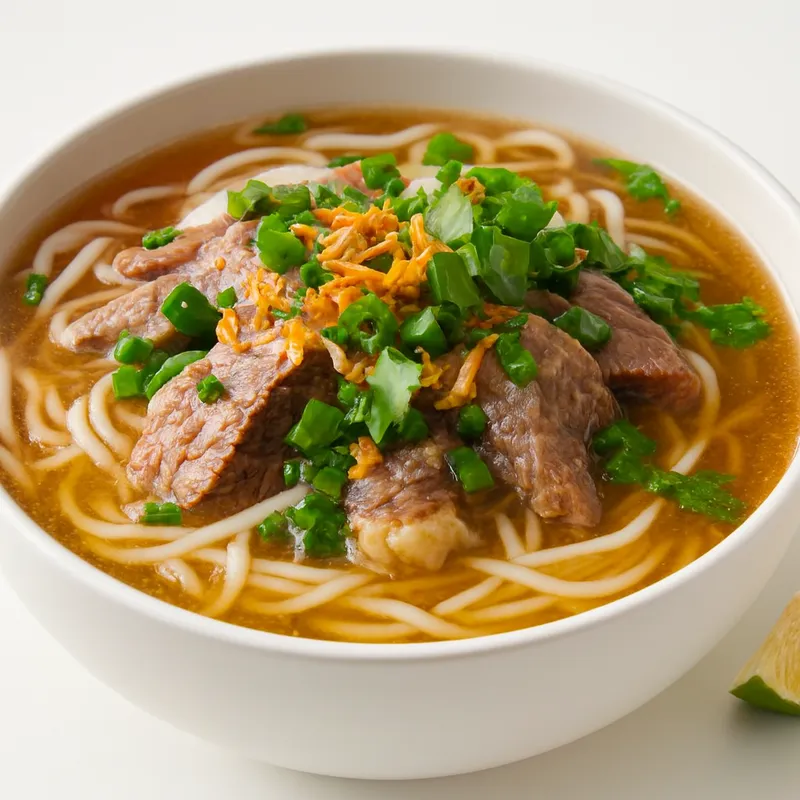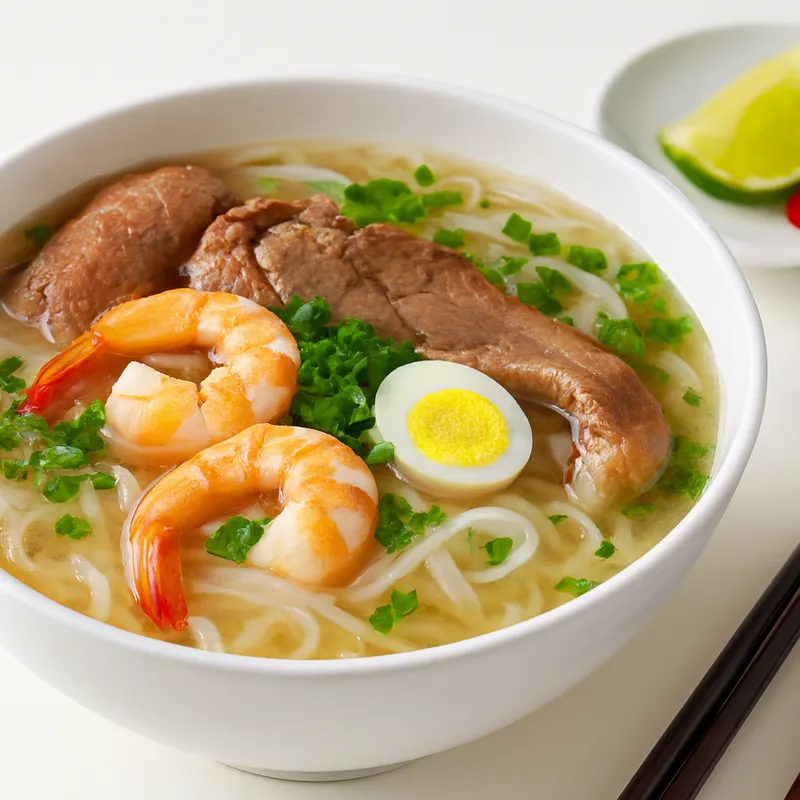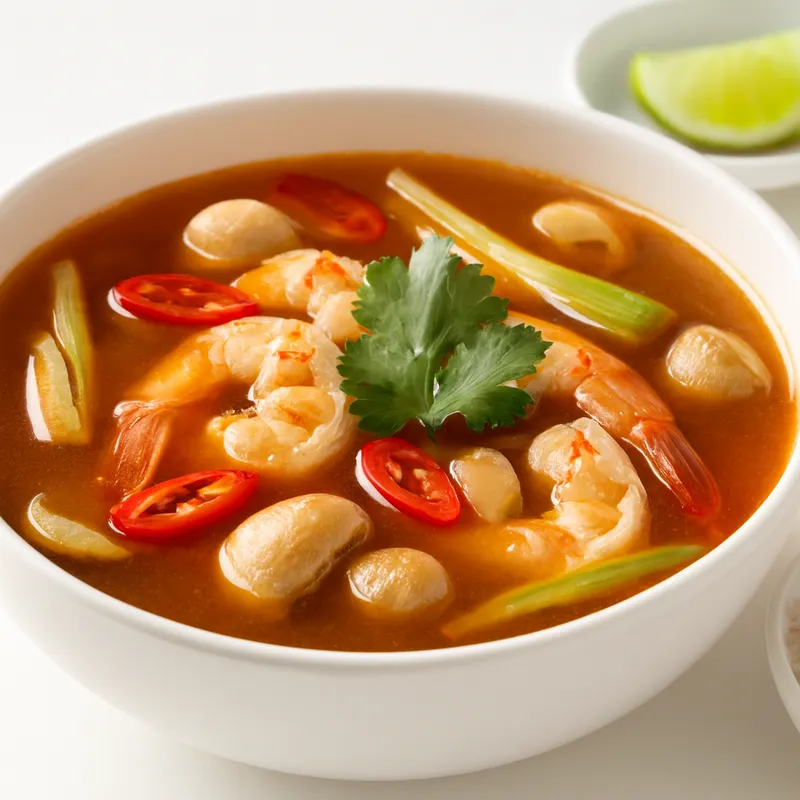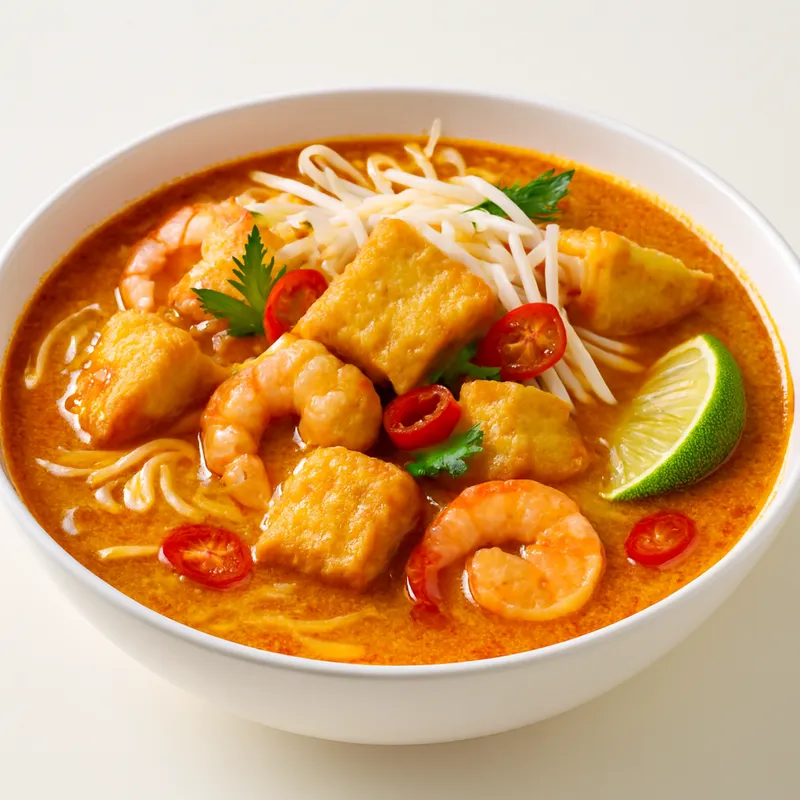
Spicy coconut curry noodle soup popular in Malaysia and Singapore, rich with shrimp, tofu puffs, and bean sprouts.
A Peranakan dish from the Straits of Malacca — Penang, Malacca, and Singapore — emerging out of intermarriage between Chinese (mostly Hokkien) traders and local Malay women from the 15th century onward. Curry laksa (Singapore/KL) uses coconut milk and is the version most know; asam laksa (Penang) is tamarind-and-mackerel based, no coconut, completely different bowl. Sarawak laksa is its own school again.
A 15th-century Peranakan bowl from the Straits of Malacca — Hokkien-Malay intermarriage written in chili oil. Rempah must fry 30 minutes until the oil splits clear and red.
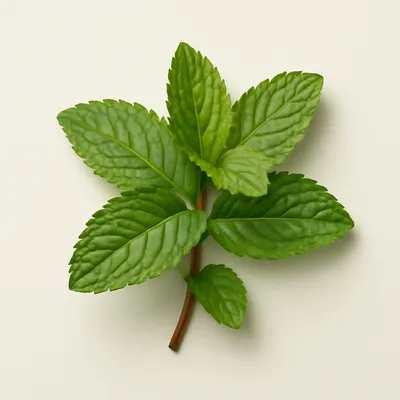
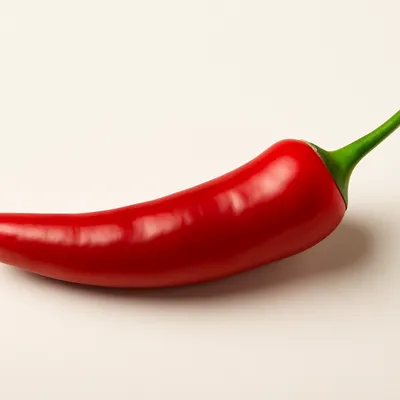
A deep bowl of orange-red coconut broth glossy with chili oil, thick rice noodles or bee hoon underneath, topped with prawn, tofu puffs (which act as sponges), bean sprouts, fish cake, and a knot of laksa leaf (Persicaria odorata). Sambal goes in to taste. The first sip is coconut-creamy, then chili builds, then the laksa leaf — citrus-pepper, like coriander crossed with mint — comes up on the back end.
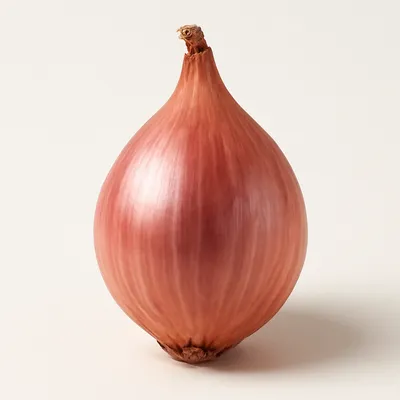
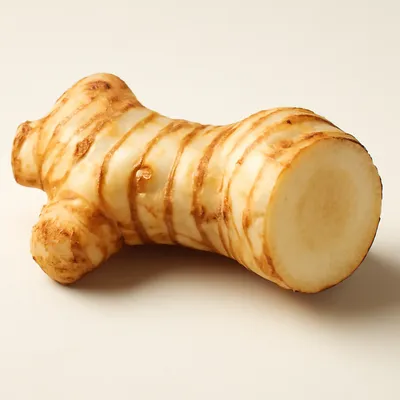
The rempah (chili-shallot-galangal-lemongrass-belacan paste) must be fried in oil until the oil splits red and clear from the paste — a 30-minute process. Untoasted rempah leaves the broth flat, with raw shallot at the front. Coconut milk goes in last and never boils hard, or it splits into curd and oil. Tofu puffs aren't optional garnish: they are the sponge that delivers broth in each bite.
Variations
Penang asam laksa runs tamarind-and-mackerel with no coconut; Singapore-KL curry laksa is the coconut-belacan bowl; Sarawak laksa uses sambal-belacan-tamarind paste with a chicken stock — three different dishes under one name.
On the Palate
Where Laksa sits in the Singaporean flavor cloud
Ingredients



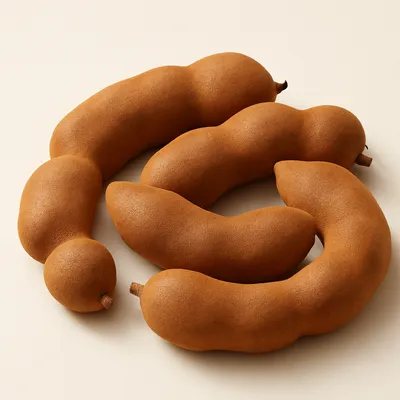


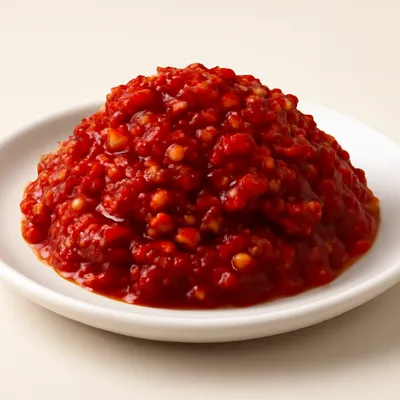
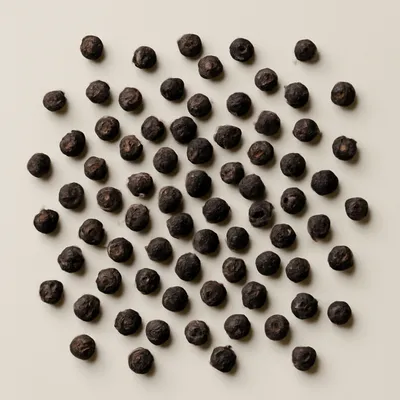
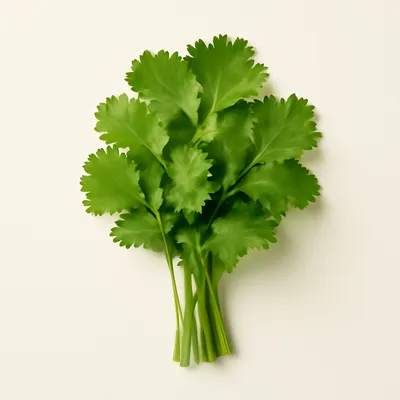





How it's made
5 steps · 30 min
- 110 min
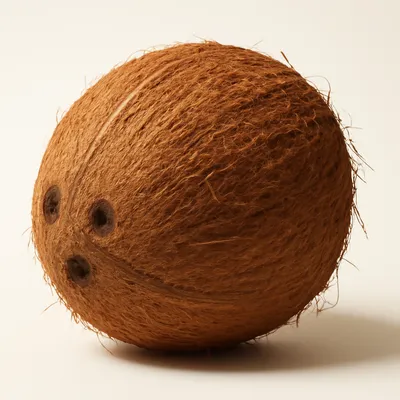
In a large pot, bring coconut milk to a gentle simmer. Add finely chopped lemongrass, chili pepper, and a splash of fish sauce. Stir until the kitchen fills with a fragrant aroma and the mixture is well combined.
Watch outBloom the aromatics in the coconut broth until the kitchen smells deeply fragrant and the raw lemongrass edge is gone — a thin milk here tastes flat, so let it concentrate.
- 25 min
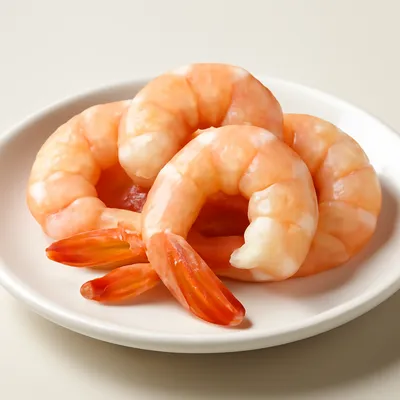
Add shrimp and tofu cubes to the simmering coconut broth. Stir gently to ensure even cooking. Watch as the shrimp turn pink and opaque, and the tofu absorbs the flavors of the broth.
Watch outThe shrimp are done the moment they curl and turn pink-opaque — pull them or they'll go rubbery in the hot broth.
- 38 min
In a separate pot, cook the noodles until just tender. Drain and rinse under cold water to stop the cooking process. Set aside.
Watch outAvoid overcooking the noodles, as they will continue to soften when mixed with the hot broth.
- 45 min
Combine the cooked noodles with the coconut broth, ensuring they are well coated. Add a squeeze of lime juice and tamarind for a tangy finish, stirring until everything is well mixed.
Watch outAdd the lime and tamarind at the very end and taste — you want a bright tang lifting the richness, not a sour broth; go a squeeze at a time.
- 52 min
Serve the laksa hot, garnished with fresh herbs. The vibrant colors and enticing aromas should invite you to dive in immediately.