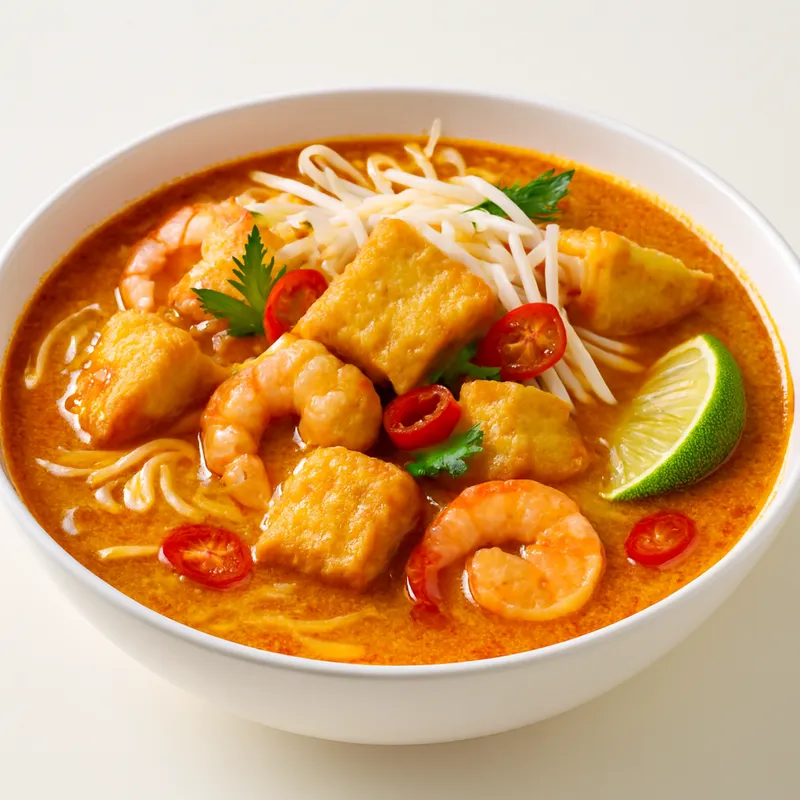
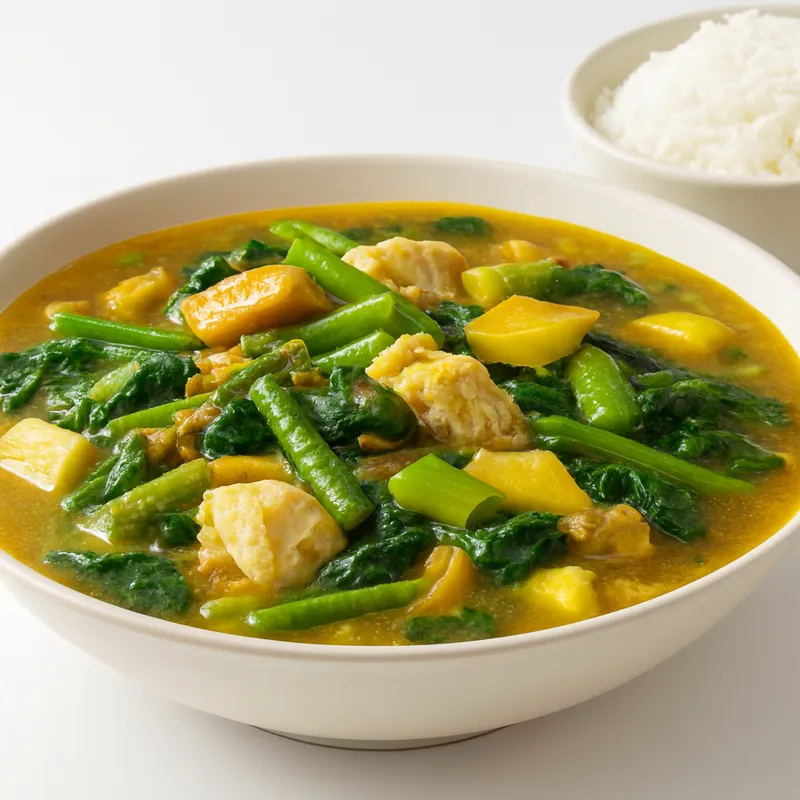
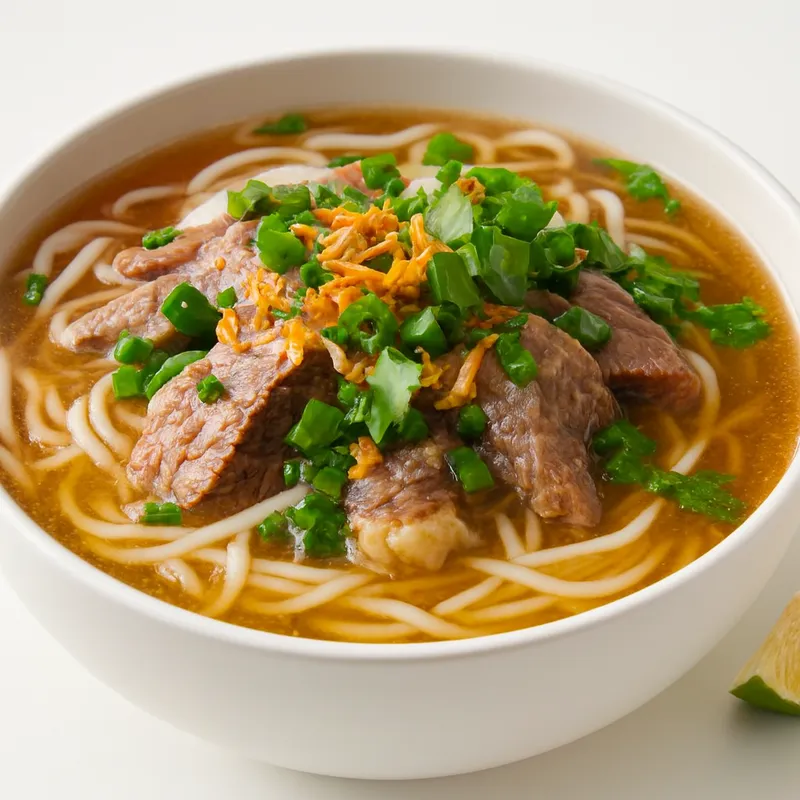
A traditional Cambodian noodle dish served with green fish curry.




Pre-Angkorian, traceable to the Khmer Empire (9th–15th century) — bas-reliefs at Bayon temple depict everyday cooking, market and fishing scenes. The dish predates chili in Cambodia (chilis arrived with Portuguese traders in the 16th century), which is why authentic versions lean on turmeric and lemongrass for color and bite, not heat.
Pre-Angkorian — Bayon temple bas-reliefs show noodle-making. Predates chili in Cambodia (Portuguese arrival, 16th century), so the bite comes from turmeric and lemongrass, not heat. Hand-pounded kroeung only; blenders chop past the oils.
Cold rice noodles, extruded fresh that morning, draped with a pale-green fish curry made from pounded lemongrass, turmeric root, kaffir lime leaf, and freshwater fish. Bean sprouts, banana blossom, cucumber, and water-mimosa go on top raw — the cold crunch against warm curry is the point. A village breakfast, eaten from a basket the seller carries on a shoulder pole.
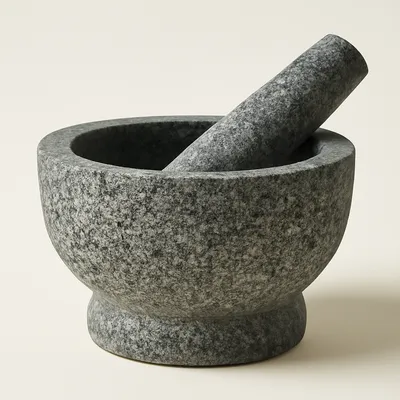
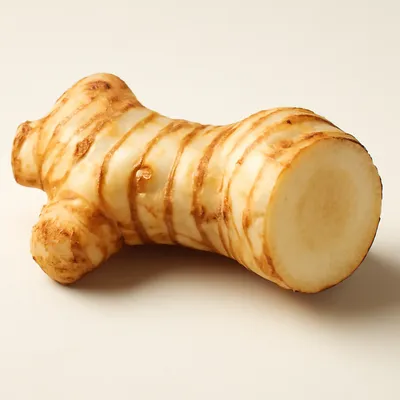
The kroeung (lemongrass-galangal-turmeric paste) is hand-pounded, never blended — the mortar bruises the fibers and releases oils that a blade chops past. Fish is traditionally snakehead or freshwater carp, poached then flaked into the curry; ocean fish gives the wrong texture. Noodles must be same-day fresh; reheating turns them gummy.
Variations
Nom banh chok samlor khmer (turmeric-lemongrass, the canonical morning bowl); samlor proher (richer, coconut-cream forward); Battambang version adds prahok directly into the curry; Siem Reap families use snakehead, coastal Kampot uses sea fish.
On the Palate
Where Nom Banh Chok sits in the Cambodian flavor cloud
Ingredients



How it's made
5 steps · 35 min
- 15 min
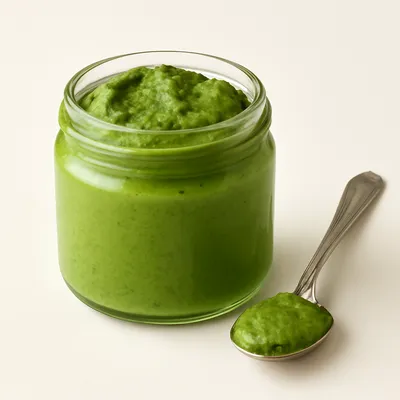
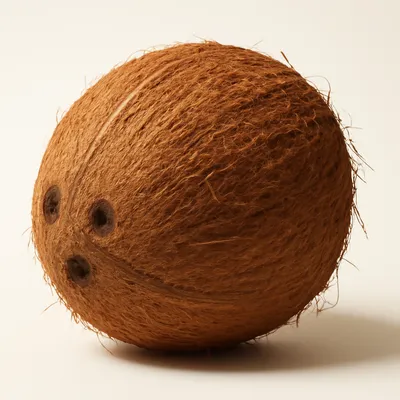
In a pot, bring coconut milk to a gentle simmer over medium heat, stirring occasionally. Add green curry paste and stir until the paste is fully dissolved and the mixture is fragrant.
Watch outStir until the coconut milk turns fragrant and the paste is fully dissolved with no raw graininess before the fish goes in.
- 210 min
Add the fish to the simmering coconut milk, ensuring it's fully submerged. Cook gently until the fish is opaque and flakes easily with a fork, about 10 minutes.
Watch outPoach gently — the fish is done the moment it turns opaque and flakes; a hard boil toughens it and clouds the curry.
- 310 min
Meanwhile, cook the rice noodles according to package instructions until tender. Drain and rinse under cold water to stop the cooking process. Set aside.
Watch outRinse the drained noodles under cold water until cool to the touch so they stop cooking and don't clump.
- 45 min
Layer the noodles in serving bowls. Ladle the coconut fish curry over the noodles, ensuring each bowl gets an even distribution of fish and sauce.
- 55 min
Top each bowl with fresh herbs, sliced cucumbers, and bean sprouts for a crunchy contrast. Serve immediately while the curry is warm.
Archive tool suggestions — not reviewed
These legacy suggestions have not been evidence-reviewed and are not presented as required tools.