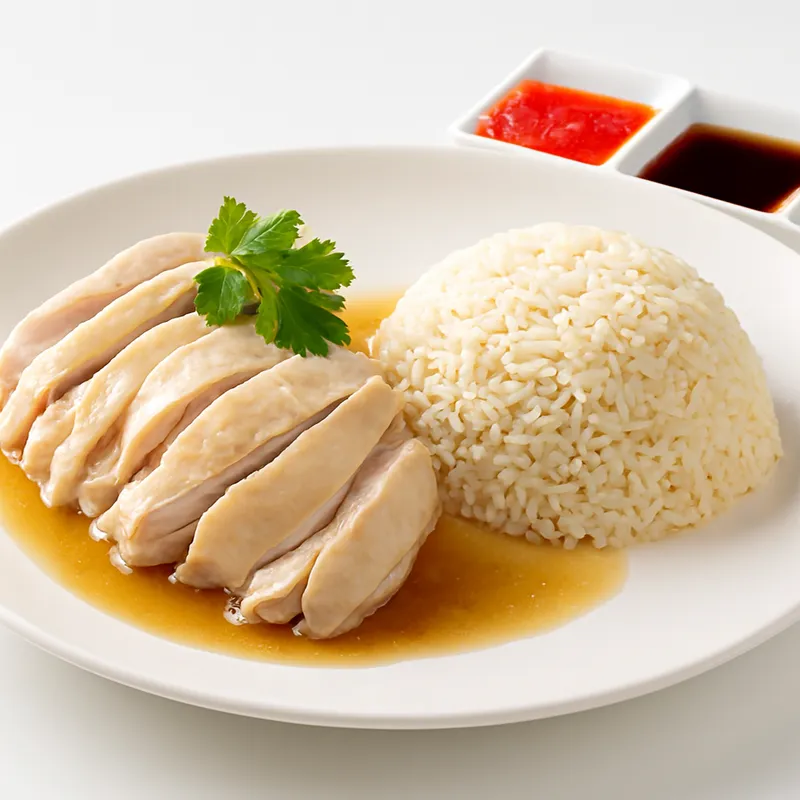
In Practice
Use a wide shallow pot — depth crushes delicate items. Court bouillon (water + wine + aromatics + 1% salt) builds back-pressure of dissolved solids that limits leaching. Eggs: 80°C with a splash of vinegar to coagulate stray whites, drop from a ramekin into a slow whirlpool, 3 min for runny yolk. Fish: 65-70°C until fillet flakes at the spine. Failure modes: water above 85°C ruins egg whites into wisps and renders fish chalky; salt-free liquid leaches flavor outward.
Background
Poaching is a universal technique, refined across various traditions for its ability to preserve delicate textures. In French cuisine, poaching is seen in dishes like Salade Lyonnaise, where eggs are gently cooked in water, maintaining their soft centers. Vietnamese cuisine uses poaching in Goi Cuon, where shrimp are cooked just enough to retain their sweetness and tenderness. The Chinese tradition includes Water-Boiled Fish, where fish is poached in a spiced broth, absorbing flavors without losing its delicate texture. In Italy, Vitello Tonnato showcases poached veal, served cold with a creamy tuna sauce.
How It Works
Liquid held at 60-82°C — below the simmer threshold — keeps protein denaturation gentle. Egg albumen sets at 62°C and yolk at 68°C; fish myosin denatures at 50°C and actin at 66°C, the latter being the boundary beyond which flesh turns dry. Sub-simmer means no agitation, so delicate flesh retains shape and moisture; flavored court bouillon penetrates by simple diffusion.
Dish examples
380 dishes · 58 cuisines


Through Time
Apicius records pulmentaria poached in milk; medieval European fast-day cookery relied on poaching for fish. Auguste Escoffier's 1903 *Le Guide Culinaire* codified court bouillon ratios still in use. Madeleine Kamman's *The Making of a Cook* (1971) and Bocuse's nouvelle cuisine pushed the precise sub-simmer parameter ranges into modern professional kitchens.
Related cooking knowledge
Simmering sits one rung higher in temperature; Sous Vide is the modern hyper-controlled version using vacuum sealing and circulator precision. Blanching is poaching's brief, blast-and-shock cousin. Confit applies the same low-temperature logic in fat rather than water.


