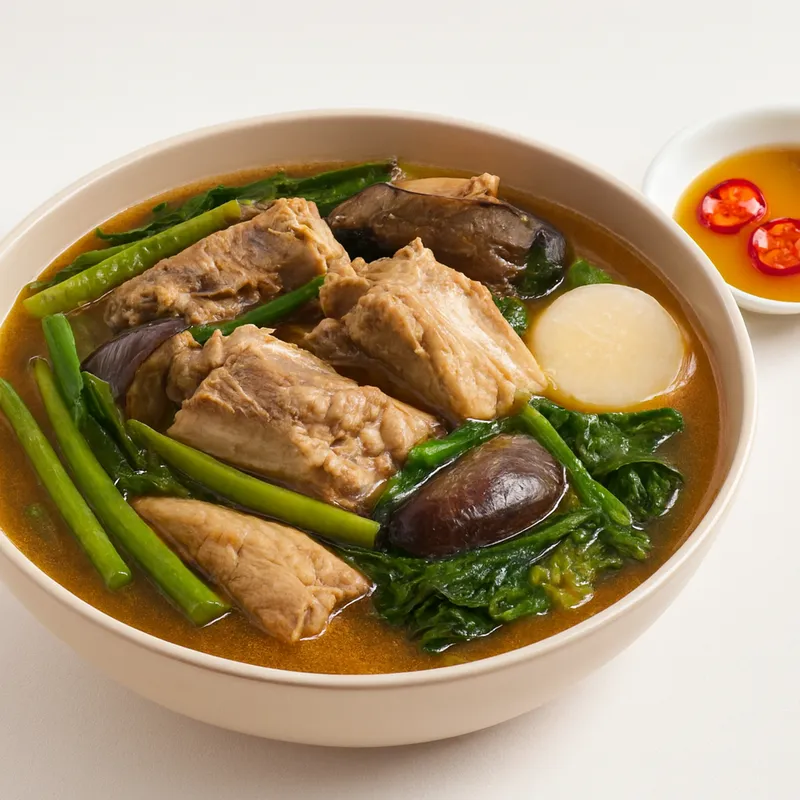
Umami's secret weapon: a little goes a long way.
Pungent fermented fish liquid; intensely umami with briny depth fundamental to Southeast Asian cooking.
Where it comes from
A staple in Vietnamese and Thai kitchens, fish sauce has been used for thousands of years, originally developed as a method to preserve fish.
In the kitchen
Used as a seasoning or marinade, fish sauce enhances dishes with its complex salty flavor, often balancing with lime or sugar for a harmonious taste.
Across cuisines
The baseline seasoning for virtually every savory Thai preparation. Pad Thai uses it in the stir-fry sauce alongside tamarind; tom yum and tom kha rely on it for salt and depth rather than added stock. Northern-style larb and Isaan-style larb plaa use it raw to dress minced meat and fish. Typically 3-season anchovy-based, about 20–25°N protein.
Nước chấm (diluted fish sauce + lime + sugar + chili) functions as the all-purpose condiment for spring rolls and grilled meats. Pho broth layers it in during simmering rather than using only salt. Bún bò Huế and bún mắm (fermented fish vermicelli) push toward funkier, higher-ferment grades for regional identity.
Tuk trey (Cambodian fish sauce) is lighter-colored and milder than Thai versions, used in kroeung-based dishes like amok trey—where it seasons the banana-leaf-steamed fish custard—and in raw beef preparations like pleah sach ko, where it acts as both salt and mild cure. Lap khmer relies on it in its fresh herb dressing.
Notable varieties
Made exclusively from black anchovies (cá cơm) fermented 12 months in wooden barrels. First-press yields 40°N protein or higher. Carries PDO designation. Amber-red color, clean brine with minimal fermented funk.
Anchovy or mixed small fish fermented 12–18 months. Protein grade 20–25°N typical for cooking; higher grades (Tiparos Gold, Megachef) reach 30°N+ for dipping. Saltier and slightly more pungent than Vietnamese styles.
By-product of bagoong (fermented shrimp/fish paste) production. Sweeter and lighter amber; fermented 12–18 months. Often served as a table condiment alongside calamansi, rather than in cooking.
Lighter fermentation, shorter production window than Vietnamese grades. Paler in color and milder in funk; often blended with lime, sugar, and chili to make the condiment tuk trey chean (Cambodian dipping sauce).
Nutrition (per 100g)
AI-estimated; model and run unavailable.
Pairs well with