Bird's Eye Chili
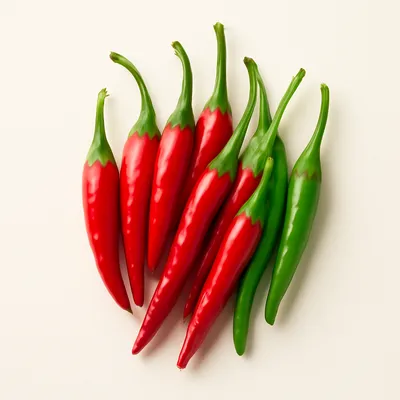
Bird's eye chili delivers explosive heat with a fruity undertone, igniting the senses with each bite. These small yet potent peppers add a fiery kick, making them a quintessential ingredient in Southeast Asian cuisine.
Where it comes from
Native to Southeast Asia, bird's eye chili has been a staple in local cooking for centuries, often found in spicy sauces and marinades. Its vibrant color and heat have made it popular worldwide.
In the kitchen
Used fresh, dried, or ground, bird's eye chili adds heat to curries, dipping sauces, and stir-fries. Its bold flavor profile enhances dishes, making it a must-have for those seeking spice.
Across cuisines
In Indonesian cuisine, bird's eye chili is often pounded into sambal, a spicy condiment used as a base or side. Sambal terasi combines these chilies with shrimp paste, adding a pungent depth to the heat. The chili's small size and intense heat make it ideal for sambal, providing a fiery kick that complements grilled fish and satays.
Cambodian cuisine frequently uses bird's eye chili as a raw garnish to add sharp heat and color. It is sliced thinly and sprinkled over dishes like Lap Khmer, enhancing the freshness and spiciness of the dish. This method highlights the chili's natural flavor without cooking it down.
In Sri Lankan cuisine, bird's eye chili is often tempered in hot oil along with mustard seeds, curry leaves, and other spices. This technique, known as 'tempering,' is used to infuse the oil with the chili's heat and aroma, which is then used to finish curries and sambols. The process enhances the depth of flavor in dishes like Lunu Miris.
Nutrition (per 100g)
AI-estimated; model and run unavailable.