
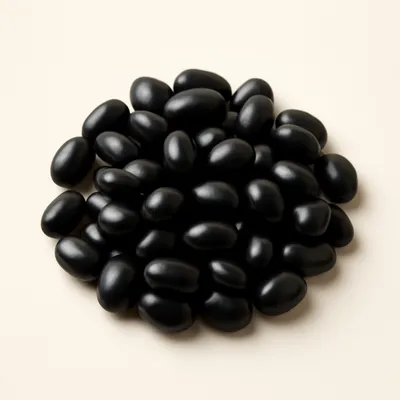
Kongjaban, also called kong-jorim, is black soybeans simmered slowly in soy sauce and sugar until the liquid cooks down to a sticky glaze and the beans turn deep, glossy and sweet-savory. It is a humble keeping side dish — a mitbanchan, the kind made in a batch and kept in the refrigerator to round out everyday meals — that holds for a couple of weeks and tastes just as good cold. The beans are tender but with a satisfying chew, the soy salt balanced by sugar and a final gloss of syrup, often finished with a scatter of toasted sesame. Plain, frugal and quietly addictive, it is one of the most ordinary and beloved fixtures of the Korean home table.




Kongjaban is everyday home cooking with no single inventor or founding date — a frugal way to turn a cheap, storable pulse into a side dish that keeps. It belongs to the broad Korean family of jorim, foods braised down in seasoning until the liquid concentrates, and to the even broader habit of mitbanchan: make-ahead keeping dishes that let a household set a varied table without cooking everything fresh each day. The black soybean carries weight beyond thrift in Korean food culture, valued as a tonic and so woven into custom that black-bean dishes appear at celebratory and milestone tables. As home refrigeration spread it stayed exactly what it had always been — a standing jar of beans to reach for at any meal.
The beans give a firm little resistance, then a soft, mealy-creamy interior, the skin slightly wrinkled and lacquered. The taste is sweet and salty in close balance — soy savor up front, sugar rounding it, a faint nuttiness from the bean itself — with a clinging, almost candied stickiness from the reduced glaze. Toasted sesame adds crunch and aroma. Cold from the refrigerator the glaze sets a touch firmer and the chew deepens; eaten this way, a few beans at a time, it is a quiet, more-ish punctuation to a bowl of rice.
The work is in patience and order. Dried black soybeans are soaked until they swell and rehydrate, then simmered in water first until tender — done early, the sugar would toughen the skins and keep the centers hard, because sugar draws water out and slows the beans softening. Only once the beans are soft do soy sauce and sugar go in, and the pot is held at a low simmer so the beans do not split while the seasoning penetrates and the liquid reduces. As the braise concentrates, the sugars and soy thicken and cling, and a little corn syrup or oligosaccharide stirred in at the end coats each bean in a reflective glaze that also helps it keep. The deep color is partly the soy and partly the bean's own anthocyanins, the antioxidant pigments that make black soybeans black.
Variations
The main choice is the bean: seoritae, green-fleshed inside, cooks up softer and nuttier, while plain black soybean (heuktae), yellow inside, stays firmer with more chew. Sweetness and gloss are tuned with sugar, corn syrup, rice syrup or honey to taste. Many cooks finish with toasted sesame seeds, and some add chopped walnuts, peanuts, anchovies or dried shrimp, or a few dried chilies and a knob of garlic. A whisper of sesame oil at the end lifts the sheen and aroma. The same braising method carries over to black beans done with other glazes, but the soy-and-sugar version is the canonical banchan.
On the Palate
Where Kongjaban sits in the Korean flavor cloud
Ingredients
Serves 8
How it's made
7 steps · 30 min
- 1360 min
Rinse dried black soybeans and soak them in plenty of water for at least six hours or overnight until plumped.
- 210 min
Drain, add fresh water to cover, and bring to a boil, skimming any foam.
- 330 min
Lower to a steady simmer and cook the beans until tender enough to crush between the fingers, topping up water as needed.
Watch outBoil the beans soft before any sugar or soy goes in — add seasoning early and the sugar toughens the skins and the centers stay hard.
- 45 min
Add soy sauce and sugar to the softened beans and stir to dissolve.
- 520 min
Simmer gently over low heat, stirring now and then, so the beans stay whole while the liquid reduces and the seasoning soaks in.
- 68 min
When the liquid has cooked down to a scant, syrupy glaze, stir in corn syrup and turn the beans to coat them glossy.
Watch outReduce to a scant syrupy glaze and turn the beans to coat — cook it dry and the glaze goes hard and dull instead of glossy.
- 73 min
Take off the heat, finish with a drop of sesame oil and a scatter of toasted sesame seeds, and cool before storing.
Archive tool suggestions — not reviewed
These legacy suggestions have not been evidence-reviewed and are not presented as required tools.


