
Yeongeun-jorim is sliced lotus root simmered slowly in soy sauce with sugar and grain syrup until it turns dark, glossy and candied at the edges. The rounds are usually parboiled in vinegared water first to tame their raw astringency and set their crunch, then braised down until the sauce thickens to a sticky glaze that coats each lacy slice. It is a classic keeping banchan — mitbanchan — that holds for many days in the fridge and only deepens in flavor, which is why it is a staple of home side-dish rotations and lunchboxes. The bite is the whole point: sweet and salty outside, still faintly crisp through the holes.





Yeongeun-jorim grows out of two old strands of Korean cooking: lotus root as a valued vegetable, and jorim as a preserving technique. The lotus carries strong associations with Buddhism, and lotus root has long been used in Korean temple cuisine (sachal eumsik) as well as ordinary home kitchens, valued as much for its texture as for being a vegetable that stores well through the cold months. Cooking it down in soy and sweetener is a classic way to make a robust, salty-sweet side that keeps — the same logic behind soy-braised black beans (kongjaban) and burdock root. There is no single recorded inventor or date; it is a generic home and temple preparation rather than a dish tied to one place or person.
You bite through a sticky, deeply savory-sweet shell into a dense, faintly crunchy interior, the little holes giving each slice a delicate, lacy snap. The flavor is layered: caramel-dark sweetness from sugar and grain syrup, a salty soy backbone, a nutty finish from sesame oil and seeds. Older batches that have sat in the sauce turn chewier and more intensely seasoned, almost like candy. There is a clean, slightly starchy vegetal note underneath that keeps it from being cloying.
Cut lotus root browns fast because it is rich in polyphenols (tannins, chlorogenic acid) and the enzyme polyphenol oxidase; exposed to air, the enzyme oxidizes the phenols into quinones that polymerize into dark pigments. A short parboil in vinegared water both denatures that enzyme with heat and lowers the pH, since the enzyme is sluggish in acid — so the slices stay pale and lose their raw, mouth-puckering astringency, while the brief cook keeps the cell walls firm for that signature crunch. In the braise, water evaporates and the soy and sugars concentrate; the sugar and grain syrup undergo some caramelization and the sugars plus soy proteins brown via the Maillard reaction, producing the dark color, sticky body and candied surface. Grain syrup, being partly resistant to crystallizing, gives a smoother, glossier glaze than sugar alone and helps the slices keep without going hard.
Variations
The sweetness and darkness vary widely by household — some keep it light and barely sweet, others braise it almost black and sticky. Burdock root (ueong-jorim) is cooked exactly the same way and the two are often made together or combined in one pan. Cooks may finish with a spoon of corn or oligo syrup for extra shine, add dried chili or gochugaru for a spicy version, or toss in nuts. A drop of vinegar in the braise keeps the slices lighter and adds a faint tang; using dark soy or more syrup pushes it toward the glossy, candied end.
On the Palate
Where Yeongeun-jorim sits in the Korean flavor cloud
Ingredients
Serves 6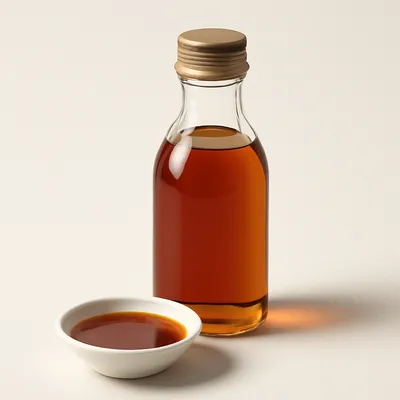

How it's made
6 steps · 15 min
- 15 min
Peel the lotus root and slice into rounds about half a centimetre thick.
- 25 min
Parboil the slices a few minutes in water with a splash of vinegar to remove astringency, then drain.
Watch outParboil the slices in vinegared water — the acid and heat stop them browning and knock out the raw pucker, while the short cook keeps the crunch.
- 33 min
Put the lotus root in a pan with soy sauce, sugar, a little water and ginger, and bring to a boil.
- 412 min
Lower the heat and simmer, stirring now and then, until the slices are tender and the sauce has reduced by half.
- 58 min
Stir in grain or corn syrup and continue cooking until the sauce is thick, dark and glossy and coats the slices.
Watch outReduce until the sauce turns dark, thick and glossy and clings to each slice — pull it early and it stays thin and won't glaze.
- 62 min
Finish with sesame oil and toasted sesame seeds and let cool; serve at room temperature.
Archive tool suggestions — not reviewed
These legacy suggestions have not been evidence-reviewed and are not presented as required tools.


