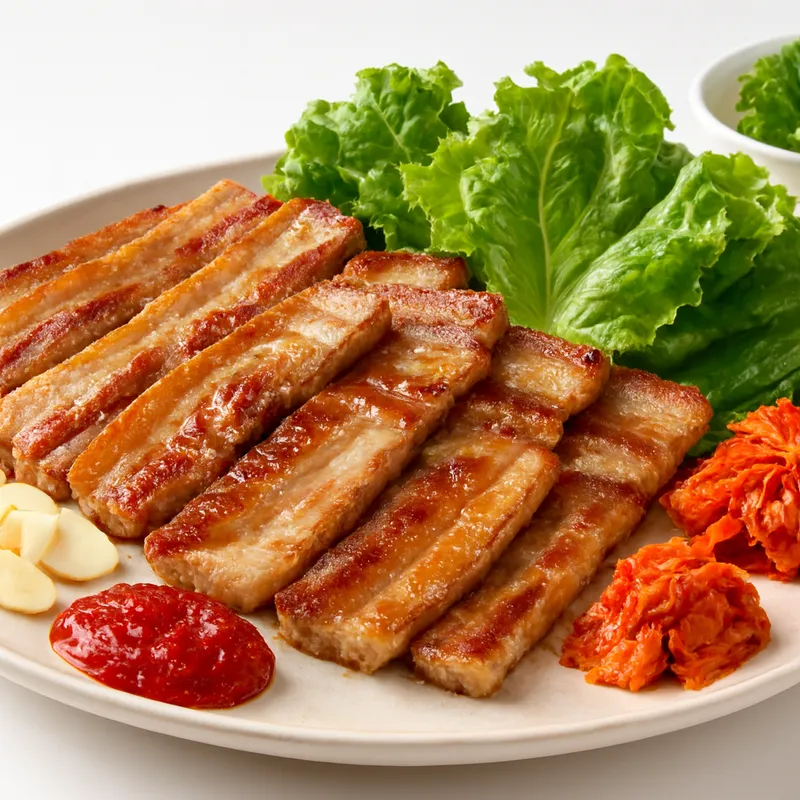
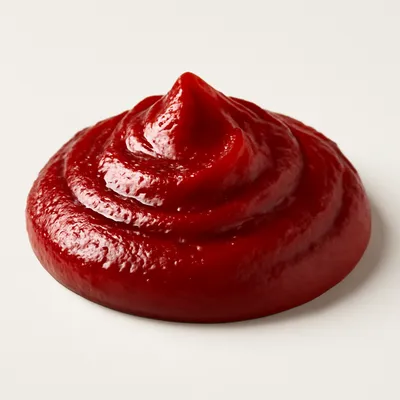
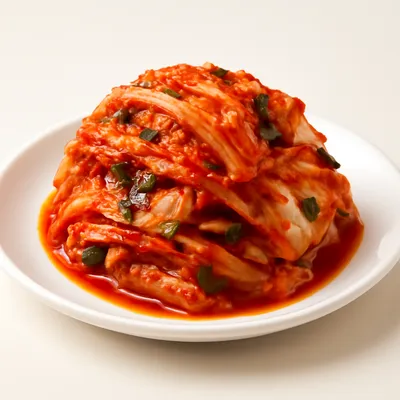
Korean grilled thick slices of unseasoned pork belly, wrapped in lettuce with garlic, chili paste, and kimchi.




Surprisingly modern: samgyeopsal-as-restaurant-genre dates only from the late 1970s in South Korea, when industrial pig farming made pork belly cheap and table-grill restaurants spread across Seoul. Before that, pork belly was a humble home cut. The unmarinated, table-grilled format and lettuce-wrap ritual crystallized in the 1980s during Korea's economic boom.
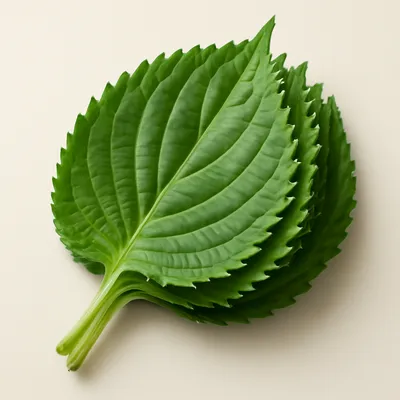
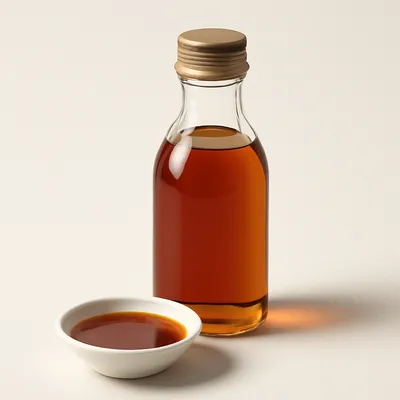
Three-layer pork belly, grilled tableside on a slanted plate so fat runs off, wrapped in perilla leaf with ssamjang, raw garlic, and a smear of sesame-oil-salt. The leaf is non-negotiable — it's the cooling counter to the fat.
Thick, unmarinated slabs of pork belly grilled at the table on a slanted iron plate that drains the fat off. Three layers visible — meat, fat, meat — give the dish its name (sam = three, gyeop = layer, sal = flesh). Wrapped in lettuce or perilla with raw garlic, ssamjang, sometimes a smear of saeujeot. Eaten in one bite, leaf folded shut. Soju is mandatory.
The fat-to-meat ratio is the whole point — about 1:1 in good cuts. The slanted grill is essential: rendered fat must drain off or it pools, fries the meat, and turns it greasy instead of crisp-edged. The lettuce wrap isn't garnish — raw vegetable balances the fat load and is the reason you can eat several hundred grams in one sitting.
Variations
Standard saeng (fresh) samgyeopsal is unmarinated; ogyeopsal includes the skin (5-layer); wine-marinated and herb-rubbed versions appeared in 2000s Seoul; Jeju black-pig samgyeopsal is the prized regional cut.
On the Palate
Where Samgyeopsal sits in the Korean flavor cloud
Let the fat render and drain, don't fry the meat in its own grease: keep the belly on a hot slanted grill and leave it alone until the underside is deep-brown and crisp-edged — flip it too early or too often and it steams pale and greasy instead of crisping.
Ingredients


How it's made
3 steps · 18 min
- 110 min
Preheat a grill or a slanted metal griddle over medium-high heat until hot. Place the thick slices of pork belly on the grill, letting them sizzle as the fat renders, about 5 minutes per side.
Watch outWait for the underside to turn deep brown and the edges to crisp and curl before touching it — that's the fat rendered and the surface caramelized.
- 25 min
As the pork grills, add garlic cloves and onion slices to the side, allowing them to cook in the rendered pork fat until they are golden and fragrant, about 5 minutes.
Watch outThe garlic and onion are ready when they've gone golden and sweet in the pork fat; let them soak up the drippings but pull them before they scorch.
- 33 min
Once the pork is cooked through, slice it into bite-sized pieces using scissors. Serve immediately with lettuce leaves, gochujang, and any other desired accompaniments.
Watch outSnip the belly only after it's fully cooked and crisp-edged; cut too soon and the juices bleed out and it dries.
Archive tool suggestions — not reviewed
These legacy suggestions have not been evidence-reviewed and are not presented as required tools.