Pork Belly
Pork belly is a succulent cut with layers of rich fat and tender meat, delivering an addictive balance of flavor and texture. Its aroma, when roasted, evokes nostalgia for comfort food at its finest.
Where it comes from
Pork belly is central to various culinary traditions worldwide, from Chinese braised pork belly to American bacon. Its versatility has made it a favorite in both casual and fine dining settings.
In the kitchen
Pork belly can be braised, roasted, or cured for bacon, with each method enhancing its natural richness. It's often served crispy or as a melt-in-your-mouth component in gourmet dishes.
Across cuisines
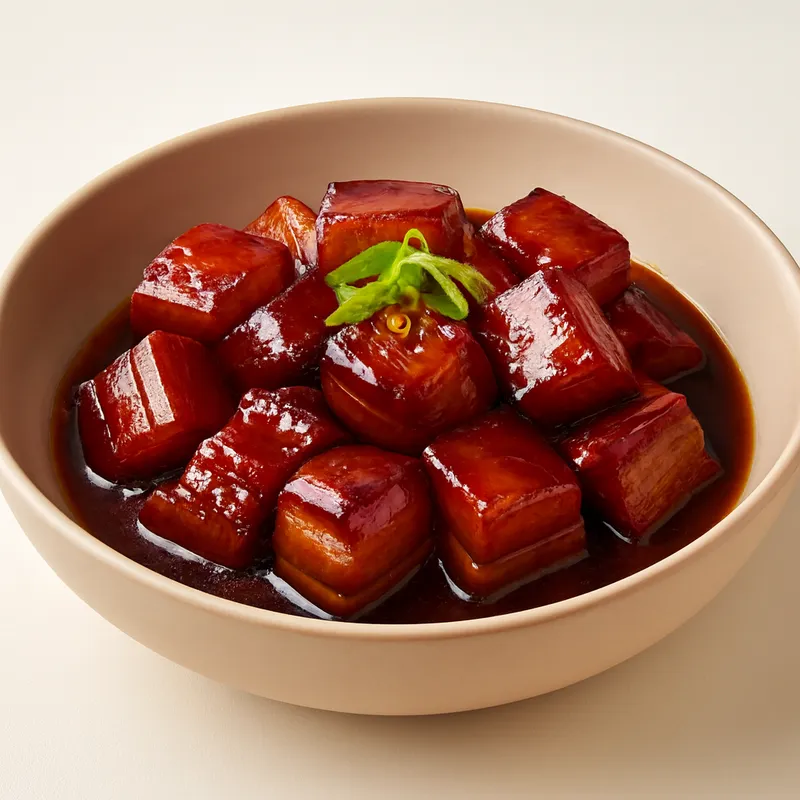
In Chinese cuisine, pork belly is often red-braised (红烧) to achieve a rich, caramelized flavor and glossy appearance. The technique involves slow cooking the meat in soy sauce, sugar, and spices, allowing the flavors to deeply infuse. This method is especially popular in dishes like Red Braised Pork Belly and Chairman Mao's Red-Braised Pork, where the balance of sweet and savory is crucial.
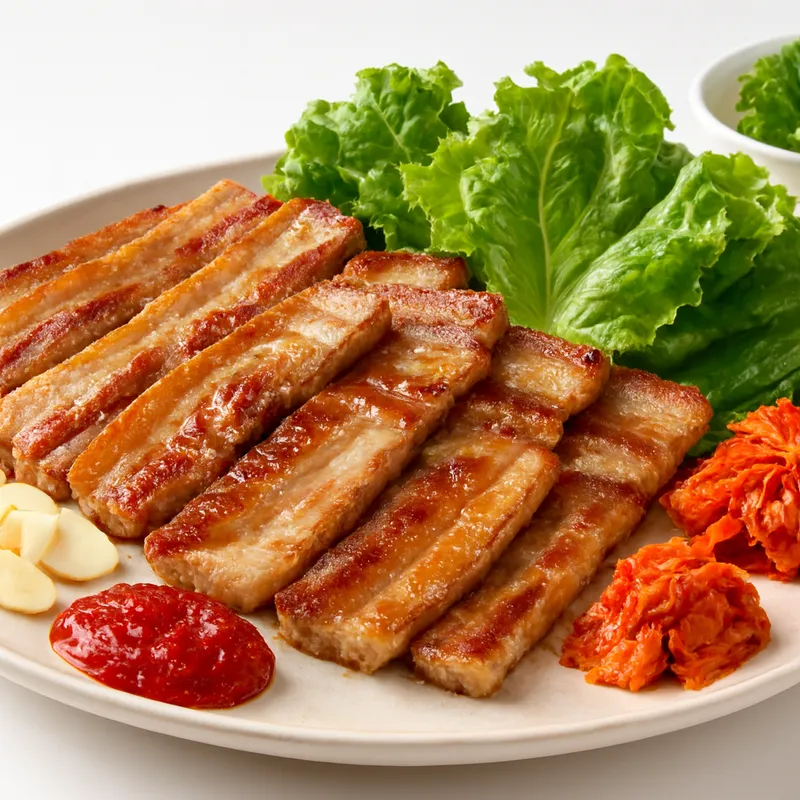
Korean cuisine features pork belly prominently in grilled dishes like Samgyeopsal. The meat is typically sliced thick and grilled at the table, allowing diners to cook it to their preferred level of doneness. It is often enjoyed with accompaniments like garlic, kimchi, and ssamjang, wrapped in lettuce leaves.
Pork belly is the cut behind Taiwan's most iconic dishes — braised long with soy and rock sugar for gua bao (the 'Taiwanese hamburger' steamed bun with pickled mustard greens, peanut powder, and cilantro), steamed over preserved mustard greens for mei cai kou rou, and diced into lu rou fan. The fat-to-meat ratio of Taiwanese pork belly leans fatter than the Western cut.
Nutrition (per 100g)
AI-estimated; model and run unavailable.
Pairs well with