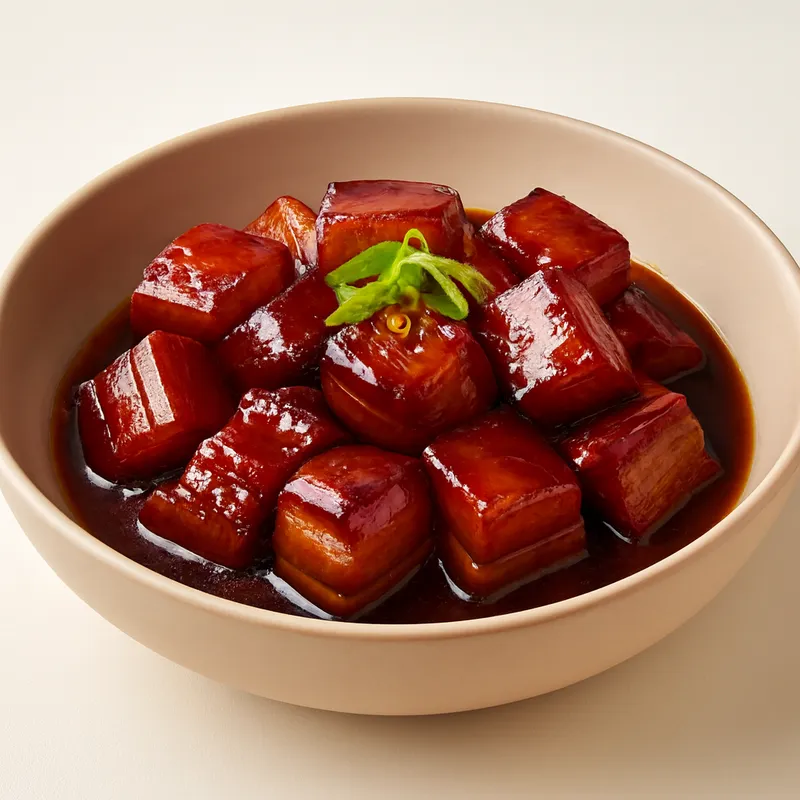
Shanghai classic of pork belly slow-braised in soy sauce, Shaoxing wine, rock sugar, and warm spices until meltingly tender.




The Shanghai 红烧 (hong shao) form was codified in Jiangnan kitchens by the Qing era (17th–19th century), but its fame is tied (largely by later attribution) to Su Dongpo, the 11th-century Song poet exiled to Huangzhou, who praised slow-stewed pork in verse (his 《猪肉颂》); he later governed Hangzhou, the home of the related 东坡肉 — 东坡肉 is the related Hangzhou cousin. Shanghai's version leans sweeter (more rock sugar) than Hunan's Mao-style red braise, which adds chili.
Shanghai hongshaorou — soy-heavy, sugar-glazed, no chili. Distinguished from the Hunan version by the dark soy and the rock-sugar finish that lacquers each cube.
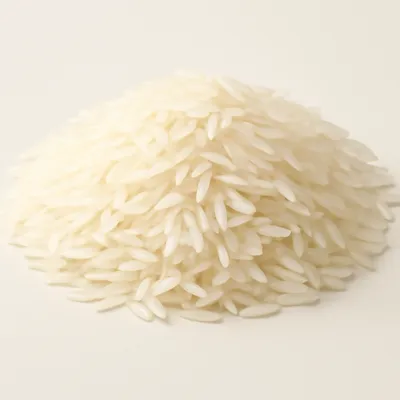
Cubes of pork belly, deep mahogany and glossy enough to mirror the light, alternating fat and lean in clean stripes. The fat has gone gelatinous — a chopstick goes through with no resistance. The sauce is thick, almost sticky, sweet-salty with Shaoxing wine warmth underneath. Served over white rice that catches the glaze. If the cubes hold a sharp edge, the braise was cut short.
Rock sugar, not granulated, is the technical move: melted in oil to a caramel before the meat goes in, it gives the dish its brown lacquer color and a roundness regular sugar can't match. The belly is also blanched first to pull blood and scum — skip this and the braising liquid clouds. Final reduction without a lid concentrates the glaze; a wet sauce means the cook stopped early.
Variations
Shanghai version (本帮) leans sweet and dark-soy heavy; Suzhou version adds dried squid for umami; Wuxi version is the sweetest of the three (paigu rather than belly is common).
On the Palate
Where Red Braised Pork Belly sits in the Chinese flavor cloud
Melt rock sugar in oil to a deep amber caramel before the pork goes in — that caramel is what gives the belly its lacquered brown color and rounded sweetness, and it will turn bitter the moment it goes past amber.
Ingredients



How it's made
4 steps · 25 min active + 2 hours waiting
- 15 min
Bring about 2 inches of water to a boil in a large pot. Add the pork belly, ensuring it's fully submerged, and boil for 3 minutes to remove impurities. Drain and set aside.
Watch outThe foam that rises is blood and scum — boil just 3 minutes, until the water is grey and murky, then drain; longer and the meat toughens.
- 25 min
In a large wok, heat oil over medium heat. Add the rock sugar and stir until it melts and turns a deep amber color, about 3 minutes. Add the pork belly cubes and stir to coat them in the caramelized sugar.
Watch outWatch the sugar go clear, then straw, then deep amber — pull the pork in the instant it hits amber, before it smokes and turns bitter.
- 310 min
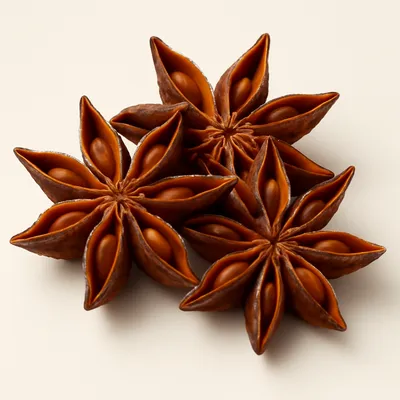
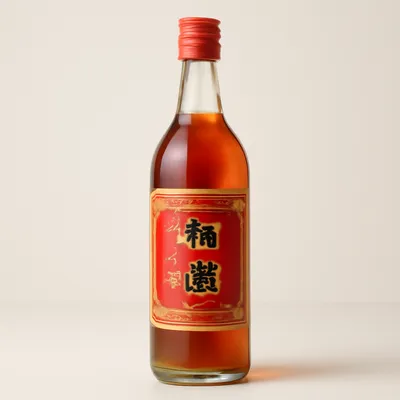
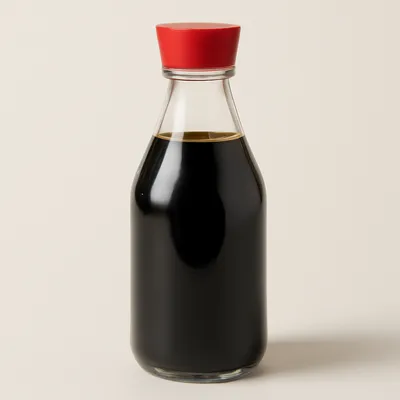
Add the soy sauces, Shaoxing wine, star anise, ginger, and enough water to cover the pork. Bring to a simmer, then reduce the heat to low and cover. Braise for at least 2 hours, stirring occasionally.
Watch outEnsure the liquid is simmering gently, not boiling, to keep the pork tender.
- 45 min
After 2 hours, taste the braising liquid. Adjust seasoning with more soy sauce or rock sugar if needed. Continue to braise until the pork is tender and the sauce is thick and glossy.
Watch outSauce is ready when it thickens enough to coat the back of a spoon and turns glossy; a wet, thin sauce means you stopped too early.


