Pork belly slowly red-braised in soy sauce and ice sugar until meltingly tender, then arranged into the shape of a gold ingot alongside mahogany-stained quail eggs — the prestige centerpiece of Tianjin's fine banquet tradition.



元宝肉 belongs to Tianjin's 细八大碗 (fine eight great bowls) banquet tradition, which emerged in the late 19th century and reached its peak in the 1920s–30s. At its height, a 细八大碗 feast cost 1.6–2 silver yuan — noticeably more than the humbler 粗八大碗 at 1.2 yuan — marking it as a celebration spread for prosperous households. The ingot shape, evoking 元宝 gold ingots, carried explicit wishes for wealth, making it a fixture at wedding and birthday banquets. The banquet tradition faded under Japanese occupation and was further eclipsed after 1949, surviving today as a heritage revival dish at Tianjin food festivals.
The skin yields with the gentlest press of a chopstick, quivering like amber jelly; layers of fat and lean alternate in silky succession, coated in a sticky-sweet soy glaze. The quail eggs, stained deep mahogany from the long braise, offer a bouncy, savory counterpoint to the richness of the pork.
Long braising (80–90 minutes) hydrolyzes the collagen in the pork skin and connective tissue into gelatin, producing the characteristic melt-in-the-mouth quality. Ice sugar undergoes caramelization at around 160°C during the final reduction, generating amber pigments and a viscous, lacquer-like glaze that adheres to the meat surface. The initial high-heat skin blistering (虎皮) creates a micro-porous surface that soaks up braising liquid during the slow cook, concentrating flavor from outside in.
Variations
The 粗八大碗 (coarser) version substitutes chicken eggs for quail eggs and uses simpler aromatics. Home cooks often skip the ingot-shaping step and serve as plain red-braised pork cubes. Some restaurant versions add red fermented tofu (南乳) to deepen the flavor, or chestnuts in autumn.
On the Palate
Where Ingot-Shaped Braised Pork Belly sits in the Chinese flavor cloud
Ingredients
Serves 4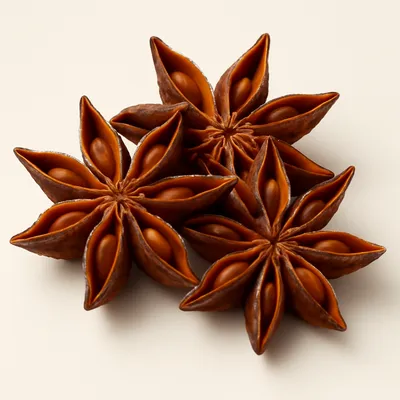


How it's made
7 steps · 20 min
- 110 min
Bring a pot of cold water to a boil with ginger slices and scallion knots; add the whole pork belly skin-side down, blanch 10 minutes to remove impurities, then drain and pat thoroughly dry.
- 25 min
Heat 2 tablespoons oil in a wok over high heat; fry the pork belly skin-side down until blistered and golden, about 3–4 minutes. Immediately plunge into cold water for 1 minute — this creates the cratered tiger-skin texture.
Watch outFry the skin until it blisters and goes golden, then plunge straight into cold water for a minute — the sudden shock is what puckers the skin into the cratered tiger-skin that later drinks up the braise.
- 33 min
In a small saucepan, melt ice sugar over medium heat until it turns amber caramel; stir in 2 tablespoons dark soy sauce, then set aside.
Watch outMelt the ice sugar only to an amber caramel — the second it darkens toward mahogany it tips bitter, so pull it and stir in the soy the moment the color is right.
- 43 min
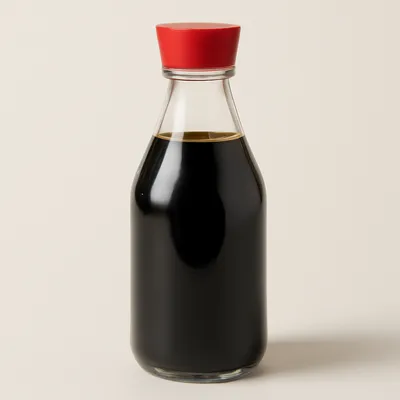
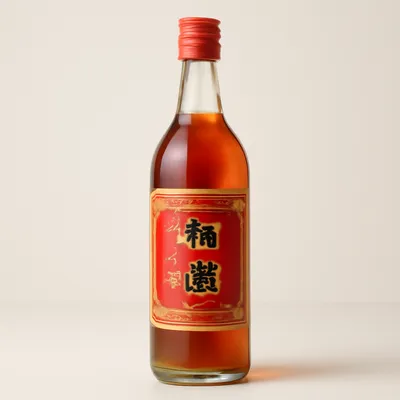
Transfer the pork belly to a braising pot; add the caramel, light soy sauce, Shaoxing wine, star anise, ginger, and scallions; pour in enough water to just cover. Bring to a boil.
- 570 min
Reduce to the lowest possible simmer; cover and braise for 70 minutes, turning the pork once at the halfway mark.
- 620 min
Add peeled hard-boiled quail eggs; continue braising uncovered for 20 minutes, basting the eggs frequently, until the sauce thickens and turns deeply glossy.
Watch outReduce uncovered, basting the eggs, until the sauce turns thick and deeply glossy and coats the back of a spoon — that lacquer shine is the caramelized glaze setting on the meat.
- 75 min
Remove pork; slice and arrange into ingot shapes on a serving platter; position quail eggs alongside; pour the reduced sauce over everything and serve immediately.
Archive tool suggestions — not reviewed
These legacy suggestions have not been evidence-reviewed and are not presented as required tools.