Pork belly from the native Shanghang Huai pig — a heritage breed prized for its thin skin, abundant collagen and sweet flesh — is braised low and slow with dried radish until the skin turns deep mahogany and the meat melts completely from the bone. A Hakka 'house dish' and one of the Eight Fresh Delicacies of Western Fujian.



The Shanghang Huai pig is Fujian Province's sole breed listed in China's first National Livestock Genetic Resource Protection Catalogue (designated by the Ministry of Agriculture in 2000). The Shanghang County Gazette records it as a prized local product: 'Huai pigs are native to this land; their coats lustrous, their flesh sweet.' The name 'huai' (槐, locust tree) traces to the Hakka diaspora: ancestors who migrated southward from Shanxi Hongtong — gathering point for generations of state-organised migration — named the local black pig after the great locust tree of Hongtong that served as the migrants' parting landmark and symbol of ancestral memory (折槐为记, 'break a locust branch as your token'). Braised Huai pork has long been the centrepiece of Shanghang Hakka hospitality tables and carries formal recognition as one of Western Fujian's Eight Fresh Delicacies (闽西八大鲜).
The skin quivers before yielding completely, steeped in a deep, lacquered soy glaze; the fat layer dissolves on the tongue like warm butter; the lean meat pulls apart in silky threads, sweet and clean with no farmyard edge; the dried radish provides a salty, pleasantly chewy counterpoint that resets the palate for the next bite.
Huai pigs are raised for 12–18 months (roughly double the industrial standard), yielding meat with higher intramuscular fat and collagen content. Slow braising at 85–95°C for 90+ minutes converts porcine type-I collagen in the skin and connective tissue into gelatin (hydroxyproline-rich peptides), coating each muscle fibre and producing the characteristic melt-in-the-mouth quality. Rock sugar undergoes partial caramelisation in the wok, generating colour compounds that stain the skin deep mahogany; soy sauce Maillard products and rock sugar together provide a balanced sweet-savoury glaze. Dried radish contributes free glutamate that reinforces the sauce's depth while its preserved cell walls remain firm enough to contrast the falling-apart meat.
Variations
Classic pairing is with dried radish; some families braise with taro, which absorbs the sauce completely and becomes meltingly soft; a Shanghang restaurant version adds fermented red bean curd (南乳) for a deeper colour and fuller bean fragrance. A lighter home version uses fresh radish instead of dried.
On the Palate
Where Shanghang Braised Huai Pork sits in the Chinese flavor cloud
Ingredients
Serves 4

How it's made
7 steps · 20 min
- 18 min
Blanch pork belly in cold water, bring to a boil for 5 minutes to remove impurities; drain and pat dry.
- 28 min
Heat a small amount of oil in a wok; add rock sugar and stir over medium heat until amber and just beginning to smoke, then add pork and turn to coat evenly in the caramel.
Watch outCook the rock sugar to amber, just beginning to smoke, then coat the pork — too pale it won't color, too dark it turns bitter.
- 35 min
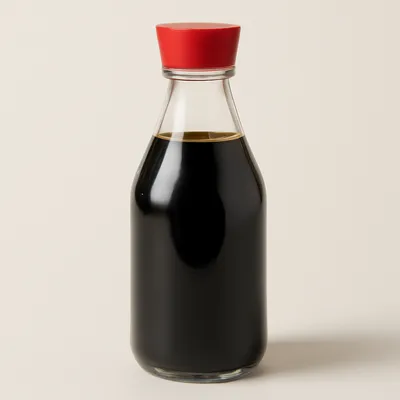
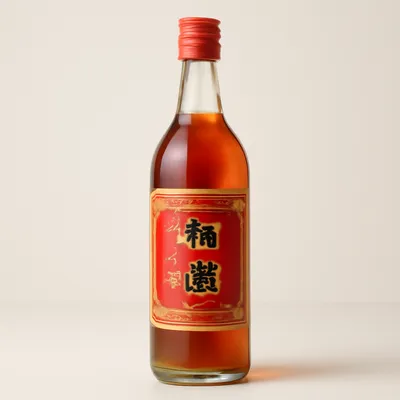
Add dark soy sauce, light soy sauce and Shaoxing wine; stir to combine, then pour in enough hot water to just cover the pork.
- 415 min
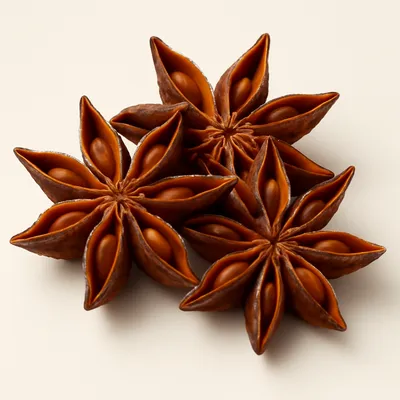
Soak dried radish in cold water for 15 minutes to reduce saltiness; squeeze dry and add to the pot along with star anise, cinnamon and scallion.
- 590 min
Bring to a boil, then reduce heat to very low; cover and braise for 80–90 minutes, turning the pork every 30 minutes.
Watch outBraise on very low heat 80–90 minutes, turning every half hour — slow heat converts the collagen so it melts in the mouth.
- 610 min
Remove lid; increase heat to medium-high and reduce the sauce until thick and glossy, turning the pork to coat.
Watch outReduce at the end until the sauce is thick and glossy and clings to the meat — a watery sauce means it hasn't caramelized down enough.
- 73 min
Transfer to a serving dish, spoon the glossy sauce over the pork and radish, and serve with steamed rice.
Archive tool suggestions — not reviewed
These legacy suggestions have not been evidence-reviewed and are not presented as required tools.



