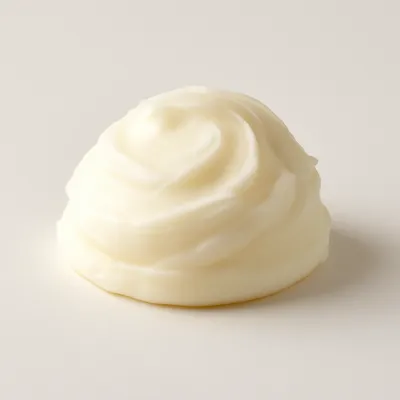
A golden, silken pudding stir-fried from egg yolk, mung-bean starch, sugar and water — its name, "three-non-stick," means it clings to neither plate, nor chopstick, nor tooth. Glossy and the color of late honey, it sets without setting hard, sliding clean off the dish and the spoon. It is a test of a cook's arm as much as skill, demanding hundreds of unbroken strokes over the fire. Born in Anyang in Henan and known by the name osmanthus egg, it became famous in Beijing as the signature dish of the old Shandong-style house Tonghe Ju.


San bu zhan began in Anyang in Henan — old Zhangde prefecture — as a traditional sweet of Henan cuisine, where it is called osmanthus egg. Its origin stories are all legend and disagree with one another: one tells of an Anyang magistrate's cook softening egg for the master's toothless father; another has the Qianlong emperor naming it on a southern tour; a third sets a Shandong cook against the palace kitchen. Even the era they claim runs from Song to late Qing, so the dish is best called simply an old Anyang sweet of uncertain origin. Its fame is Beijing's: Tonghe Ju, founded in 1822 and first among the city's "eight ju" Shandong houses, made it the restaurant's signature — one of "the capital's three perfections" — its plaque later inscribed by Pujie, the last emperor's brother. Japan's prime minister Toshiki Kaifu once carried it home in an insulated flask as a gift for the imperial household, and Tonghe Ju's chefs travelled to Japan to make it.
A mound of glossy, deep-yellow custard, trembling but holding its shape, given a clean spoon and a clean plate that it refuses to stick to. It is silky and warm, sweet without being cloying, rich with egg yolk and just faintly chewy where the starch binds it; a touch of osmanthus or hawthorn sometimes lifts it. It slips off the chopsticks and melts on the tongue, leaving the mouth clean — the three non-stickings proved in a single bite.
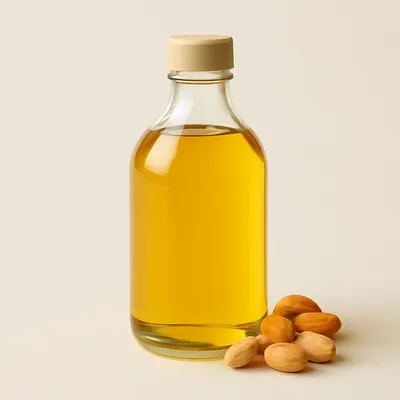
This is the hard part, and the legend of "hundreds of strokes" is no exaggeration: Tonghe Ju's cooks count three to four hundred unbroken strokes, even four or five hundred — one hand stirring, the other ladling in oil, neither resting. Egg yolk, sugar, water and mung-bean starch (roughly 4:3:2:1, water to yolk to sugar to starch) are beaten smooth, then cooked over heat with plenty of oil added in two or three pourings of cool oil down the side of the wok — the oil keeps the egg from setting at once and from gripping the pan. Begin over high heat to a paste, then drop low and push without stop for eight or nine minutes, the color deepening from pale yellow to gold. The science is simple and brutal: the yolk proteins denature, the starch gelatinizes and binds, and only ceaseless agitation stops it cooking into lumps — leaving that smooth gel that sets but never sticks.
Variations
Tonghe Ju's Beijing version follows a strict ratio of egg yolk to mung-bean starch and is the reference. The Anyang original — the source — fries on a mung-bean starch base with egg, sugar and water and finishes with a scatter of osmanthus, which is why it is called osmanthus egg. Some cooks add osmanthus or a little hawthorn for fragrance and to cut the richness, but the dish is otherwise left plain to show the silk of it.
On the Palate
Where San Bu Zhan sits in the Chinese flavor cloud
Ingredients
Serves 4
How it's made
8 steps · 25 min
- 15 min
Beat egg yolks with the mung-bean starch, sugar and water until completely smooth and lump-free.
Watch outBeat the yolks, starch, sugar and water completely smooth and lump-free — any lump here shows up as a grain in the finished paste.
- 22 min
Heat the wok with a generous measure of oil over high heat.
- 32 min
Pour in the yolk mixture and stir hard as it thickens to a paste.
- 44 min
Lower the heat and push and stir without stopping, never letting it set on the pan.
Watch outDrop to low heat and push without ever stopping, never letting it set against the pan — one pause and it grips and scorches.
- 52 min
Pour in cool oil down the side of the wok in two or three additions as you stir.
Watch outPour cool oil down the side of the wok in two or three additions as you stir — the oil is what keeps the egg from seizing all at once.
- 63 min
Keep stirring eight to nine minutes as the color deepens to glossy gold.
- 71 min
Cook until it pulls together, smooth and glistening, sliding free of the wok.
Watch outKeep going until it pulls together glossy and slides free of the wok in one mass — that clean release off the pan is the doneness cue.
- 81 min
Turn out onto a plate, scatter with osmanthus if using, and serve at once.

