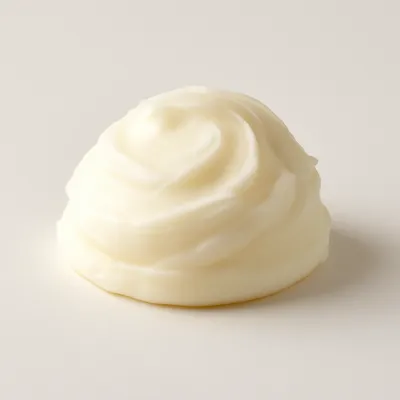
One of the most technically demanding dishes in the Henan repertoire: egg yolk, sugar, starch, and lard stirred without pause over gentle heat until the mixture transforms into a shimmering golden mass. It earns its name by defying adhesion — it neither clings to the wok, the chopsticks, nor the teeth. Silky and sweet, its texture sits midway between a baked egg custard and a soft candy.



The dish is also known as 桂花蛋 (Osmanthus Egg) for its golden, petal-like sheen. According to Anyang tradition, it was devised during the Qianlong reign (1736–1796) by a cook in the household of a local county magistrate: the official's elderly father had lost his teeth and could no longer chew solid food. The cook beat egg yolks with sugar, water, and starch and stir-fried the mixture until it achieved a silken, non-adhesive softness; the old man reportedly praised it as 'complete in color, fragrance, and taste.' Local folk tradition also holds that Emperor Qianlong was once served the dish while passing through Zhangde Prefecture (present-day Anyang) and was so delighted that he ordered its recipe preserved for the imperial kitchen; the creator and precise date of origin remain unverifiable.
The surface gleams like polished amber and the mass trembles gently on the plate. A spoon glides through it cleanly, without resistance. In the mouth it is utterly smooth — no grain, no stickiness — dissolving in a wave of rich egg and caramelized sweetness before vanishing entirely, leaving only a clean, faintly floral warmth.
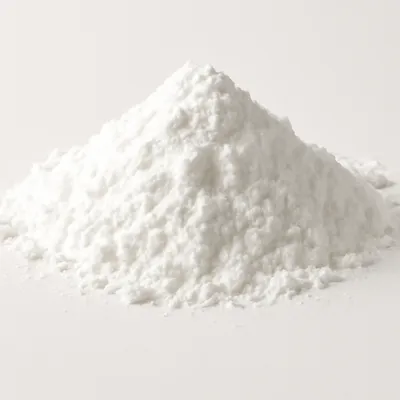
The three-no-stick property rests on precise emulsification chemistry. Egg yolk contains lecithin, a phospholipid emulsifier whose hydrophilic head anchors to the water phase while its lipophilic tail embeds in fat droplets; as lard is added incrementally under constant stirring, lecithin builds a stable oil-in-water emulsion throughout the mixture. Concurrently, starch gelatinizes at around 70°C, swelling into a continuous gel network that locks the emulsion droplets in place and prevents the mass from separating or adhering to surfaces. Constant stirring serves two functions: it prevents localized protein coagulation — which would produce a rubbery, adhesive texture — and maintains the temperature below roughly 80°C, the threshold at which egg proteins denature irreversibly, collapse the emulsion structure, and make the mass sticky. The result is a food with no free reactive surface to bond to cookware, tableware, or teeth.
Variations
The imperial court version sometimes incorporated osmanthus syrup for fragrance, with red date paste swirled in for color contrast. A modern lighter adaptation substitutes water for lard — lower in fat but prone to weeping after standing. Some Anyang cooks add a spoonful of honey at the finish to deepen the caramel note.
On the Palate
Where Three-No-Stick Egg Candy sits in the Chinese flavor cloud
Ingredients
Serves 2How it's made
7 steps · 10 min
- 15 min
Beat egg yolks in a large bowl. Dissolve white sugar and cornstarch in 180 ml of cold water; combine with the beaten yolks and whisk until completely smooth with no lumps.
- 22 min
Pass the mixture through a fine-mesh sieve to remove any chalaza or fibrous bits; set the sieved liquid aside.
- 31 min
Heat a wok over low heat; add one tablespoon of lard and swirl to coat all interior surfaces thoroughly.
- 45 min
Pour in the egg mixture; immediately begin stirring in slow, steady figure-eight motions with a flat wooden spatula — do not stop stirring at any point.
Watch outStart stirring in steady figure-eights the moment the egg hits the wok and never stop — pause and it sticks and scrambles.
- 55 min
After about 5 minutes the mixture will begin to thicken visibly; add a second tablespoon of lard and continue stirring without stopping.
- 610 min
When the mass turns uniformly glossy and starts to pull away from the wok walls (about 15 minutes of total stirring), add the final tablespoon of lard; stir vigorously until no pooling oil is visible and the surface is smooth and even.
Watch outAdd the last lard when the mass turns glossy and pulls from the walls — it's done when no oil pools and the surface is smooth.
- 72 min
Transfer immediately to a warmed serving plate; the finished dish should hold its rounded shape without spreading or sticking. Serve at once, garnished with a pinch of osmanthus flowers or a light dusting of sesame if available.


