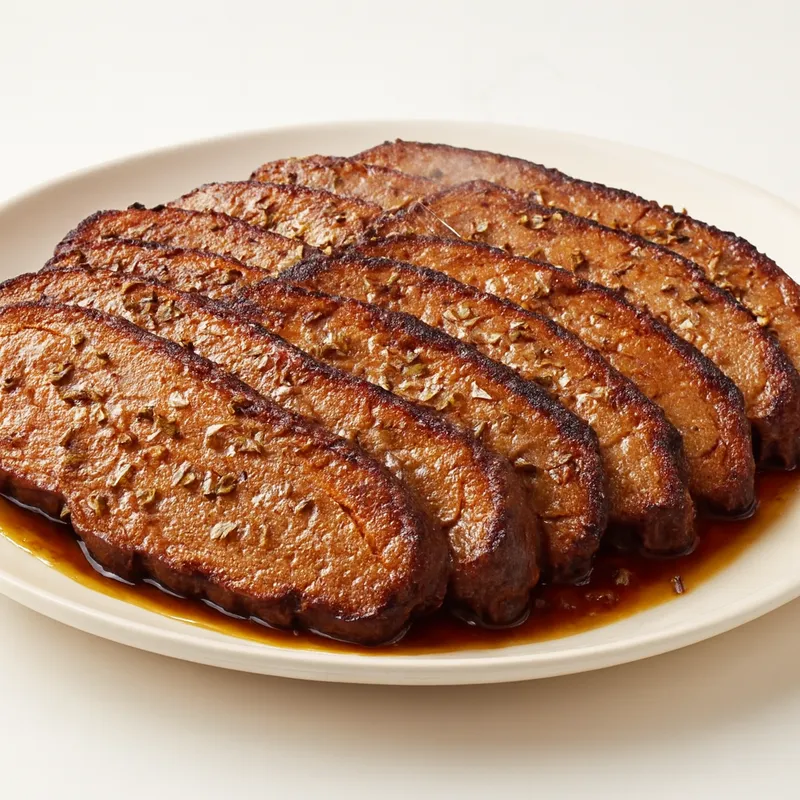
Sticky glutinous rice pressed around youtiao, pickled greens, and pork floss into a tight, satisfying cylinder—the definitive hand-held breakfast of the Jiangnan street stall.
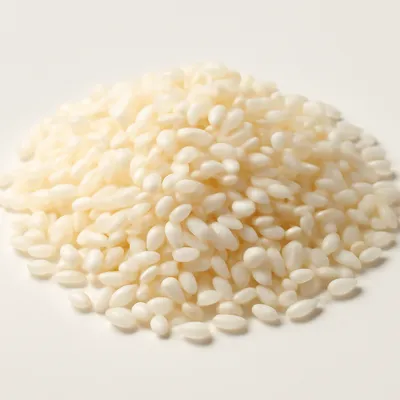

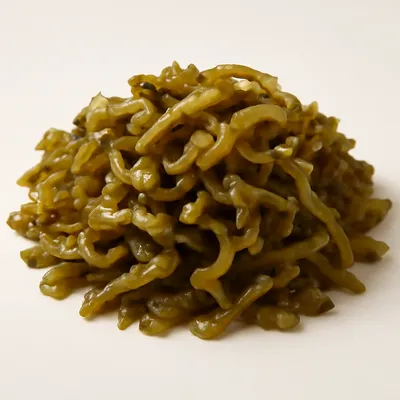


The glutinous rice culture of the Wu-Yue region (modern Jiangsu and Zhejiang) dates to the Spring and Autumn period, when glutinous rice was a staple grain of the Yangtze Delta peoples. The specific form of wrapping cooked glutinous rice around oil-fried dough and pickled vegetables into a hand-held roll developed as a street food in the context of modern Shanghai's working-class breakfast culture in the early 20th century. The cifantuan became one of the 'four heavenly kings' (si da jin gang) of Shanghai breakfast—alongside the bing flatbread, youtiao, and soy milk—a shorthand for the whole city's morning rhythm.
The roll must be eaten warm. The outer rice layer is sticky and dense; the youtiao inside still has a faint crunch against the soft grain. Pickled greens cut through the richness with a salt-sour jolt; pork floss adds a whisper of umami. It is compact enough to eat walking, filling enough to last until lunch.
Glutinous rice is composed of nearly 100% amylopectin, a highly branched starch polymer. When steamed, the amylopectin granules fully gelatinize and their branched chains hydrogen-bond into a cohesive, elastic network—far stickier than regular rice, which contains 20–30% linear amylose. Unlike amylose-rich rice, amylopectin retrogrades (re-crystallizes) very slowly on cooling, so the roll stays pliable and sticky rather than turning hard. The youtiao provides textural contrast; the acidity and salt of the pickled greens stimulate salivation, making the dense glutinous mass easier to swallow.
Variations
The sweet version replaces pickled greens with white sugar, sesame paste, and peanut powder—popular in older Shanghai neighborhoods. Taiwan's variant is often oval, incorporating tuna, corn, or ham. Nanjing's 'zheng fan bao youtiao' is spindle-shaped with tapered ends. Hong Kong versions are wrapped in plastic, cut in half, and sold from counters throughout the morning rush.
On the Palate
Where Glutinous Rice Roll sits in the Chinese flavor cloud
Ingredients
Serves 4How it's made
8 steps · 2 hours 40 min
- 1120 min
Soak glutinous rice in cold water for at least 2 hours (or overnight); drain.
- 225 min
Spread soaked rice in a steamer basket lined with damp cheesecloth; steam over high heat for 25 minutes until fully cooked and translucent.
Watch outSteam the rice until fully translucent, about 25 minutes — chalky opaque grains stay hard and the roll won't hold together.
- 32 min
Season freshly steamed hot rice with a pinch of salt for savory rolls.
- 43 min
Lay a length of plastic wrap flat; with dampened hands, spread a portion of hot rice over it into a rough 20 cm rectangle about 1 cm thick.
- 52 min
Scatter pickled mustard greens and pork floss across the surface; sprinkle with sesame seeds.
- 62 min
Place a halved fried dough stick along the bottom edge of the rice.
- 73 min
Lift the plastic wrap and roll the rice firmly away from you, pressing with both palms to form a tight cylinder with all fillings sealed inside.
Watch outRoll firmly with both palms so the fillings seal inside a tight cylinder — a loose roll falls apart the moment you slice it.
- 82 min
Remove the plastic wrap and serve immediately; cut in half crosswise if desired.
Archive tool suggestions — not reviewed
These legacy suggestions have not been evidence-reviewed and are not presented as required tools.