The archetypal Shanghai breakfast: hot glutinous rice spread on a damp cloth, wrapped tightly around a crispy oil stick with pork floss and pickled mustard stem, then pressed into a dense, portable cylinder eaten on the move.
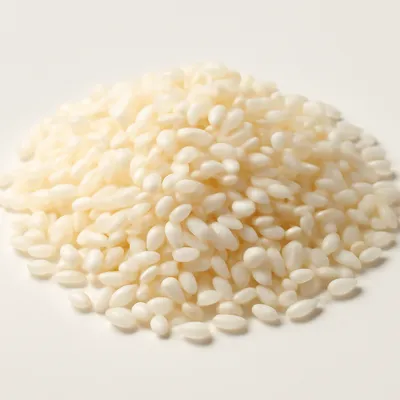


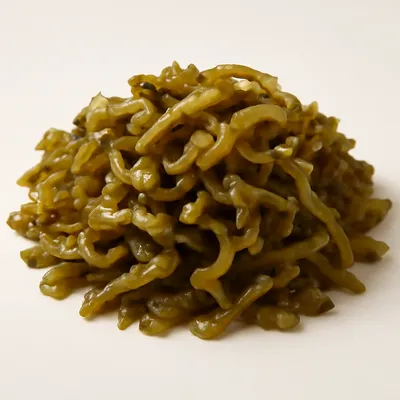

Ci fan tuan draws on the Jiangnan tradition of glutinous-rice breakfast foods — the ancient term ci fan (粢饭, millet-rice) eventually came to denote any cooked glutinous rice. Shanghai vendors fused this rice culture with the city's own oil-stick tradition sometime in the early twentieth century, creating a self-contained breakfast that a street stall could assemble in seconds. The dish entered the informal canon of Shanghai's si da jin gang (four breakfast heavenly kings) alongside the scallion flatbread, the oil stick, and the soymilk cup, and remains the default morning fuel of Puxi alleys and Pudong office towers alike. Jiangnan variants survive in Suzhou, Hangzhou, and across the diaspora communities of Hong Kong and Taiwan, each adapting the filling to local taste.
The rice wall yields with gentle resistance — dense and just-sticky enough to hold its shape — then the inner oil stick gives a faint, dry crackle. Pickled mustard stem cuts through the richness with a sharp, vegetal snap, and pork floss dissolves into whispers of savoury cotton, leaving a warm, cohesive mouthful of rice and oil and salt.
Glutinous rice contains almost no amylose (under 2%) and is nearly all amylopectin, a highly branched starch. When gelatinized through steaming, the dense amylopectin network produces characteristic sticky elasticity that allows the rice to cohere around the filling without any binder. As the roll cools slightly, retrograded amylopectin chains partially re-associate and firm the exterior into a shell that holds its cylinder even when gripped single-handed — the physics of breakfast eaten while walking.
Variations
Black glutinous rice (purple rice) is popular for its earthier sweetness and striking colour. Sweet versions omit the savoury fillings in favour of sesame paste and crushed peanuts. Nanjing calls a simpler open-form version steamed-rice with oil-stick. Modern cafés have introduced tuna, cheese, and avocado fillings, but these remain curiosities outside the mainstream.
On the Palate
Where Sticky Rice Roll with Fried Dough Stick sits in the Chinese flavor cloud
Ingredients
Serves 2How it's made
6 steps · 30 min
- 15 min
Rinse glutinous rice until the water runs completely clear; soak in cold water for at least 2 hours (overnight is better).
- 225 min
Drain the soaked rice, transfer to a lined steamer basket, and steam over high heat for 22–25 minutes until each grain is tender and fully translucent.
Watch outSteam the soaked rice until every grain is tender and fully translucent — chalky rice won't cohere and the roll falls apart in your hand.
- 32 min
Season the hot rice with a pinch of salt and fold gently to combine; keep covered and warm so it stays pliable.
- 43 min
Lay a dampened clean cloth or bamboo mat on your work surface; scoop about 150g of hot rice onto it and spread into a rectangle roughly 20cm × 15cm.
- 52 min
Place one piece of freshly fried oil stick (or briefly oven-toasted leftover youtiao) along the near edge of the rice; scatter a tablespoon of pork floss and a tablespoon of finely diced pickled mustard stem across the surface.
- 63 min
Using the cloth to assist, lift the near edge and roll the rice tightly away from you, pressing firmly as you go so the roll compacts into a dense cylinder; twist the cloth ends to tighten the shape, then unwrap and serve immediately.
Watch outRoll it tight, pressing firmly as you go, into a dense cylinder — a loose roll crumbles the moment you pick it up.
Archive tool suggestions — not reviewed
These legacy suggestions have not been evidence-reviewed and are not presented as required tools.

