Smooth spheres of glutinous rice dough wrapped around a sesame-lard filling that liquefies with cooking, served in sweet ginger broth. Eaten at the Lantern Festival and Winter Solstice, their round shape is an explicit symbol of family reunion.


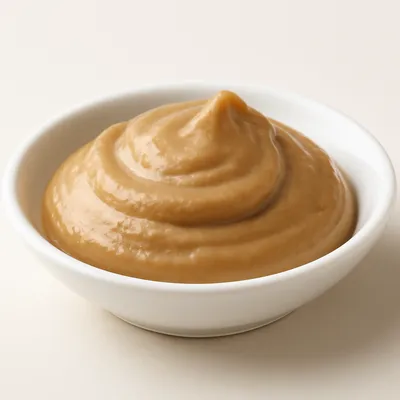
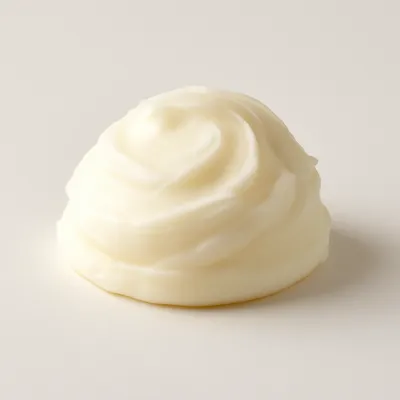


The predecessor of tangyuan—called 'floating yuanzi' (浮元子)—first appears in Song Dynasty sources. Pre-Song Lantern Festival rice balls were unfilled solid spheres boiled and eaten with sweet condiments. By the Southern Song period, sesame and sugar fillings appear in records; the Wulin Jiushi (Records of the Former Capital) lists 'milk-sugar yuanzi' (乳糖圆子) as a Hangzhou specialty. The Ningbo style—water-milled glutinous rice flour wrapped around a sesame-lard-sugar filling—became the canonical southern tangyuan by the Qing Dynasty, and remains the benchmark against which all others are measured.
A cool, ghost-white sphere meets the teeth with gentle resistance, then yields—and a warm flood of black sesame and lard surges out, intensely nutty, rich without cloying, the ginger broth lifting everything clean.
Glutinous rice starch is almost entirely amylopectin (around 98%), compared to 70–80% in regular rice. Amylopectin gelatinises at 62–65°C and forms a highly viscous, elastic gel on cooling—the source of the tangyuan skin's characteristic smooth stretch. Starting the balls in cold water and bringing to the boil gently ensures the skin gelatinises uniformly from outside to centre, preventing the split-skin failure common with instant boiling. The filling's lard has a melting point of 35–40°C; by the time the skin is cooked, the filling is fully liquid, creating the molten-core burst-on-bite effect. Pre-freezing the filling balls prevents them from melting during the wrapping process.
Variations
Ningbo remains the gold standard: water-milled rice flour, pure sesame-lard filling, no sugar in the skin, served in plain hot water or osmanthus-sugar syrup. Sichuan versions add brown sugar and peanuts to the filling and serve in a richer sweet broth with wine lees. Taiwan's traditional form is small, unfilled, served in black-sugar or ginger syrup—closer to the pre-Song original. Cantonese restaurants serve tangyuan in a ginger-sugar broth with a touch of pandan. Savoury Sichuan tangyuan exist with pork mince filling, served in a chilli-oil-dressed bowl.
On the Palate
Where Glutinous Rice Balls sits in the Chinese flavor cloud
Ingredients
Serves 4How it's made
7 steps · 35 min active + 35 min waiting
- 132 min
Mix black sesame paste with lard and sugar until smooth; roll into small balls of about 12–15 g each. Freeze on a tray at least 30 minutes until firm.
- 28 min
Combine glutinous rice flour with warm water gradually; knead into a smooth, pliable dough that does not stick to the hands.
- 35 min
Divide dough into portions of about 20 g each; flatten each into a disc, pressing the centre slightly thinner than the edges.
- 48 min
Place one frozen filling ball in the centre of each disc; gather the dough up around the filling and pinch firmly to seal. Roll smooth between palms.
- 55 min
Place tangyuan in a pot of cold water; bring slowly to a boil over medium heat.
Watch outStart the tangyuan in cold water and bring it up gently — a hard boil from the start cracks the skins and leaks the filling.
- 64 min
Once the water boils, add a splash of cold water to calm it. Cook until the tangyuan float and swell, about 2 more minutes.
Watch outThey're done once they all bob up and swell — floating is the tell the skin has cooked through to the center.
- 73 min
Ladle into bowls with sweet ginger broth or plain hot water. Serve immediately.
Archive tool suggestions — not reviewed
These legacy suggestions have not been evidence-reviewed and are not presented as required tools.


