Raoyang's celebrated hand-cut noodles — mung bean flour, wheat flour, egg white, sesame seeds, and sesame oil blended, rolled gossamer-thin, and cut at 1,600 strokes per jin into hair-fine, semi-translucent golden strands. A Qing-dynasty specialty that became imperial tribute in the Guangxu era, won second place at a 1920s Tianjin domestic goods exhibition, and earned Raoyang the title 'hometown of mixed-grain noodles.'




The Qiu-family noodle tradition of Dongguan Village, Raoyang County, is traced by local sources to the early Qing dynasty. One account places the innovation in the seventh year of the Yongzheng reign (around 1729), when a Qiu-family farmer first combined mung bean flour with wheat flour and egg white to produce a fine, clear noodle superior to pure wheat varieties; other sources attribute the origin to the Kangxi era, making the precise date uncertain. By the Guangxu era the noodles had entered the imperial court: a palace eunuch surnamed Li who was native to Raoyang would purchase Qiu-family noodles on every home visit as gifts for the court, and the product subsequently appeared on the annual tribute list. The Shenzhou Local Annals (《深州风土记》) describes the cutting standard: 'one thousand six hundred strokes, strands fine as silk' (千六百刀,面细如丝). In 1929 Raoyang mung bean noodles won second place at a Tianjin national domestic goods exhibition; Raoyang has since been known as 'the hometown of mixed-grain noodles' (杂面之乡).
Semi-translucent, pale golden strands in the bowl — the mung bean starch gives a slightly waxy, springy snap quite unlike wheat noodle softness. Sesame oil adds a subtle nutty warmth throughout, and the fine strands absorb broth or sauce with exceptional efficiency thanks to their enormous surface area relative to volume.
Mung bean starch has a high amylose content (around 35–40%), which forms tightly packed double-helix crystal structures upon cooling (retrogradation); this retrogradation produces the firm, springy bite and characteristic translucency of the cooked noodle. Egg white proteins — primarily ovalbumin — coagulate on heating to form a protein network that binds the otherwise weakly cohesive mung bean starch granules into a workable dough, enabling the sheet to be rolled paper-thin and cut at 1,600 strokes per jin without crumbling. Sesame oil applied before drying forms a lipid barrier on each strand, preventing oxidative rancidity and inter-strand adhesion during storage.
Variations
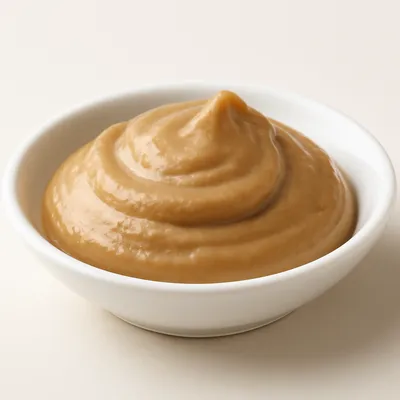
Cold sesame version: cooked noodles rinsed in cold water, dressed with sesame paste, black vinegar, cucumber shreds, and chili oil. Braised pork and mushroom gravy (打卤): the most festive preparation, ladled over noodles at the table. Quick-soak version: dried noodles covered with just-boiled water for 3 minutes — Raoyang locals call this the 'earliest instant noodle.'
On the Palate
Where Golden Thread Mixed-Grain Noodles sits in the Chinese flavor cloud
Ingredients
Serves 4


How it's made
7 steps · 1 hour
- 120 min
Sift mung bean flour and wheat flour in a 7:3 ratio. Add egg white, a pinch of sugar, sesame oil, and just enough warm water to bring the dough together; knead into a very stiff, smooth dough. Cover and rest for 20 minutes.
Watch outKnead to a very stiff, smooth dough — mung bean starch is weakly cohesive, so a soft dough won't roll paper-thin without crumbling.
- 215 min
Divide the dough into palm-sized portions. Using a rolling pin, roll each portion progressively thinner, working from the center outward, until the sheet is nearly paper-thin.
- 320 min
Dust the sheet lightly with dry starch to prevent sticking. Fold loosely into layers. Using a sharp, heavy cleaver, cut across the folded layers with rapid, even strokes — aiming for 1,600 cuts per 500g of dough.
- 425 min
Shake the cut strands gently apart and spread on a clean bamboo mat or rack. Brush lightly with sesame oil. Air-dry for 20–30 minutes until semi-dry and slightly pliable.
Watch outBrush a thin film of sesame oil and air-dry only until the strands are half-dry and still pliable — bone-dry strands snap, fully wet ones stick together.
- 52 min
Bring a generous pot of water to a full boil. Drop the noodles in and immediately stir with chopsticks to prevent clumping.
- 62 min
Cook for 1–2 minutes until the strands float and turn fully translucent. Drain promptly — the noodles deteriorate quickly if overcooked.
Watch outPull them at one to two minutes, the instant they float and go fully translucent, and drain at once — these fine strands slump fast if overcooked.
- 73 min
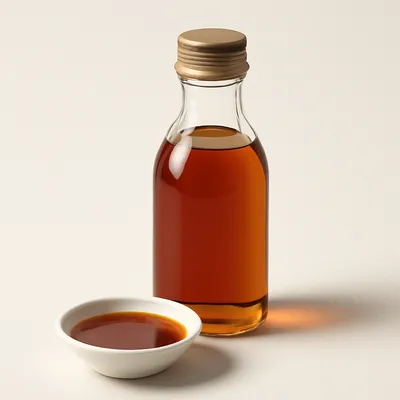
Transfer to bowls and dress at once with hot broth, sesame paste, braised pork and mushroom gravy, or simply soy sauce and sesame oil.
Archive tool suggestions — not reviewed
These legacy suggestions have not been evidence-reviewed and are not presented as required tools.


