Lai Tangyuan is Chengdu's most storied sweet rice-ball, tracing its name to street vendor Lai Yuanxin, who began selling from a carrying pole in 1894. The skin is made from 吊浆粉, a slow-drained wet-ground paste of glutinous and indica rice, silky-soft yet elastic enough to pull a two-inch thread before it snaps. Each ball is sealed around a cube of black sesame, lard, and sugar filling that dissolves into warm flowing paste the moment it hits heat. The result earns its famous double six-no reputation: the skin never bursts, leaks, or clouds the broth while cooking; the dumpling never sticks to chopsticks, teeth, or the bowl while eating.



In 1894, a man from Ziyang named Lai Yuanxin arrived in Chengdu and took to the streets with a carrying pole, calling out the Ziyang dialect word 'nài' — meaning piping-hot — to advertise his wares. Chengdu ears heard not the dialect word but his surname 'Lài,' and the stall became universally known as Lài Tāngyuán. By the 1930s Lai had saved enough to open a shop at Zongfu Street near the Chunxi Road commercial district, formally registering the name. Public-private restructuring in 1956 brought the brand under state management. It was later designated a Chinese Time-Honored Brand, and in 2011 the traditional 吊浆粉 making technique was inscribed on the Sichuan Province intangible cultural heritage list.
Each ball arrives in the bowl plump and white, still trembling. The skin is thin and yielding but carries a distinct spring — stretch it and it pulls into a thread. Bite through and the black sesame-lard filling releases in one warm rush, fragrant and round, with a sweetness that does not linger. Two or three are enough; the satisfaction is immediate and clean.
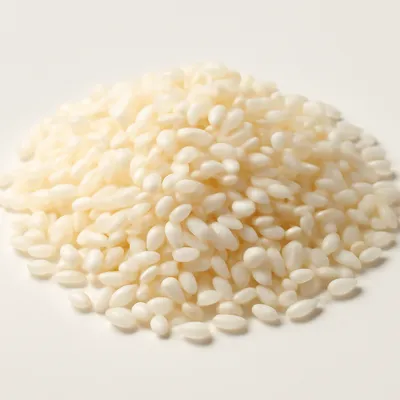
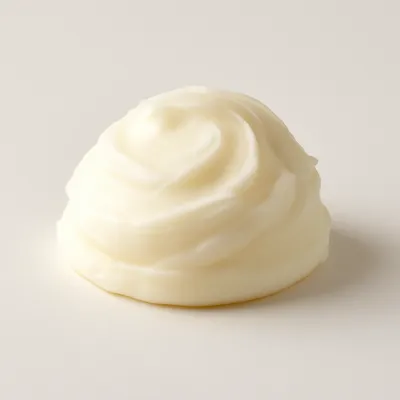
The defining technique is 吊浆粉 (diàojiāng-fěn). Glutinous and indica rice (4:1 ratio) are soaked for two days, stone-ground into a fine wet slurry, then poured into cloth bags and hung to drain. The slow draining removes excess free water while preserving intact starch granules and natural moisture — the dough is far more elastic than dry-milled commercial rice flour, where drying partially damages starch chains and reduces stretchiness. The filling relies on cooked lard as a structural binder: black sesame powder and sugar are loose powders at room temperature but become firm cubes once kneaded with lard and cooled; in boiling water, the lard melts in seconds and the filling flows. Cooking requires a full rolling boil, then an addition of cold water once the balls float — this tempers the water just enough to prevent violent bubbling that would split the skin, while still finishing the interior.
Variations
Classic black sesame (麻蓉) is the defining variety; the Lai shop also offers sweet red bean, rose-and-bean-paste, osmanthus, jujube-paste, and peanut fillings. Modern frozen retail versions are sold across China and exported overseas. Off-brand imitators typically skip the two-day soak and stone-grinding, using dry commercial rice flour instead, producing a noticeably softer and less springy skin that falls short of the original.
On the Palate
Where Lai Tangyuan sits in the Chinese flavor cloud
Ingredients
Serves 4How it's made
6 steps · 1 hour active + 2 days waiting
- 12880 min
Rinse glutinous rice (1000 g) and indica rice (250 g) together; soak in cold water for 2 full days, changing the water 2-3 times daily to prevent souring.
- 230 min
Drain the soaked rice; stone-grind (or blend on highest power) with just enough cold water to produce a fine, smooth slurry. Pour into a cloth bag, tie tightly, and hang to drain for 4-6 hours until the dough-mass is firm but pliable — this is the 吊浆粉.
Watch outHang the ground slurry only until the mass is firm-but-pliable — too dry and it cracks when you wrap, too wet and it slumps.
- 320 min
Toast black sesame (50 g) over low heat, stirring constantly, until fragrant and no longer releasing steam. Cool, then grind coarsely. Mix with wheat flour (125 g) and sugar (500 g); add cooked lard (175 g) and knead until cohesive and smooth. Press flat with a rolling pin and cut into roughly 1.2 cm cubes (about 100 pieces). Refrigerate to firm up.
- 410 min
Add a small amount of cold water to the drained 吊浆粉 and knead to a smooth, pliable dough. Divide into 50 g portions; keep covered with a damp cloth.
- 515 min
Flatten each portion into a disc. Place one sesame cube in the centre, fold the edges up over the filling, pinch the seam shut firmly, and roll between palms into a smooth, seamless sphere. Repeat for all portions.
Watch outPinch the seam shut firmly and roll it smooth before boiling — a weak seam splits open and the sesame filling leaks out.
- 615 min
Bring a large pot of water to a full rolling boil. Lower the tangyuan in gently. Once they float to the surface, add one ladleful of cold water to calm the boil. Repeat twice more. The tangyuan are done when the skins look slightly translucent and each ball has rolled freely through two full boils. Serve immediately in the hot broth.
Watch outThey're done once they float, look faintly translucent, and have ridden through two full boils — pull them early and the center is still raw dough.
Archive tool suggestions — not reviewed
These legacy suggestions have not been evidence-reviewed and are not presented as required tools.


