
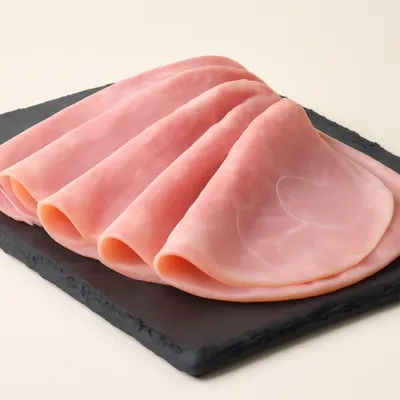
The headline dish of Luoyang's 水席 (Water Banquet), and a feat of disguise: it is a clear soup whose 'bird's nest' is made entirely from white radish. The radish is cut into hair-fine threads, coated with mung-bean or other starch, and steamed until the strands turn translucent and springy, mimicking the look and slither of real 燕窝 (swallow's nest). The strands are then served in a clear, rich broth with shredded toppings — sea cucumber, ham, egg, mushroom and the like. Because no real swallow's nest is used, it was originally called 假燕菜 ('mock swallow's-nest'); it is also called 洛阳燕菜. In its banquet form a peony, often shaped from egg, is set floating on the surface, which gives it the name 牡丹燕菜.




Luoyang's 水席 is a banquet of mostly soupy, broth-based courses, and the swallow's-nest radish is its opening dish. By tradition its origin is tied to the Tang empress Wu Zetian: the story goes that an unusually large white radish was presented to the court as an auspicious sign, and the palace cooks, asked to make something of it, cut it fine and dressed it with rare ingredients into a soup so like swallow's nest that she named it 假燕菜 — but this is legend, and the dish's exact age is not on record. What is documented is its modern naming. In October 1973, Premier Zhou Enlai accompanied the visiting Canadian Prime Minister Pierre Trudeau to Luoyang; a Luoyang master cook set a peony fashioned from egg afloat on the radish soup, and Zhou, taken with it, remarked that a peony had bloomed in the dish (菜里开牡丹) — Luoyang being the city famous for peonies. From then the 洛阳燕菜 was also called 牡丹燕菜. (The exact wording of the remark is given slightly differently across accounts.)
A spoonful is mostly clear, hot broth carrying a tangle of fine pale strands. The radish threads are the surprise: where you expect crunch there is instead a soft, slightly springy slither, close to the texture of real swallow's nest, the raw bite and peppery pungency of radish entirely cooked and rinsed away. The broth is the real flavor — clean, savory and rich without being heavy — and the shredded toppings give little accents of ham-salt, sea cucumber slip and egg. The banquet versions are usually sweet-sour-savory and lightly peppery. Done well the strands are even and intact, translucent, with no radish smell; done badly they are cut thick and still taste sharply of raw radish, clump into a starchy mass, or the broth is dull and the dish tastes of nothing but hot water.
The trick is to make a watery, sharp-tasting root behave like a delicate gelatinous luxury. White radish is mostly water, with the pungency of mustard-oil compounds and a crisp cell structure that collapses with heat. Cut to hair-fineness, soaked in cold water, then salted, the strands lose their raw sharpness and shed water. Coating them in mung-bean or sweet-potato starch is the key step: under steam the starch gelatinizes around each strand and binds it into a slippery, semi-translucent thread that holds its shape and reads as swallow's nest. The strands are steamed, cooled, and rinsed of loose starch through several cycles until they are clean and even (the goal phrased as 'flesh like white jade, form like swallow's nest', 质如白玉,形似燕窝). They carry no flavor of their own — so everything depends on a good clear broth (清汤/高汤): the soup is what the radish drinks in and delivers, the toppings supply contrast, and a final touch of vinegar, white pepper and sesame oil lifts it.
Variations
The dish is most often called 洛阳燕菜 (Luoyang swallow's-nest) in its plain form and 牡丹燕菜 once the floating peony is added for banquets. It is the canonical first course of the full 洛阳水席 (the 'twenty-four courses' banquet of eight cold and sixteen hot dishes). Households and restaurants vary the toppings — sea cucumber, squid, ham, tendon, magnolia-petal, egg, mushroom — and the seasoning runs from a clearer savory broth to a more sharply sour-and-peppery one. Some cooks bind the radish with mung-bean starch, others with sweet-potato starch. The same mock-luxury idea appears in 'mock' dishes elsewhere in Chinese cooking, where humble ingredients are dressed to imitate costly ones; here the imitation target is specifically 燕窝.
On the Palate
Where Luoyang Peony "Swallow's-Nest" Radish Soup sits in the Chinese flavor cloud
Ingredients
Serves 6


How it's made
8 steps · 50 min active + 20 min waiting
- 118 min
Peel white radish, discarding the green-shouldered top, and cut it into hair-fine threads; soak the threads in cold water to draw out the raw pungency, then drain.
- 215 min
Toss the drained threads with a little salt and let them sit until they soften and shed water, then squeeze gently and loosen.
- 35 min
Dust and toss the radish threads evenly with mung-bean (or sweet-potato) starch so every strand is lightly coated.
Watch outDust every hair-fine strand evenly with starch — bare spots won't set translucent, so the threads clump instead of reading like swallow's nest.
- 412 min
Spread the starched threads in a steaming basket and steam over high heat until the starch sets and the strands turn translucent; lift out, cool, and rinse off loose starch.
Watch outSteam over high heat only until the starch sets and the strands turn translucent — then cool and rinse off the loose starch so they stay separate.
- 510 min
Repeat the steam-cool-rinse cycle as needed until the strands are clean, even, and read like swallow's nest (质如白玉,形似燕窝).
- 620 min
Prepare shredded toppings — sea cucumber, ham, mushroom, egg crepe — and a good clear chicken-and-pork broth; bring the broth to a gentle simmer.
- 74 min
Heap the steamed radish threads in a bowl, arrange the shredded toppings, and pour the hot clear broth over; season with salt, white pepper, a little vinegar and sesame oil.
- 83 min
For the banquet form, set a peony shaped from egg afloat on the surface before serving.
Archive tool suggestions — not reviewed
These legacy suggestions have not been evidence-reviewed and are not presented as required tools.


