Mianyang rice noodles are the city's defining breakfast, built on a bowl of bone broth simmered for hours, thin round noodles flash-scalded in a wire ladle, and a topping of braised beef or spiced pig intestine finished with cilantro, scallion, and pickled vegetables. The city runs on two schools: red broth (spicy and rich, layered with fermented doubanjiang) and clear broth (a translucent pork or chicken stock lifted only by ginger and white pepper). The noodles are silky-elastic, the stock deeply savory, and the whole bowl assembled in under three minutes — the rhythm of a city putting itself together before eight in the morning.


Mianyang sits at the confluence of the Fu and Anchang rivers in northwest Sichuan, a garrison town since the Qin dynasty and a trading hub for over two thousand years. Long-grain rice dominated the surrounding plains, and the tradition of pressing soaked rice paste into round noodles is an old one in the region — though exactly when the city's two-broth system took its current form is unrecorded. The clearest traceable influence is from neighboring Jiangyu county, whose red-braised pig intestine has been celebrated across northern Sichuan since at least the Qing dynasty; Mianyang's noodle stalls adopted the same braising technique wholesale, making the intestine branch the most storied variant. Through the twentieth century, Mianyang's shops established a firm local code: broth made fresh daily, noodles blanched to order, and the pot closed when sold out.
Round noodles pulled apart with chopsticks carry a thin film of bone broth on every strand. In the mouth the first sensation is the noodle's buoyant spring — not as yielding as glass noodles, not as starchy as wheat — before the broth registers. In the red version the heat arrives slowly, a half-beat behind the salinity, because Mianyang's spice rests on the fermented complexity of doubanjiang rather than the electric buzz of Sichuan peppercorn. Braised beef comes in slices with clear grain, tender but not falling apart. A bite of pickled vegetable cuts through the fat mid-bowl, resetting the palate for the next pull of noodles.
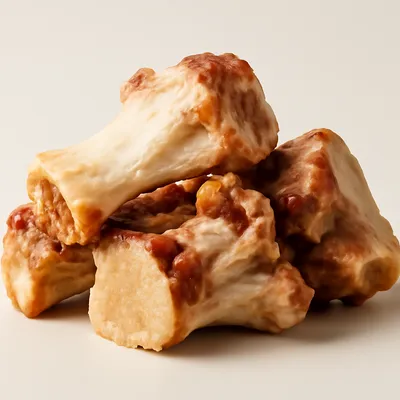
The key technique is 烫粉 (flash scalding). Round rice noodles are never boiled in a pot but placed in a bamboo wire ladle, plunged into rolling water for fifteen to twenty seconds, tossed to separate, and lifted out immediately — cooked through yet still springy, never waterlogged. The stock is the second pillar: pork or beef bones blanched to remove blood, then simmered low for four to six hours; collagen in the connective tissue dissolves into gelatin over those hours, whitening the liquid and giving it body that no MSG shortcut can replicate. For the red version, doubanjiang fermented at least twelve months is stir-fried in hot oil until darkened and fragrant — the Maillard reaction releasing layered umami compounds — then deglazed with bone stock; capsaicin dissolves into the fat and clings to each noodle, delivering persistent heat rather than a sharp spike.
Variations
Red broth and clear broth mark the fundamental divide. In the red camp: beef rice noodles use long-braised yellow-cattle shank sliced thin across the grain; intestine rice noodles borrow Jiangyu's red-spiced braising method for large intestine, cleaned meticulously and slow-cooked until silky. In the clear camp, kelp-chicken noodles — an old hen and dried kelp simmered together for clean oceanic sweetness — are the most popular; a 'three-delicacy' variant adds tofu puffs and thin pork slices. Chain versions beyond Sichuan often substitute pickled chili for fermented doubanjiang, which makes the heat sharper but loses the fermented depth. Old Mianyang shops blanch to order and shut when the pot runs dry — no pre-cooked backup.
On the Palate
Where Mianyang Rice Noodles sits in the Chinese flavor cloud
Ingredients
Serves 4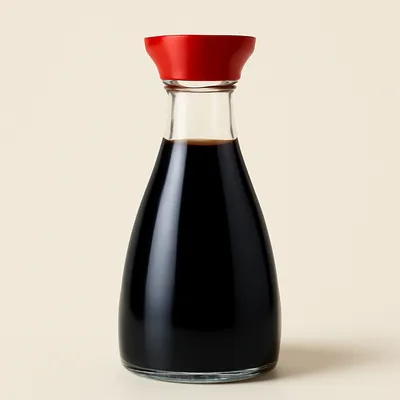



How it's made
7 steps · 30 min
- 115 min
Blanch pork bones in boiling water for 5 minutes to remove blood and impurities. Drain, rinse under cold water, and transfer to a large pot. Cover with 2.5 litres of fresh water; add ginger slices and scallion. Bring to a rolling boil, skim foam, then reduce to a low simmer. Cook for at least 4 hours until the broth is milky and full-bodied. Season with salt.
- 220 min
Braise the beef brisket: combine light soy sauce, dark soy sauce, Shaoxing wine, star anise, cinnamon, dried chili, rock sugar, and enough water to submerge the meat. Bring to a boil, add the whole brisket, and braise over low heat for 90 minutes until a chopstick slides through easily. Let the beef cool in the braising liquid; slice thin across the grain just before serving.
Watch outSoak the noodles until pliable but still firm at the core — over-soak and they snap apart the moment they hit boiling water.
- 315 min
Make the red broth base: heat oil in a wok over medium heat and fry doubanjiang for 3–4 minutes, stirring constantly, until it darkens and the oil turns red and fragrant. Add Sichuan peppercorn and crushed dried chili; stir 30 seconds. Pour in 1 litre of the bone broth, bring to a simmer, and cook 10 minutes. Taste and adjust salt.
Watch outFry the doubanjiang until the oil runs red and fragrant — this is the color and backbone of the whole red broth.
- 45 min
Soak the dried round rice noodles in cold water for 30 minutes until pliable but still firm in the centre. Do not over-soak or they will break during blanching.
- 510 min
Prepare condiments: finely slice scallion, pick cilantro leaves, and drain pickled mustard. Set each in a small bowl at the serving station. Arrange chili oil and vinegar on the side.
- 65 min
Blanch noodles: bring a large pot of water to a rolling boil. Working one serving at a time, place a portion of soaked noodles in a wire ladle or mesh basket. Submerge in the boiling water for 15–20 seconds, tossing with chopsticks to separate the strands and ensure even cooking. Lift out, drain well, and tip directly into a serving bowl.
Watch outScald each portion of noodles just fifteen to twenty seconds, tossing to separate — a moment more and they go waterlogged and mushy.
- 75 min
Ladle 250 ml of hot red (or clear) broth over the noodles. Lay 3–4 slices of braised beef on top. Scatter scallion, cilantro, and a small heap of pickled mustard. Serve immediately with chili oil on the side; the noodles absorb broth fast and must be eaten at once.
Archive tool suggestions — not reviewed
These legacy suggestions have not been evidence-reviewed and are not presented as required tools.



