A prestige dish of Xi'an's court-derived official cuisine: dried squid is painstakingly rehydrated in alkaline water, then slow-braised in a rich pork-bone stock laced with Shaanxi aromatics until silky and deeply flavored. One of Shaanxi's ten famous dishes, it testifies to the ancient Silk Road trade in dried seafood reaching far inland.





Xi'an's official cuisine (官府菜) grew from the banquet traditions of Shaanxi's administrative and scholarly elite, who composed elaborate menus drawing on both local produce and luxury trade goods moved along the ancient Silk Road. Dried squid — lightweight, shelf-stable, and intensely umami — was a prestige import from the southeastern coast carried deep into the inland northwest. The technique of slow-braising rehydrated squid in bone stock bridges two distinct food cultures: Shaanxi's tradition of deep-flavored long-simmering braises and the coastal Chinese practice of using dried seafood as a concentrated flavor anchor. Listed among the officially recognized 陕西十大名菜 (Ten Famous Dishes of Shaanxi) — selected by the China Culinary Association and the Shaanxi Provincial Department of Commerce — 生煨鱿鱼丝 remains a fixture on formal Xi'an banquet menus.
Silky, faintly chewy shreds of squid soaked through with mellow, deep-flavored bone broth — luxurious yet not heavy, each strand carrying the umami of both sea and earth.
Dried squid must be rehydrated in dilute alkaline solution (baking soda water): the alkaline environment disrupts inter-protein hydrogen bonds and partially cleaves disulfide cross-links, allowing compressed muscle fibers to swell back toward their original dimensions without turning to mush. Slow-braising at sub-boiling temperature, around 85–90°C, keeps proteins below the threshold of rapid contraction and toughening; the extended cooking time allows glutamates, inosinate, and glycine from the bone stock to diffuse into the squid shreds by osmosis, building layered umami from the inside out.
Variations
Some versions extend the dish with dried lily buds, wood-ear mushrooms, or tofu skin. A richer variant combines chicken stock with pork bone. Finely julienned scallion and ginger are standard garnishes. A Sichuan-inflected version adds a small amount of doubanjiang to the braising broth.
On the Palate
Where Xi'an Slow-Braised Squid Shreds sits in the Chinese flavor cloud
Ingredients
Serves 4

How it's made
7 steps · 30 min
- 1240 min
Soak dried squid in cold water for 2 hours; drain, then soak in warm water with a pinch of baking soda for another 2 hours until fully soft and expanded.
Watch outRehydrate the dried squid in dilute baking-soda water until fully soft and swollen — the alkali lets the fibers plump back without turning to mush.
- 210 min
Rinse the rehydrated squid repeatedly under cold running water to remove any alkaline residue; cut into thin shreds approximately 5 cm long.
Watch outRinse the alkaline residue out thoroughly under cold water — leave it in and the squid keeps a soapy off-taste.
- 33 min
Blanch squid shreds in rapidly boiling water for 30 seconds; drain and set aside.
- 4120 min
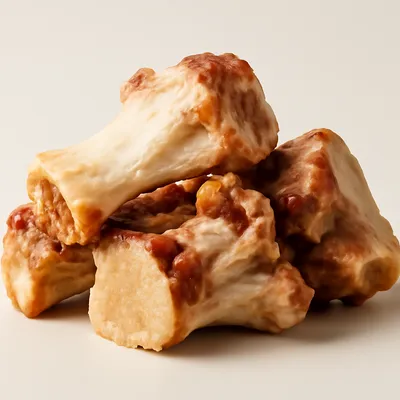
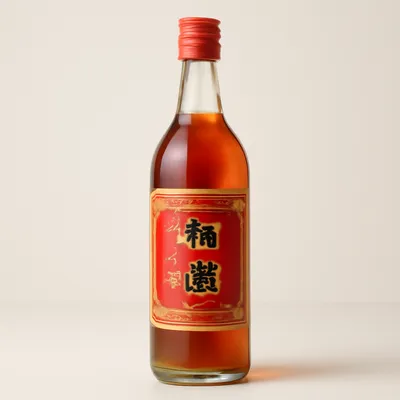
Prepare bone stock: simmer pork bones with ginger, scallion, Shaoxing wine, star anise, and dried tangerine peel for 2 hours; skim frequently and strain to a clear stock.
- 545 min
Transfer stock to a clay pot over the lowest possible heat; add squid shreds, a small amount of dark soy sauce, and salt; maintain a bare trembling simmer and braise slowly for 45 minutes.
Watch outBraise at a bare trembling simmer around 85°C for 45 minutes — any harder and the squid seizes tough instead of drinking in the stock's umami.
- 63 min
Taste and adjust seasoning with salt and a few drops of sesame oil; thicken the braising liquid gently with a thin potato-starch slurry if a coating consistency is desired.
- 72 min
Transfer to a deep serving bowl; garnish with fine julienned scallion and ginger; serve immediately while hot.
Archive tool suggestions — not reviewed
These legacy suggestions have not been evidence-reviewed and are not presented as required tools.


