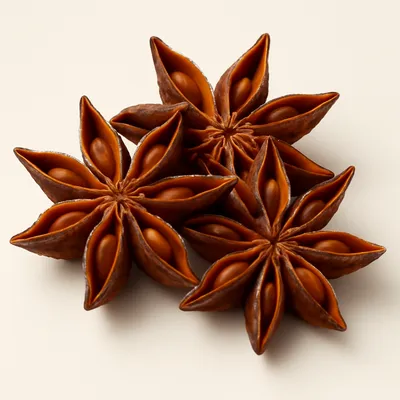
Xianyou Stuffed Intestine — also called Nine-Turn Coiled Intestine (九转套肠) — is Xianyou County's most technically demanding street food and banquet set piece. Raw pig intestine is turned inside-out and threaded through itself using a chopstick, coiled into compact rings five or six casings thick, then simmered for hours in a master stock of pork bone broth, star anise, and cassia. When sliced, the cross-section reveals concentric pale rings glistening with braising liquid: chewy, elastic, richly savory, and deeply perfumed — the taste Xianyou emigrants carry in memory across the world.




Xianyou tradition traces the dish to Zheng Ji, a Ming-dynasty official who rose to become Minister of Revenue (Hubu Shangshu). According to local lore, Zheng Ji grew up in deep poverty. One New Year, a neighbor gifted his family a single set of pig intestines — all they had for the ancestral offering. The young Zheng threaded and nested the segments into a round, layered ring, presenting it on the altar with dignity. Neighbors copied the gesture; the technique spread through the county. The ring's roundness (圓, also meaning reunion and completeness) sealed its role at weddings and New Year feasts, while its nickname 九转 — nine turns — evokes the homesick longing of those far from Xianyou. This account is preserved in local food-culture writings; the precise date has not been independently verified in historical documents.
The first bite reveals concentric rings that separate into distinct layers. Outer rings, saturated with braising liquid, are silky and deeply savory; inner rings, more shielded from heat, stay springier and denser. The long simmer eliminates all off-notes, leaving clean pork richness and a warm whisper of star anise and cassia that lingers.
The nesting technique multiplies the surface-area-to-volume ratio far beyond a flat length of intestine — the concentric layers allow braising liquid to penetrate from every interface simultaneously. Collagen in the intestine wall converts to gelatin during the long simmer (60–90 minutes), making each ring slippery and coating the layers with a natural glaze. The sweet potato starch used in washing acts as a physical abrasive to strip odor-causing mucus and bile residues from the mucosal surface, while an acid rinse (vinegar) denatures surface proteins to further deodorize before cooking.
Variations
Some households stuff diced firm tofu or rehydrated shiitake inside the coiled rings before braising, enriching the cross-section. A lighter street version simmers small rings for only 30 minutes and serves them whole as a quick snack. A sweet variant (甜套肠) uses a lightly spiced stock and is served with plum dipping sauce.
On the Palate
Where Xianyou Stuffed Intestine Sausage sits in the Chinese flavor cloud
Ingredients
Serves 4


How it's made
7 steps · 1 hour
- 120 min
Trim pig small intestine into 80 cm lengths. Use a chopstick to help turn each section inside-out. Rub thoroughly with sweet potato starch, coarse salt, and white vinegar to strip the mucosal lining and remove odors. Rinse under cold running water until the water runs completely clear.
Watch outScrub with the starch and vinegar until the rinse water runs dead clear — any cloudiness means mucus and off-smell are still clinging on.
- 215 min
To coil each ring: insert a chopstick halfway into one intestine section, push it through to break the wall, then insert it into the opening of a second section. With one hand gripping the junction, use the other hand to push the outer section down over the inner one. Repeat with four to five more sections until all are nested, then curl into a tight doughnut shape and secure by tucking the loose end inside.
- 35 min
Bring a large pot of water to a rolling boil. Blanch the coiled rings for three minutes to set their shape. Remove and drain on a rack.
- 460 min
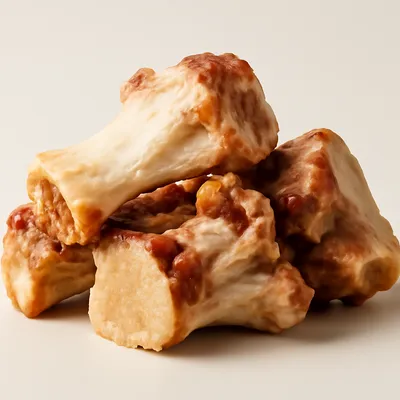
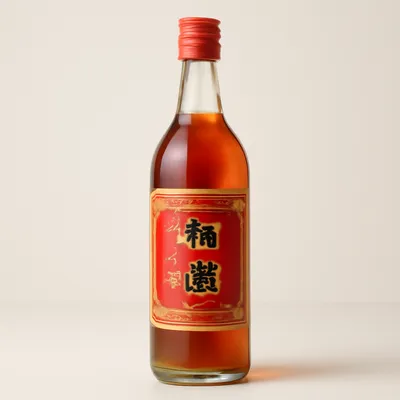
Prepare master stock: combine pork knuckle bones and old hen in cold water, bring to a boil and skim. Add star anise, cassia bark, cloves, bay leaves, dried tangerine peel, ginger, scallion, dark soy sauce, light soy sauce, Shaoxing wine, rock sugar, and salt. Return to a boil, then simmer over low heat for one hour until the broth is deep amber and aromatic.
- 575 min
Add the blanched intestine rings to the simmering stock. Cook over the lowest heat for 60–90 minutes, turning once, until the rings feel yielding but spring back when pressed.
Watch outHold it at the barest simmer, never a boil — a hard bubble bursts the nested rings; they're done when they press soft but spring back.
- 620 min
Lift the rings out and rest them in the cooled stock for 20 minutes to absorb further flavor. Reserve the stock for repeated use — it deepens with age.
Watch outLet the rings sit in the cooled stock off the heat — this soak is where the flavor really drives in, not the boiling.
- 75 min
Slice each ring into 1.5 cm rounds and arrange in overlapping layers on a plate. Drizzle with a spoonful of reduced braising stock and serve warm.
Archive tool suggestions — not reviewed
These legacy suggestions have not been evidence-reviewed and are not presented as required tools.



