The Yellow Sea mudflat goby of Lianyungang — pan-fried until golden, then boiled to a milky-white broth with soft tofu, richest from October when folk wisdom says 'October shaguang rivals mutton soup.' Called the 'number one fresh' of the northern Jiangsu coast.





Shaguang goby (矛尾复虾虎鱼) is a warm-temperate bottom-dwelling fish endemic to the Yellow Sea, particularly abundant in the shallow mudflat waters off Lianyungang. Coastal communities in what was historically called Haizhou (海州) have eaten the fish for centuries; the Ming–Qing period herbal compendium 《食物本草》 records that shaguang goby 'warms the center, benefits qi, fortifies the sinews and bones, and promotes circulation.' The fish is so deeply identified with Lianyungang that the folk saying '十月沙光赛羊汤' is recorded in multiple local historical texts including 《海州民俗志》 and 《连云港特色文化》, and the city has held an annual Shaguang Goby Food Festival.
The flesh is white, silky-fine, and almost boneless in feel — extraordinarily tender with a delicate oceanic sweetness. The broth, driven to vigorous boil, turns milky and rich yet never heavy; tofu absorbs the fish essence and becomes satiny. The whole bowl is clean umami with a haunting freshness that locals insist no other fish in northern Jiangsu can match.
Shaguang goby accumulates subcutaneous and intramuscular fat as autumn water temperatures drop, reaching peak richness in October — hence the folk comparison to mutton soup, prized for its fat-enriched depth. Pan-frying the fish before adding water serves two purposes: it denatures proteins on the skin surface and releases fish fat into the oil, both of which become emulsifying agents when vigorous boiling begins. The rolling boil at 100°C forces fat droplets into a stable oil-in-water emulsion, producing the characteristic milky-white color. Collagen from fish skin and bones simultaneously converts to gelatin, giving the broth body and a silky mouthfeel. Inosinic acid (肌苷酸) abundant in the fish muscle synergizes with glutamate released from the soy protein in tofu, producing a synergistic umami amplification (鲜味相乘) that makes the combined broth markedly more savory than either ingredient alone.
Variations
Red-braised shaguang (红烧沙光鱼) — marinated in soy and rice wine, pan-fried, then braised in a glossy sauce — is equally traditional and preferred in colder months. Some households add sliced winter melon or silk gourd to the tofu stew to lighten the broth; dried tofu sheets substitute fresh tofu in rural versions. The fish is also eaten pickled-and-braised (醉沙光) in some coastal households.
On the Palate
Where Shaguang Goby Soup sits in the Chinese flavor cloud
Ingredients
Serves 4
How it's made
7 steps · 15 min active + 22 min waiting
- 110 min
Scale, gut, and rinse the shaguang goby; score each side twice; rub with Shaoxing wine and a pinch of salt; rest 10 minutes.
- 24 min
Heat oil in wok over medium-high; pan-fry fish on each side until golden-brown, about 2 minutes per side.
Watch outPan-fry the fish golden-brown on each side first — the rendered fish fat is what emulsifies into the milky broth later; skip it and the soup stays thin and clear.
- 31 min
Push fish to the side; add smashed ginger and garlic; stir-fry 30 seconds until fragrant.
- 45 min
Pour in just-boiled water to cover fish by 3–4 cm; bring to a vigorous rolling boil over high heat.
Watch outPour in just-boiled water, not cold, and keep it at a hard rolling boil — that violent boil is what forces the fat into a milky emulsion.
- 55 min
Maintain vigorous boil for 5 minutes until broth turns milky white; gently lower in soft tofu cubes.
Watch outBoil hard five minutes until the broth turns milky white before the tofu goes in — that color change tells you the emulsion has formed.
- 610 min
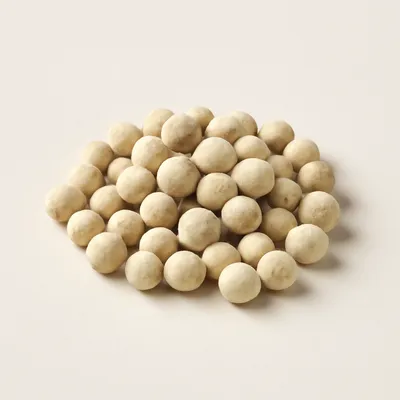
Reduce to medium; simmer 10 minutes; season with salt and white pepper to taste.
- 72 min
Ladle into a large serving bowl; scatter sliced scallions on top; serve immediately.
Archive tool suggestions — not reviewed
These legacy suggestions have not been evidence-reviewed and are not presented as required tools.



